
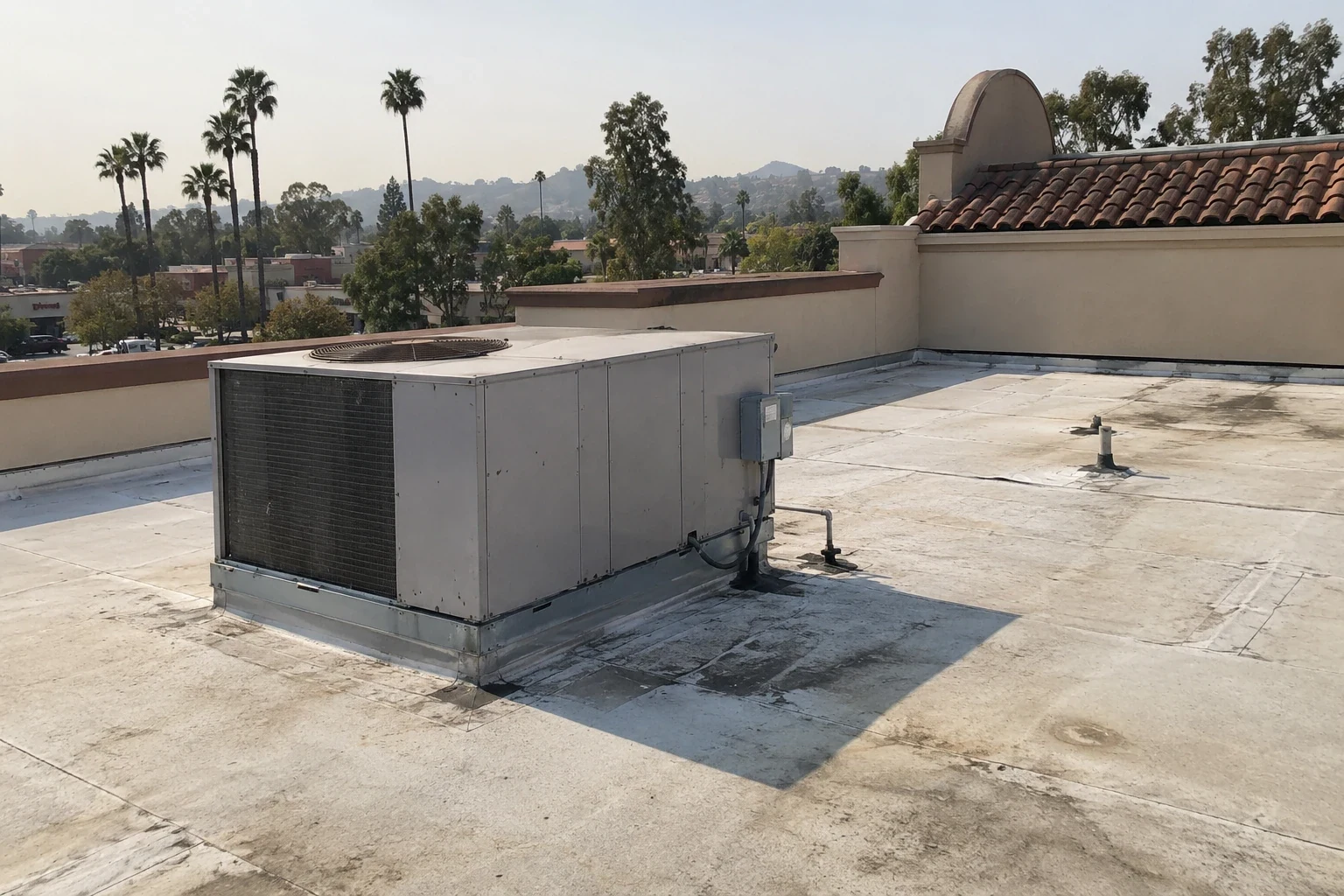
Restaurant Roofing in San Mateo, CA
CATEGORY
Property Types We Roof
LOCATION
San Mateo, CA
A kitchen exhaust curb concentrates grease, vibration, service visits, and flashing in a small roof zone. For a restaurant property in San Mateo, that detail can affect an occupied dining room below and a mechanical trade working above it. We map exhausts, make-up air units, refrigeration lines, drains, and membrane laps before defining the repair limit. San Mateo identifies restaurants and retailers among its business sectors, so the city's commercial setting is relevant; it does not establish the condition of a particular roof. The building walk does. We record the substrate, termination, water path, and access route, then give the general contractor a scope that separates roofing from equipment work. That makes the first price discussion more useful than an allowance built on an unseen curb.
Exhausts: Keep the curb and trade boundary clear
Kitchen exhaust assemblies can carry grease residue at the fan, curb, and nearby membrane. The roofer should inspect the flashing and adjacent lap without assuming that the exhaust itself belongs in the roofing contract. We identify the disconnect, lift, and reset responsibilities before removal, then note which trade restores power and confirms operation. If the curb is corroded, loose, or too low for a durable transition, that condition changes the detail and possibly the schedule. Photographs from more than one side show whether the membrane terminates cleanly or disappears beneath a unit base.
The work plan also needs a safe route to the roof and a place for removed material. A restaurant may receive food deliveries during the same window a lift is needed. We ask the manager to set a delivery blackout or alternate entrance, then coordinate the staging point with the GC. A penetration-flashing review can cover exhaust curbs and related openings; grocery roof coordination addresses a different equipment mix but shares the need to name each trade handoff.
Drainage: Trace discharge beyond the kitchen
A roof drain near an exhaust can collect debris, grease-bearing residue, or loose material, but the outlet still needs a direct inspection. We check the strainer, bowl, clamping ring, membrane cut, leader, and discharge point as separate observations. San Mateo's published drainage basis is a minimum two-inch-per-hour rainfall rate. That value informs design; it does not tell a restaurant operator whether a particular drain is open today. We record the condition and identify any plumbing or site drainage item that falls outside the roofing price.
Water marks above a prep area are clues, not a roof map. We compare the interior location with slope, seam, curb, and edge conditions, then mark the likely investigation zone. If a leak requires same-shift protection, the crew sets a temporary dry-in boundary before opening material. The drain and scupper scope can define bowl and flashing work, while a ponding-water review separates a blocked outlet from a persistent low spot.
Operating hours: Set a workable roof window
Restaurant hours are not the only constraint. Receiving, trash pickup, hood cleaning, refrigeration service, and evening turnover can each control the access lane or the area below a planned opening. We ask which service doors must remain available, where staff travel, and when exterior dining or queue space is active. The daily work limit should match what the crew can remove, repair, and dry in before leaving, not merely the square footage on a schedule.
Downtown San Mateo, Bay Meadows, and Mariner's Island have different surrounding land uses and circulation patterns. The planning context helps frame a conversation, but the site contact confirms the truck entrance and staging conditions. A nearby Downtown San Mateo work area may require a different delivery window than a site closer to US 101. We confirm the specific route with management instead of inferring a building layout from a neighborhood name.
Assembly: Price the layers that are actually present
Repair, recover, and tear-off are not interchangeable lines in a proposal. We check membrane type, seam condition, cover board, insulation, attachment, and visible deck before recommending an approach. A dry, well-bonded field may support limited work, while wet material or deteriorated deck can extend removal. The scope states the assumed layers and a process for concealed conditions, so a measured change can be priced before the opening expands.
A TPO membrane assembly uses heat-welded seams and its own flashing details; an existing built-up or modified-bitumen roof calls for a different substrate and tie-in check. We do not select a system from the roof's age alone. San Mateo's current code adoption date is January 1, 2026 for the 2025 California Building Standards Code. The project design professional determines applicable requirements; the bid records its attachment, edge, and inspection assumptions. A replacement comparison is strongest when it identifies those boundaries beside the repair option.
Closeout: Leave the kitchen and roof crew aligned
Before the last phase begins, the GC should know which exhaust or refrigeration trade has returned, which penetration is sealed, and which area remains protected. We photograph each completed curb, seam, drain, and termination and label the image to a roof zone. A short handoff note records work completed, any excluded item, and the next inspection point. This is particularly useful when an operator changes maintenance vendors or a manager needs to locate an older repair.
Planning identifies the Caltrain spine and the SR 92 / US 101 road network as regional circulation references. They do not reveal a particular restaurant's driveway or truck turn, so we confirm those at the site. For a roof walk, share the roof plan, equipment list, leak locations, delivery rules, and the person authorized to approve a field change. A kitchen shutdown may not align with a roofer's preferred start. The operator can identify active exhaust units, scheduled service visits, and hours when cooking cannot pause. We record those points as coordination notes, not as a claim that a roofing crew services the fan. If a curb must be opened, the detail gets a named trade and return time; the roofing phase ends only at the agreed dry-in boundary. A hotel roof plan may add guest and amenity sequencing; the restaurant scope should reflect its own kitchen, exhaust, and service schedule. Routine maintenance inspections can keep drain and curb observations tied to that record.
Commercial Roofing Questions
How should exhaust-fan work be divided between trades?
List disconnect, lift, reset, electrical reconnection, curb repair, and membrane flashing as separate responsibilities. The GC should name the trade owner and return time for each step before a roof opening is scheduled.
Can a restaurant stay open during a roof repair?
That depends on the work zone, access, noise, and protection below. Set a daily opening limit and a dry-in point with the operator, then keep customer and delivery routes outside the lift area.
What should a roof bid say about grease or residue near an exhaust?
The roofer should document the observed surface condition and state how preparation is included. Cleaning, exhaust service, and equipment work may belong to other trades, so exclusions and handoffs should be visible in the price.
Why inspect drains when a leak appears near a kitchen curb?
Water can travel along a seam or low area before it reaches the ceiling. A roof walk compares the interior report with the outlet, curb, membrane lap, and discharge path instead of treating the stain as the entry point.
What documents help before the first site walk?
Bring roof plans, past leak notes, equipment schedules, access rules, service hours, and any known repair records. Those details let the GC and roofer set a practical route and discuss the same scope boundary.
Coordinate the roof around kitchen service
Share the roof plan, exhaust and refrigeration list, access rules, service hours, and known leak areas. We will inspect the field condition, mark the scope limit, and set a practical sequence with your GC.