
Local weather advisory
Coastal Flood Advisory: Commercial Roof Help in San Mateo
The National Weather Service has issued a coastal flood advisory covering San Mateo. Heavy rain and drainage loading can expose roof leaks, blocked drains, and ponding water. This is a weather exposure advisory; it does not establish damage to a specific roof.
Do not access a roof during hazardous weather. Protect people first, avoid water near electrical equipment, and request roofing help when conditions permit.
National Weather Service · Updated Oct 28, 2026, 7:20 AM UTC
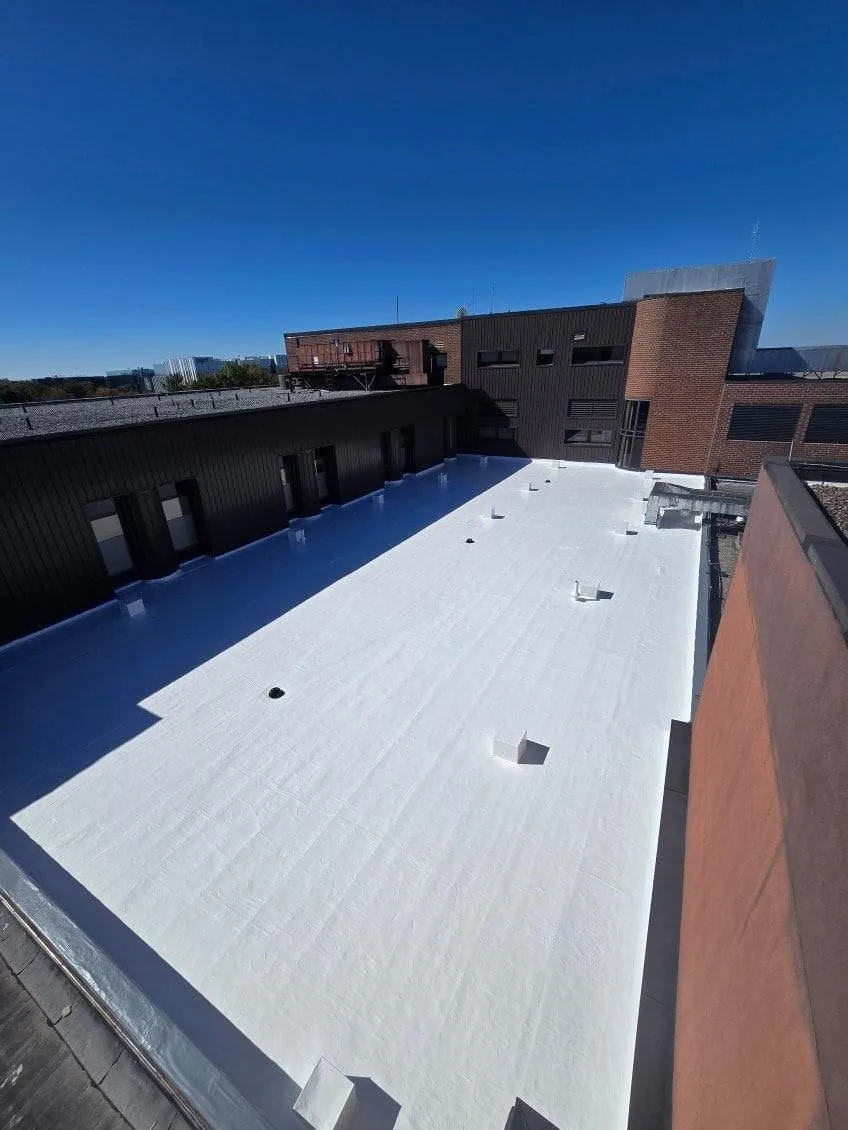
Commercial Roof Leak Repair in San Mateo, CA
CATEGORY
Commercial Roofing Services
LOCATION
San Mateo, CA
A leak report is a starting point, not a roof diagnosis. In San Mateo, moisture can enter near a penetration, seam, drain, or perimeter and travel before it reaches a ceiling. We record the affected rooms and timing, then compare those details with roof plans, past patches, and the assembly above. The city’s planning identifies commercial uses around Downtown, Hillsdale, Bay Meadows, and Mariner’s Island; each property still needs its own access, occupant notice, and inspection boundary.
Inspection boundary: stabilize the interior first
The property contact should identify affected spaces, electrical or equipment concerns, and any contents that need protection. If safe, contain drips and move vulnerable materials; do not use a wet ceiling as a ladder or open a panel without the responsible trade. The response note should include when the leak began, whether it changes with rain or equipment cycles, and what temporary steps were taken. Those details help connect the indoor symptom to a roof location.
A temporary cover or interior collection can reduce immediate exposure while the roof is reviewed. State the boundary and expected duration of that measure, and arrange a follow-up inspection. Permanent correction depends on the actual material and entry detail. A urgent roof response can coordinate active water entry, while a later repair scope should identify the tested condition and lasting tie-in.
A manager can make the diagnostic visit faster by separating current evidence from remembered history. Attach a recent photograph of the interior mark, label the room, and note whether water appeared during rain, after equipment operation, or without a clear trigger. Add the date of the latest roof repair and whether an interior finish was opened. This record does not prove causation, but it gives the inspector a better starting point than an unlocated call log. The roof plan then connects that room to the nearest roof elevation and likely drainage path.
Assembly review: build a leak map from useful evidence
Mark the room, ceiling grid, wall line, roof elevation, and equipment above the reported stain. Compare more than one report if several spaces are affected, but do not combine separate symptoms until the evidence supports a common pathway. Roof plans, maintenance notes, photos, and old repair tickets can reveal whether a location has been patched, altered, or accessed by another trade. Document the date and source of each observation for the owner.
On the roof, inspect the likely path and neighboring details, including seams, flashing, curbs, drains, and edge transitions. An inspection walk can record the broader condition where repeated calls suggest more than a single defect. The San Mateo roof-drain design criterion is a minimum rainfall rate of two inches per hour; visible ponding or a blocked outlet should be recorded separately from a membrane opening.
After the initial visit, agree on a short next-step list with the owner. It may include a controlled hose test, a test cut, follow-up after the next storm, or a separate drain cleaning scope. Each action should identify who authorizes it, what area is affected, and how the opening is restored. If the evidence supports more than one possible entry point, preserve the alternatives instead of choosing the first visible split. The owner can then direct testing toward the decision that matters, rather than paying for an undefined roof-wide investigation.
Sequence: test before opening more roof
Choose a test only when it answers a decision. A controlled water test can isolate a detail under agreed conditions; an approved core can identify the assembly and confirm materials at one sample point. Infrared imaging may help direct sampling after suitable conditions, but a thermal pattern is not proof of a leak. The scope states the test boundary, who authorizes an opening, how it will be restored, and which result changes the repair plan.
Do not enlarge a repair because another roof zone looks aged. If a local seam failure is visible, specify that correction and note the separate observations. If the entry remains uncertain, preserve the interior report and schedule staged testing. A moisture investigation can help map potential areas, and a seam-focused repair can follow confirmed evidence.
Field detail: choose materials that belong together
An effective leak repair starts with membrane identification and surface preparation. Clean and dry the bonding area, remove failed material where required, and use an approved repair detail compatible with the existing assembly. Seam welding, adhesive patches, liquid-applied details, and bituminous repairs are not interchangeable. The work record should name the product family only when its identity is confirmed and should show how the new material terminates at sound substrate.
A patch that bridges a moving joint or leaves a drain flange untreated may redirect rather than stop water. Review roof movement, attachment, substrate, flashing height, and any prior coating. A EPDM detail review differs from a PVC seam inspection, and a Downtown San Mateo property should be assessed by its own records and access conditions.
Cost drivers: keep the permanent repair within scope
The written scope should identify the roof plane, approximate repair area, defect, preparation, material, tie-in, and closeout evidence. List exclusions such as concealed insulation, deck damage, interior finish restoration, or unrelated drain work. If a condition appears after removal, pause at a safe stopping point, photograph it, and request authorization using a clear quantity and correction. This prevents a small leak scope from carrying a broad, unpriced promise.
Where water entry is active, state what temporary action is included and who monitors it. A permanent detail may require dry conditions or access coordination that cannot be assumed during the initial call. San Mateo’s US 101 and SR 92 corridors carry commercial activity, but that does not establish a route, staging area, or work window for a particular building. Confirm those logistics with the property contact before scheduling material delivery.
Closeout: confirm dryness and monitor the result
After the repair, inspect the completed tie-in and take close and context photographs. The closeout record should identify materials, application limits, weather conditions, and unresolved items. Inside, confirm whether the affected area needs a separate drying or restoration contractor. Do not treat the disappearance of a ceiling stain as proof that concealed materials are dry; use an agreed inspection or measurement method if that question affects the next decision.
If a later rain produces another report, compare its location and timing with the original map and repair record. A dated condition report can keep the evidence organized; warranty records should preserve notice and maintenance requirements where applicable. Commercial Roofing San Mateo can review the roof area, document the likely entry point, and set a bounded repair or test plan with the manager.
Commercial Roofing Questions
What should a manager note when reporting a leak?
Record the affected room, ceiling location, time noticed, relation to rainfall or equipment, and any temporary protection. Photos and roof plans help the inspection team compare indoor symptoms with roof details.
Does a wet ceiling identify the roof opening?
No. Water may move before appearing indoors. A roof walk, records review, and controlled testing can narrow the path without treating the stain as the entry point.
Can infrared imagery confirm a leak?
Infrared patterns may guide sampling, but temperature differences do not prove water entry. Confirm the relevant material at an approved test point and explain the limits of the sample.
Should a recurring leak receive a larger patch?
Only if the observed defect and substrate call for it. The scope should correct the confirmed failure and list separate conditions for further approval.
What belongs in repair closeout?
Keep dated photos, location, material, preparation, tie-in, weather constraints, unresolved conditions, and any follow-up instruction with the building roof record.
Discuss commercial roof leak repair in San Mateo
Share the roof plan, access rules, and current condition with Commercial Roofing San Mateo. We can define the inspection boundary and next field step for commercial roof leak repair.