
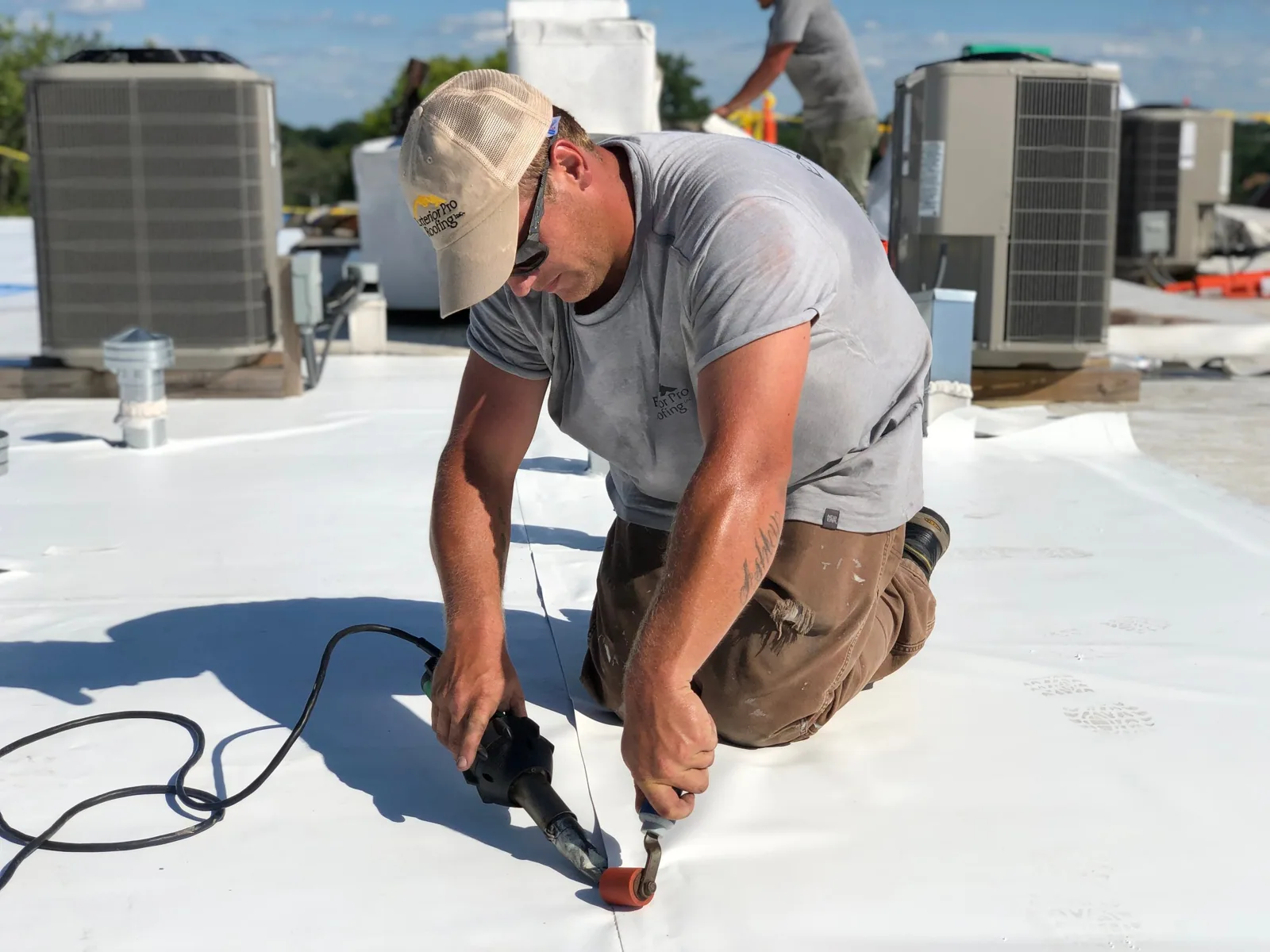
Commercial Roof Repair in San Mateo, CA
CATEGORY
Commercial Roofing Services
LOCATION
San Mateo, CA
A repair should connect a visible symptom to a verified roof condition. In San Mateo, a stain below a drain line, parapet, or rooftop unit can be several feet from the opening that admits water. We trace the water path, inspect the assembly, and mark the repair boundary before material is cut. Downtown offices, Bay Meadows mixed-use blocks, and Mariner's Island properties bring different access and operating constraints, so the field plan starts with the actual building and its manager.
Inspection boundary: trace the path before opening the roof
Record the interior symptom, date, recent weather, and rooms affected, then compare those notes with the roof plan. On the roof, look uphill from the stain toward seams, penetrations, drains, edge transitions, and earlier patches. A surface defect may be related to a different detail, while water can travel within insulation before appearing indoors. We do not select a repair material until the accessible assembly and likely entry point have been reviewed.
Photographs should show context and a close view, with the roof zone or grid reference attached. If the entry point is concealed, state what can be tested and what access is needed. An inspection scope can document broader conditions when the leak is recurring or several areas are affected. Keep the first response narrow enough to protect the interior, but avoid presenting a temporary cover as a permanent repair.
A repair visit also needs a clear stop point. The work order can authorize a measured patch and a small amount of preparation, then require approval before insulation, deck, or framing is changed. That distinction protects the schedule when a concealed condition appears. Ask the property contact to identify the person allowed to approve added work and how quickly that decision can be made. A crew should not leave an exposed opening while waiting for a routine approval, so the contract needs an agreed safe temporary closeout for that situation.
Assembly review: match the repair to the existing membrane
Identify the membrane, reinforcement, surface condition, and attachment before specifying a patch or seam repair. TPO, PVC, EPDM, modified bitumen, built-up, and coated roofs require different preparation and compatible materials. Where records are absent, use exposed seams or an approved test point and label uncertainty. A patch bonded to dirt, moisture, oxidation, or incompatible coating may not form a durable transition even when the new material is correct for a different assembly.
At the repair edge, prepare the substrate, remove loose material, and extend the correction onto sound roof. A membrane system review can help the manager identify the existing material, while bituminous roof details need a separate heat and lap plan. San Mateo is in climate zone 3, with an 85 mph basic wind speed reference, but those city values do not replace project-specific attachment or product requirements.
A roof map should use names the facilities staff recognize, such as north stair, loading canopy, or unit 4 curb, while still tying each label to a plan location. Avoid references like near the back or by the machine, which may mean something different to a later technician. Mark the repair zone, adjacent drains, roof level, and direction of travel. That small discipline saves time on a follow-up and gives the owner a way to compare the repair with future inspection photographs.
Sequence: define repair size and exclusions
A useful work order states the building, roof section, measured area, defect, preparation, materials, tie-in, and closeout method. List adjacent conditions that remain open, such as a cracked curb, blocked outlet, loose edge metal, or separate membrane blister. If the repair requires interior protection or equipment shutdown, assign responsibility and timing. The price should describe the repair actually authorized, not imply that every condition on the roof is included.
For a leak across multiple levels, split the scope by roof plane or detail group so the owner can track what was tested. A flashing correction or seam repair may be priced separately when the field evidence points to distinct failure modes. San Mateo's two-inch-per-hour roof-drain design basis makes outlet condition relevant when water remains after a storm. Drainage design questions should go to the project professional.
Field detail: control water while the permanent scope is prepared
If water is entering, protect people and contents, place interior collection where safe, and inform the property contact. A temporary measure should be described by location and limits. It may reduce immediate exposure while testing, drying, or a permanent repair is scheduled. Do not close an interior ceiling or cover a roof opening until the condition is understood and the responsible parties agree on the next step.
San Mateo's shoreline adaptation work examines low-lying areas and coastal flooding exposure; that context does not diagnose a roof leak. The site still needs its own inspection. If thermal patterns may help select test points, an infrared moisture survey can guide additional investigation, followed by approved verification. For an occupied property near Hillsdale Station, the manager can coordinate room access and tenant communication through a building access plan.
Cost drivers: schedule around access and weather exposure
Confirm ladder or hatch access, escort rules, tenant hours, loading areas, rooftop equipment, and any roof safety requirements. A repair crew may need dry conditions for cleaning, adhesion, welding, or curing. The work sequence should identify what can be completed in one visit and what relies on follow-up testing. If temporary protection is used, state who checks it and when, and what event requires another inspection.
US 101, SR 92, El Camino Real, and Caltrain are major circulation references in San Mateo plans, yet each property has its own delivery route and gate rules. Confirm the route with the building contact rather than assuming a citywide access pattern. A Mariner's Island repair visit may require a different staging plan from downtown. The proposal should set an arrival window and a customer contact for roof release.
Closeout: close the loop with a repair record
After work, photograph the prepared area, completed patch, nearby detail, and restored access point. Record the material system used, environmental conditions that affected application, and any limitation that remains. If the repair exposes wet insulation or deck deterioration, document the finding before covering it and obtain approval for added scope. A record lets a later inspector distinguish the new work from older patches.
Share the repair location and date with the property manager so future leak reports can be compared against the same roof map. A condition report can group repairs with other observations, and asset tracking can preserve the service history. Call Commercial Roofing San Mateo with the leak location, building access contact, and any roof records. We can inspect the affected area and define a repair boundary before permanent work is priced.
Commercial Roofing Questions
Why can a roof leak appear away from the opening?
Water can move across a membrane or through insulation before reaching an interior surface. We compare the stain with roof seams, penetrations, drains, and transitions, then document the evidence and any test needed.
Can a patch be placed before the roof system is identified?
A temporary protective measure may be appropriate for active entry, but a permanent patch needs compatible materials and preparation. The crew records uncertainty and verifies the assembly before setting the repair method.
What does a repair proposal include?
It should identify the roof area, defect, preparation, material, tie-in, access assumptions, exclusions, closeout photos, and the condition that would require added work.
Do drain problems belong in a leak repair?
If a drain is blocked, damaged, or holding water, record it as a separate observed condition. Clearing, repairing, or redesigning a drainage system are distinct scopes and may require the responsible designer.
How should a recurring leak be investigated?
Compare dates and locations, review prior patches, inspect adjacent details, and expand testing only where the evidence points. A written map avoids repeating an identical patch without addressing the entry path.
Discuss commercial roof repair in San Mateo
Share the roof plan, access rules, and current condition with Commercial Roofing San Mateo. We can define the inspection boundary and next field step for commercial roof repair.