
Local weather advisory
Coastal Flood Advisory: Commercial Roof Help in San Mateo
The National Weather Service has issued a coastal flood advisory covering San Mateo. Heavy rain and drainage loading can expose roof leaks, blocked drains, and ponding water. This is a weather exposure advisory; it does not establish damage to a specific roof.
Do not access a roof during hazardous weather. Protect people first, avoid water near electrical equipment, and request roofing help when conditions permit.
National Weather Service · Updated Oct 28, 2026, 7:20 AM UTC
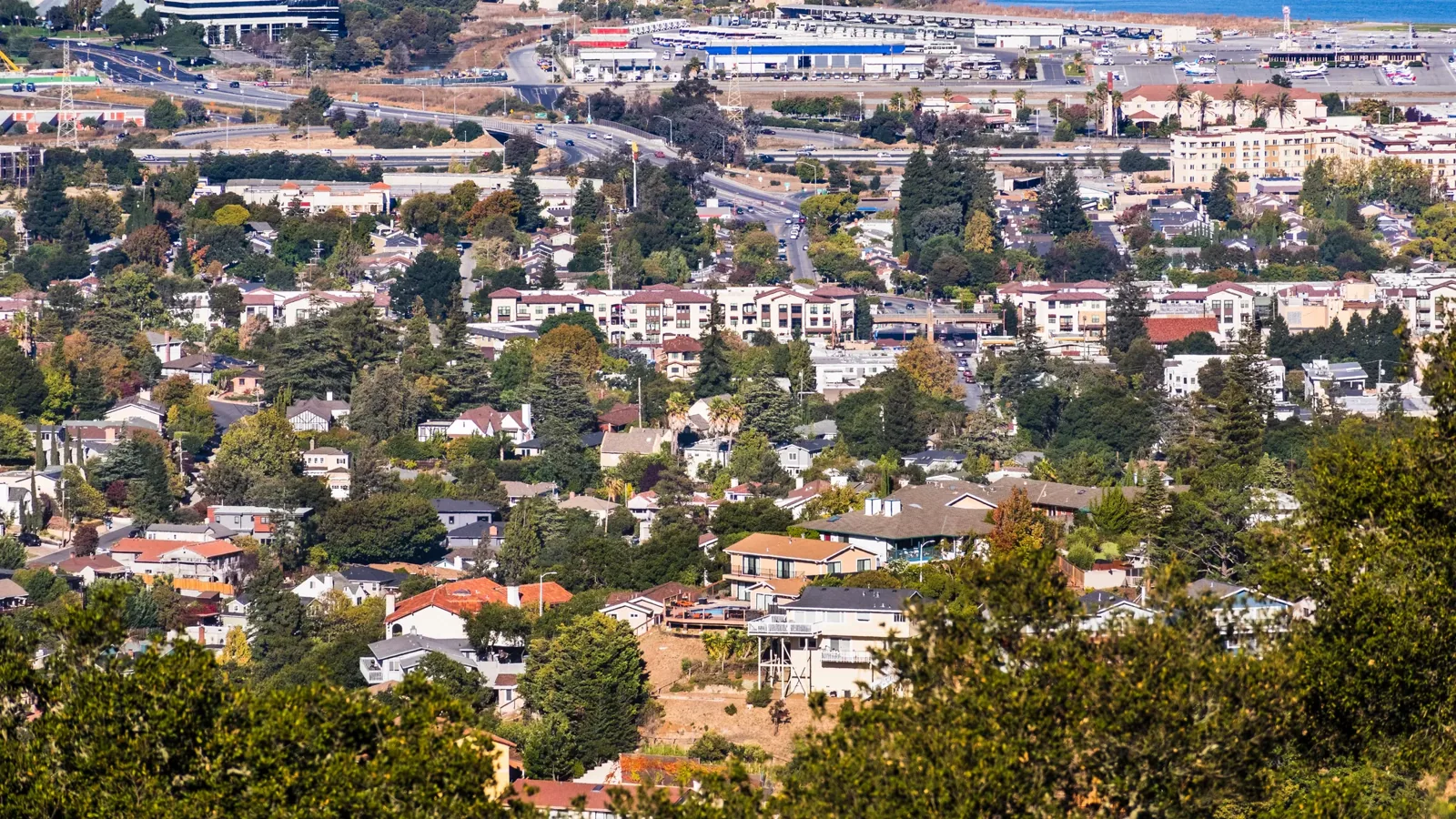
Commercial Roofing in San Carlos, CA
CATEGORY
Service Areas
LOCATION
San Mateo, CA
A roof at a San Carlos commercial property needs a scope that follows the actual work area, not a broad assumption about the whole building. We inspect the roof assembly, map drains and penetrations, and confirm staging with the property contact before setting a sequence. The Industrial Arts District is a multi-property area for small-scale industrial, artisan, and manufacturing uses; each address still requires its own access plan and roof review. We record conditions and separate measured work from allowances.
Field condition: the roof and the work below
The Industrial Arts District is intended for small-scale industrial, artisan, and manufacturing businesses. On a property in that broad area, roof work may intersect with deliveries, mechanical service, or production scheduling, but the roof itself determines the repair. We document the surface, seams, penetrations, drains, edges, and visible changes between roof sections. If access, equipment clearance, or interior protection changes the sequence, we record it before preparing a scope.
San Carlos also identifies office and research-and-development areas. A facility manager should not assume those roofs share the same assembly or equipment layout. We verify the system where visible, inspect each relevant transition, and mark where a condition needs testing. The report gives the owner a clear boundary between a localized defect and work that may involve insulation, attachment, or deck review. A commercial inspection can establish that baseline, while a repair visit focuses on a defined condition.
Scope boundary: employment corridors and access
San Carlos names El Camino Real, Old County Road, Brittan Avenue, and Industrial Road as employment corridors. Those corridor names help identify a general part of the city, not a specific roof entrance, truck turn, or staging location. Before a material delivery, we confirm the property address privately with the owner, the approved vehicle approach, and the area reserved for unloading. No street-level map can replace a site contact's access instructions.
For a roof with several additions, mark which hatch or ladder serves each section and whether the route crosses an active work area. We also note lift placement, overhead conflicts, and where tools can be staged without blocking a tenant or another trade. If an owner coordinates properties in Redwood City too, the records should stay separated by building; the city's land-use and circulation framework is a different planning context from the San Carlos employment corridors. The Redwood City service area is another city-level target, not an extension of any one property.
Sequencing: find the cause before pricing the repair
A water stain may appear several feet from the opening that admitted water. We trace roof slope and drainage, inspect the membrane above the report, and check curbs, edge metal, laps, and penetrations for a path that matches the interior evidence. We photograph the observed condition and note whether the diagnosis is complete or depends on a test opening. That distinction keeps the owner from paying for a broad replacement when a sound assembly may accept a focused repair.
A repair price changes when wet insulation, weak attachment, deteriorated deck, or a failing perimeter extends beyond the visible opening. Before the crew mobilizes, we also confirm whether a prior coating or overlay changes the surface preparation, where temporary protection can be staged, and who can release the work zone. Those details affect how much roof can be opened safely during one shift. The estimate separates a confirmed repair from a test opening or deck allowance, so the owner can approve the next step without treating an unknown condition as completed work. We show each assumed quantity and identify what would change the recommendation. If a recover is feasible, existing layers and edge height matter; if not, removal may be necessary to correct concealed conditions. For a complete renewal, a replacement proposal should include the tear-off boundary, insulation plan, drains, flashing, and a dry-in sequence, not only the membrane field. We also note which work limits depend on a test opening, so the owner can authorize investigation before a larger contract is priced.
System detail: choose an assembly from field evidence
San Carlos properties can contain commercial, office, research, or industrial uses, but those labels do not identify a roof material. We compare the existing surface, substrate, drainage, penetrations, rooftop service routes, and expected maintenance access before discussing an assembly. A single-ply option may work where the deck and details support it; another roof may need a different approach at frequent equipment penetrations or complex transitions. Material selection comes after those conditions are documented.
For metal areas, fastening, panel movement, laps, and perimeter attachment should be checked as one system. A standing-seam metal roof needs details that allow the panels to move while the flashing remains weather tight. For low-slope sections, we can compare TPO membrane work or another suitable assembly after the inspection. A manager with an additional Peninsula property can use the Menlo Park coverage area as a separate stop and retain a building-specific assembly record.
The employment corridors named for San Carlos include El Camino Real, Old County Road, Brittan Avenue, and Industrial Road. For an owner scheduling work across more than one of them, keep delivery instructions and lift placement on the individual job sheet rather than reusing a district-wide route. A technician can confirm the roof hatch, equipment clearances, and temporary dry-in area at the pre-start meeting. That small field check prevents a specified material package from arriving before the site is ready to receive it.
Cost driver: closeout for the next crew
A completed scope should leave a location-based record. We label repaired seams, drains, penetrations, and edges on a roof plan, then attach photographs and the material information available from the work. If another contractor must finish a support, conduit, or mechanical task, that open item stays separate from the roofing completion. The owner can then see which details were corrected and what still needs a decision before the next service visit.
If water entry remains active, temporary stabilization and permanent repair should be recorded as distinct steps. Keep the work limit visible, especially where a membrane ties into an older addition or metal edge. Our drain and scupper review can help when outlets are part of the observed condition. A crew can also document edge metal and coping where wind, movement, or a previous repair has disturbed the termination. Share the roof plan, access requirements, and reported condition to schedule a San Carlos field review.
When one property has several elevations, divide the work map by elevation and mark each transition. Show which zone has a confirmed assembly, where equipment access remains, and whether another trade must finish a support or curb. The distinction lets a facilities manager approve the next phase without treating an unfinished tie-in as a completed roof. We can price a follow-up visit from the open items and the owner’s current access window.
Commercial Roofing Questions
Does an Industrial Arts District address identify the roof type?
No. The district is a broad multi-property area. We inspect the actual building, confirm the assembly where possible, and record conditions such as seams, penetrations, drainage, and edge details before recommending a material.
Can roof work be phased around a San Carlos production schedule?
Yes. We set the daily work boundary, dry-in point, and material path with the property contact. The sequence can change when production access, deliveries, or equipment service would cross the roof work zone.
What changes the cost of a commercial roof replacement?
Removal volume, wet insulation, deck repairs, edge height, drainage, equipment curbs, disposal, and access all affect scope. We identify what is confirmed and what remains an allowance before comparing bids.
How are leak repairs documented?
The crew records the observed entry path, repair limits, materials used, and any nearby condition that remains open. Dated photographs and a marked plan make later maintenance easier to compare.
Can the same roof specification cover several San Carlos buildings?
A specification can set common requirements, but each roof needs its own survey. We note differences in substrate, existing layers, edge details, drainage, and access before finalizing a multi-building scope.
Plan a San Mateo roof review
Share the property location, roof access requirements, reported condition, and any available plan or repair history. We will inspect the relevant areas and provide a field-based scope for the next decision.