
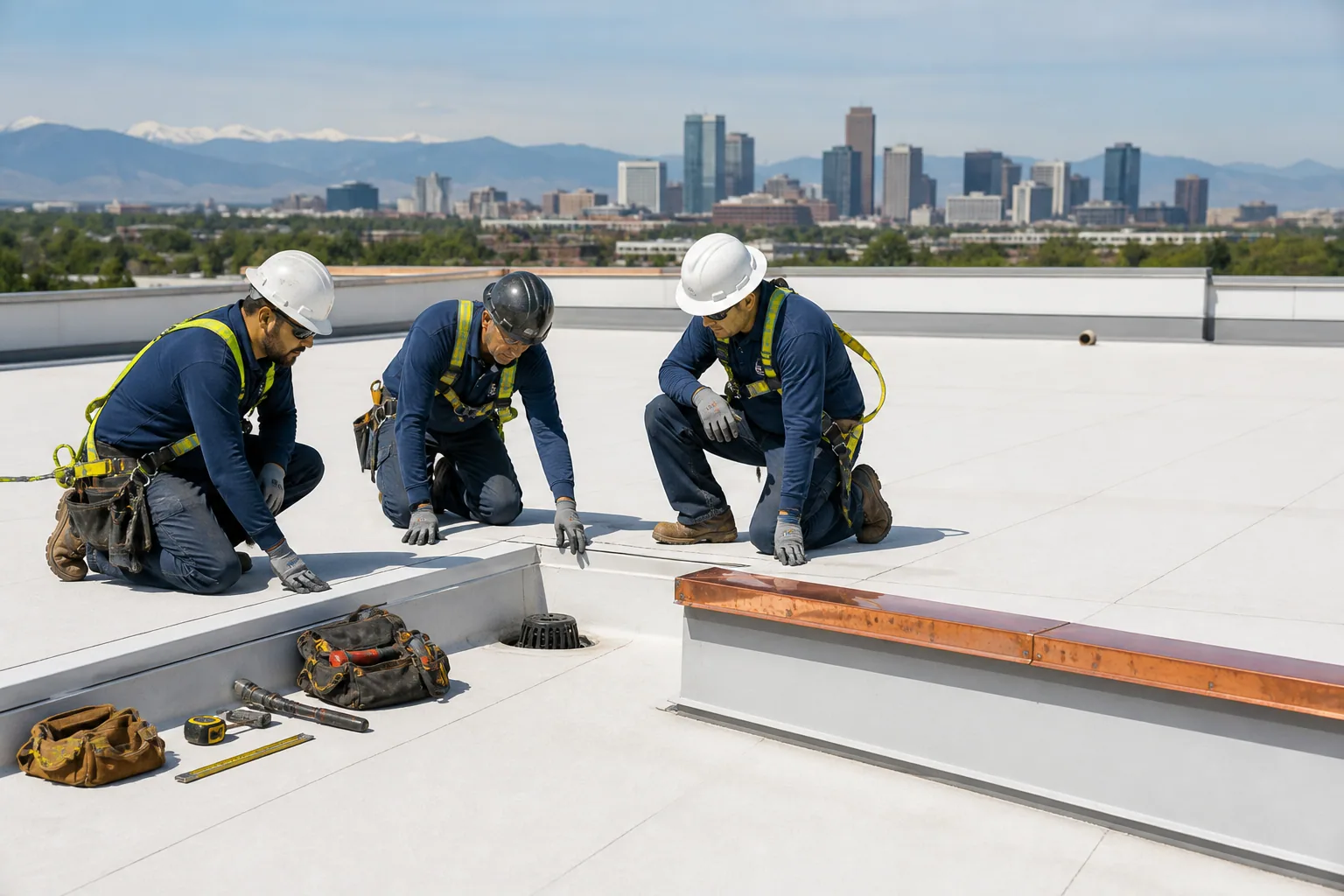
Commercial Roof Maintenance in San Mateo, CA
CATEGORY
Commercial Roofing Services
LOCATION
San Mateo, CA
Local roofs cover offices, retail, apartments, and mixed-use properties; each needs its own access plan. We inspect drain paths, field seams, curbs, penetrations, edge metal, rooftop equipment, walk paths, and prior repairs. Then we mark which conditions need a prompt repair, which can be grouped into a planned visit, and which need testing before a recommendation. The city’s code summary sets a 2-inch-per-hour minimum rainfall basis for roof drains, a design input rather than a field verdict. For a San Mateo commercial property, the field record should connect roof observations to access, budget, and a realistic follow-up date.
Repair history: start with the last repair record
Before climbing, we review leak tickets, warranty notes, roof plans, photographs, prior scopes, and any known equipment changes. A recurring ceiling stain may point to one drain path, but it can also reflect a curb, seam, wall transition, or an abandoned penetration farther uphill. The report should distinguish what a technician saw from what remains uncertain. We mark the roof zone, interior location, date, weather if supplied by the owner, and any earlier patch that may affect the next repair. That record keeps the maintenance conversation tied to evidence instead of a generic annual checklist.
Building history matters when additions were installed at different times. A roof may combine single-ply, metal, or older built-up areas. Equipment changes can alter foot traffic or leave unused openings. We compare drawings with the field layout, then record gaps in the documents. A marked condition report gives the GC and facility manager a shared basis for pricing and access.
Drainage: follow water from the high point
At each roof zone, we trace the likely water path toward a drain, scupper, or edge. We check strainers, drain bowls, sumps, clamping rings, counterflashings, scupper throats, and discharge conditions that can be seen safely. A clogged outlet calls for a different response than a low area, split membrane, loose lap, or failed termination. We photograph the condition before debris is moved when the record needs to show what was found. Then we note whether the flow path reaches the intended outlet and whether water appears to remain after ordinary drainage time.
San Mateo planning identifies low-lying areas near the Bay as exposed to sea-level rise and flooding concerns. That is citywide context, not a site flood level or roof diagnosis. We inspect roof drainage separately and flag when exterior water management needs another specialist. A drain and scupper review can define a slow outlet or ponding repair. A coating does not replace a working drain path.
Roof details: inspect seams, edges, and penetrations
Field seams and terminations deserve close review because small movement can open a path under wind or thermal cycling. We inspect laps, cover strips, wall flashings, curb corners, pitch pans, pipe boots, skylight perimeters, and the securement visible at roof edges. On metal roofs, we look at panel laps, fasteners, closures, and sealant condition. A patch may have sound edges while the substrate beneath it stays wet or weak. The report should say what was accessible, what was obscured, and whether a test opening is justified.
The city lists 85 miles per hour as a three-second-gust basic wind speed in its code summary. That is a design reference, not a forecast or proof of roof damage. After an event, we compare lifted edges, displaced flashing, equipment supports, and prior photographs. An infrared moisture survey may map areas for closer evaluation; a drone survey can document areas that are difficult to view by foot.
Work priorities: rank the findings by consequence
A maintenance list should separate exposure from appearance. Active water entry over electrical equipment, a loose edge near an occupied entrance, or a drain that cannot pass water may require a prompt decision. Surface wear without an open detail may be suitable for monitoring. We record the affected area, likely path, condition, and the result if work is deferred. If evidence is incomplete, we identify the next inspection or test rather than presenting an assumption as a diagnosis. That lets the owner distinguish time-sensitive work from items suited to a planned budget window.
For multi-building owners, keep each roof record distinct. Similar layouts do not mean similar membrane age, repair history, drainage, or attachment. A property manager can use a roof asset record to sort work by building and roof zone, while each recommendation remains tied to its own inspection. We can separate immediate control, scheduled repair, and monitoring items, then note the approval needed for each. A targeted repair scope should state what is included, what stays in service, and what concealed condition could change the work.
Work window: set access and timing before mobilization
Maintenance timing depends on the building contact, roof access, weather exposure, tenant use, and the available work area. We confirm ladder or hatch access, escort requirements, roof traffic rules, lift locations, material handling, and any hours when a noisy task should pause. If a repair needs interior protection, we identify the room below and agree on who can approve a temporary closure. For a property near the Bay Meadows area or Mariner’s Island, nearby land-use context does not replace the parcel’s own access rules; the facility contact confirms the entrance and staging area.
City planning names Downtown, Hillsdale, Mariner’s Island, Bay Meadows, and State Route 92 as commercial or office areas. Those labels help organize a portfolio; they do not describe one roof or tenant schedule. We set the visit from the building record and state each access route, roof zone, and work window. If a repair requires temporary opening, the daily limit and dry-in check are agreed before work starts.
Maintenance or repair: choose maintenance, repair, or testing
Routine cleaning and observation make sense when the assembly remains sound and details are stable. A split seam, loose flashing, failed curb corner, or repeated leak may need repair rather than another checklist visit. Widespread wet insulation, deck concerns, or multiple recurring defects can justify testing or a broader replacement comparison. We explain the evidence behind that change in scope. A coating is considered only when the substrate and existing layers are suitable, the drainage works, and the surface can be prepared correctly. It cannot correct trapped moisture or an unstable assembly.
A leak repair scope names the suspected entry point, adjacent details, temporary protection, and verification. If deterioration spans several zones, a replacement comparison weighs removal, insulation, cover board, membrane, edges, and access costs. Concealed conditions remain an approval point until opened, keeping maintenance findings separate from assembly changes.
Closeout: leave a record the next crew can use
After a visit, the closeout should identify each roof zone reviewed, photographs, observed defects, work completed, items deferred, and any access limitation. Note whether a drain was cleared, a seam was tested, or a repair was only recommended. If temporary protection was installed, record its location and the condition that requires a return visit. A useful maintenance record makes the next inspection shorter because the crew can compare the same roof details rather than reconstructing the history from an invoice.
Group recommendations by urgency, budget year, and operational effect. Avoid a remaining-life estimate unless a qualified assessment supports it. We state what was visible and what needs follow-up. Share roof plans, leak locations, prior reports, and access windows to arrange a condition-based maintenance visit.
Commercial Roofing Questions
What sets the interval for commercial roof inspections?
Set frequency from assembly, exposure, repair history, drainage, and the owner’s maintenance program. A current inspection can establish a baseline and identify changes to review next time.
Does a drain meeting the city criterion prove it is working?
No. The code summary gives a design criterion, while field review checks the actual outlet, strainer, sump, discharge, and water path. A blocked or damaged drain needs its own scope.
Can maintenance include minor repairs?
It can when the repair is authorized, accessible, and defined. We list labor and materials separately from observations so the owner can distinguish completed work from recommendations.
What should be ready before a maintenance visit?
Provide roof plans, leak history, prior repair records, access rules, equipment locations, and a facility contact. We confirm safe access and the areas available for review.
When should a maintenance finding become a replacement study?
Repeated leaks, broad moisture, failed attachment, or deck concerns can justify testing and a replacement comparison. The report explains the evidence and separates confirmed conditions from open questions.
Set the next maintenance window
Share roof plans, prior work, leak locations, and access rules. We will document current conditions, rank the next decisions, and define a practical follow-up scope.