
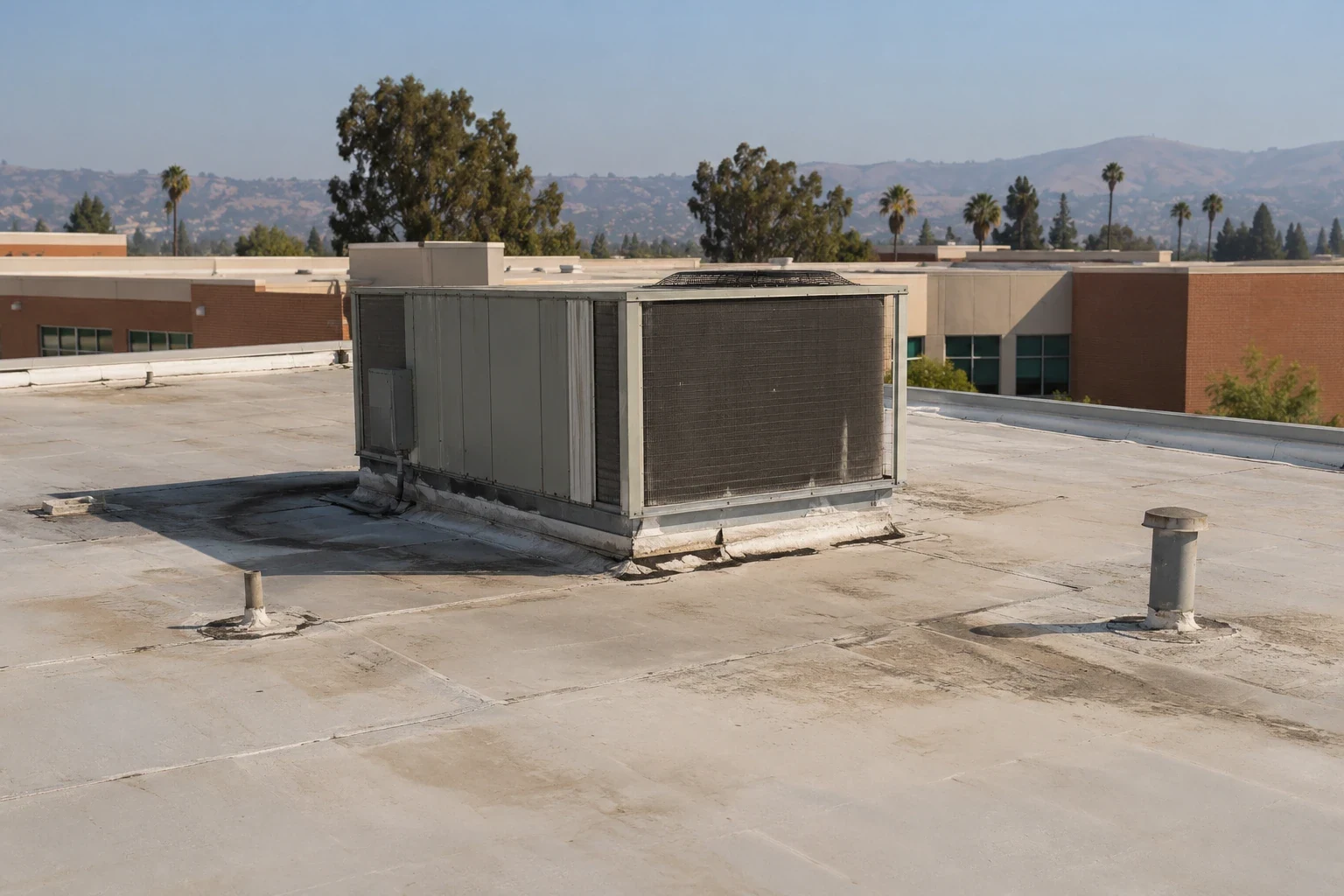
Roofing for School Districts in San Mateo, CA
CATEGORY
Industries We Serve
LOCATION
San Mateo, CA
A school district has to fit roof work between instructional days, summer projects, events, and the conditions staff report inside each building. We inspect the roof area above the concern and plan access, protection, and dry-in around the district’s approved schedule. The rail-corridor transit-oriented plan includes the Hillsdale and Hayward Park station areas. For a district roof program, those labels help with location context, while campus entry and work timing remain property-specific. These local places help organize visits, but each campus’s roof, access rules, and occupancy conditions require an individual review.
Campus inventory: use the same fields, keep each roof distinct
A district may hold records from different construction periods, roof systems, and repair vendors. We create a roof-zone plan for each building and record the assembly only where it can be confirmed. The inventory should show drains, curbs, edges, skylights, access points, leak reports, and prior work. A condition report can connect photos to locations and separate observed issues from questions that need testing. Keep district-wide comparison fields consistent, but do not infer that two buildings have identical insulation, deck, or attachment because they share a campus. The facilities director can then compare repair urgency and budget needs using a common structure that preserves each building’s specific condition.
Instructional calendar: plan each work window
School work often has a firm handback date. The schedule should account for inspections, material lead time, access control, noise, lifts, debris movement, and final cleanup before students or staff return. We break a larger roof into areas that can be secured and checked within a defined window. A phased occupied-building plan can be used when an office, administration building, or summer program remains in operation. The district identifies restricted areas, custodial access, event dates, and the person who can authorize a change. Each day’s work boundary should be marked so the next shift knows what remains open and what has been restored.
Water reports: give each condition a location
A ceiling stain may show where water surfaced, not where it crossed the roof. Ask staff to record room, date, weather, and whether the condition returned after an earlier repair. We compare that information with roof seams, drains, equipment supports, and adjacent transitions. If a test opening is warranted, mark its location and restore the assembly before releasing the area. The repair scope should tell the district what is fixed, what is not included, and what follow-up would change the recommendation. This gives the facilities team a useful record rather than a ticket that only says “leak repaired.” Repeat reports can then be compared by zone and condition.
System options: make the basis of the estimate visible
We inspect membrane, attachment, substrate, insulation, deck, drainage, perimeter details, and penetrations before comparing repair, coating, recover, or removal. A repair may make sense when the failure is local and surrounding material remains sound. A recover needs evidence about moisture, attachment, edge height, and code. Replacement may be the clearer path if failures span roof zones or insulation is wet. An itemized replacement comparison separates removal, new insulation, edge metal, details, and handback requirements. For permit-sensitive work, note that California’s 2025 Building Standards Code took effect on January 1, 2026, then let the project drawings and review establish which provisions apply to the planned scope.
Site coordination: separate district planning from property approval
A roof near Hillsdale Station may sit within a transit-oriented plan area; the district’s facilities lead still sets arrival, staging, and site-control requirements. US 101, State Route 92, El Camino Real, and Caltrain all shape regional movement, but a school-site work plan needs the approved entrance and delivery window for that campus. Those facts can inform where a district visit begins and how a crew approaches the area, but they do not establish a school’s gate, staging area, or approval process. We confirm the campus contact, loading point, permitted work hours, and student-safety boundary before mobilization. A Hillsdale Station area visit should still follow property-specific access rules. This prevents route planning from being mistaken for campus permission.
Closeout: give facilities a next-action list
The district should receive the roof plan with completed work highlighted, photographs of repaired details, materials documentation, test results, and any remaining issue. List the next inspection point or owner decision in plain language. If an equipment contractor changed a support, note the location and the trade that accepted the interface. The facilities team can use the record to prepare the next summer schedule and avoid reopening areas without a reason. Public agency facilities records benefit from similar clarity, though school operations add their own access and calendar requirements. A clear handoff lets the district compare buildings while preserving the repair history for each one. For other publicly owned assets, a healthcare facilities roof report can use comparable inspection fields without copying school access assumptions.
When a district reviews a roof program, include the building’s use calendar alongside its condition. A gym, administrative office, food-service area, and classroom wing can have different access windows even when they share one campus. We identify the roof section over each space and note any inspection hold point that must happen before it can reopen. The district can then choose whether to complete one area during a break or divide the work across separate windows. Keep temporary drains and walk paths on the daily plan so custodial and maintenance staff understand what remains restricted. If a leak returns after a repair, use the roof-zone record to determine whether the new report involves the same detail or an adjacent transition. A small, accurately located follow-up may be preferable to reopening a larger section without new evidence. The final budget should state whether testing, deck work, or equipment resets remain outside the base scope. That makes it easier for facilities staff to compare alternatives before the next academic period begins.
A district can reduce repeated site visits by making plans and access details available before the inspection. Provide roof drawings, equipment lists, prior repair notes, room locations, and the campus contact who can authorize entry. We compare those records with the actual roof and note discrepancies for facilities review. If a district has several buildings, schedule nearby visits together where that helps access, but retain separate findings and photos for each roof. Avoid treating a campus-wide work order as one continuous roof unless the drawing and field condition support that boundary. After inspection, the facilities team can use each marked zone to assign repairs, update the capital list, and communicate dates with building users.
Commercial Roofing Questions
How early should a district plan a summer reroof?
Start with roof access, inspection, testing, permits, material selection, and the date the building must be ready. We identify long-lead decisions and separate them from field conditions that can only be confirmed after opening the assembly.
Can a school building stay in use during roof repairs?
The district sets the occupancy and safety boundary. We coordinate noise, routes, interior protection, and daily dry-in so work occurs only in an approved zone.
What should staff include in a leak report?
Share the room, date, weather, recurrence, and any equipment or ceiling concern. A precise report helps us locate the roof section and compare it with previous repairs.
How can district staff compare roofs across campuses?
Use one set of fields for system, condition, drainage, access, repair history, and open testing, then retain a separate recommendation for each building. Portfolio consistency should not replace inspection.
What does the district receive at handback?
A marked roof plan, photographs, completed repair scope, relevant material records, inspection notes, and open items. Facilities staff can use those records to schedule maintenance and prepare future budget decisions.
Review the roof scope with our crew
Share the property type, roof condition, access rules, and timing constraints. We can inspect the assembly, define a field scope, and coordinate a sequence around the operation.