
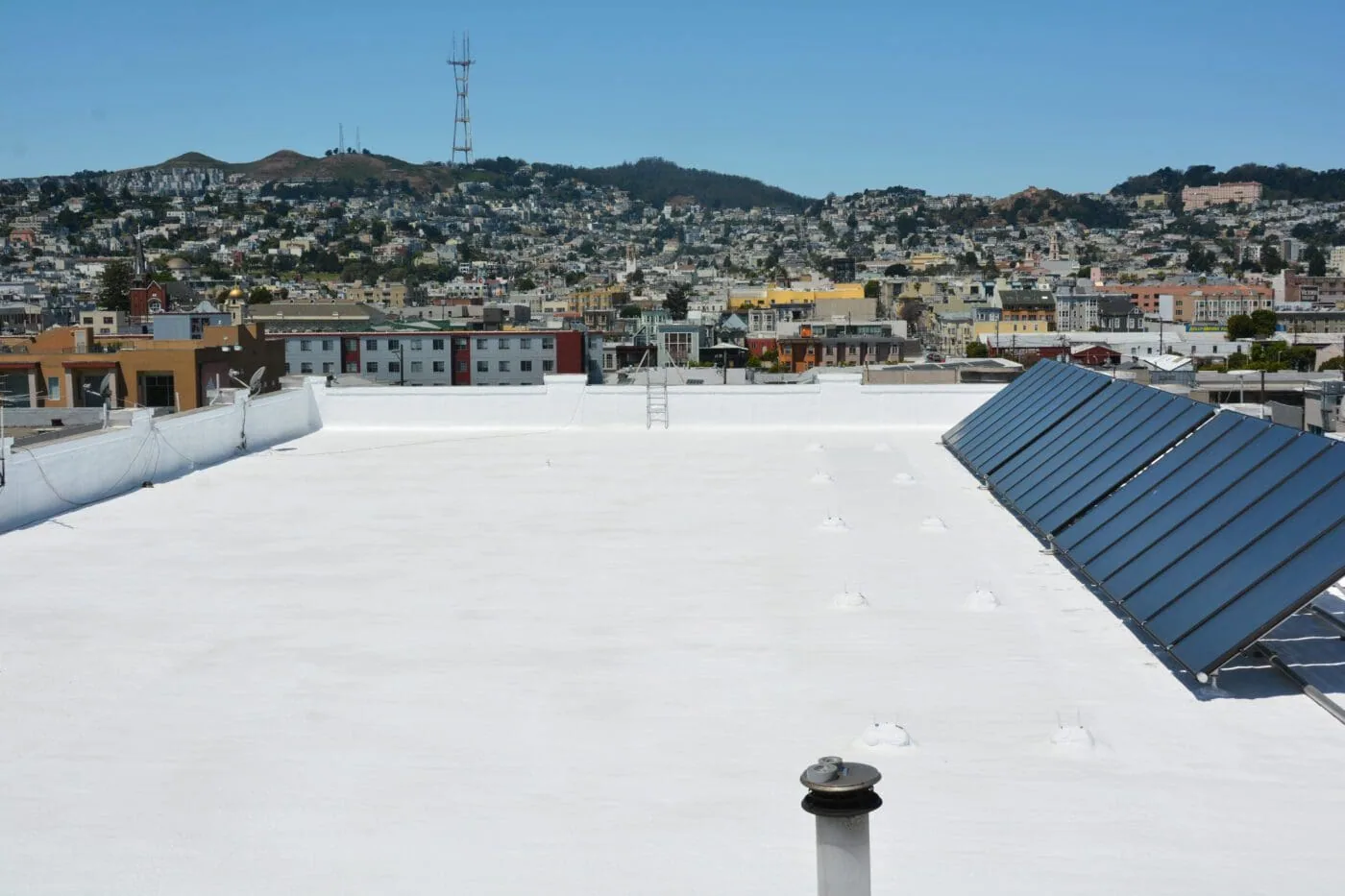
Spray Polyurethane Foam Roofing in San Mateo, CA
CATEGORY
Roof Systems
LOCATION
San Mateo, CA
A spray polyurethane foam roof depends on a continuous, dry substrate and a protective coating that stays intact. Before recommending another coating cycle, we check foam condition, adhesion, soft areas, exposed cells, ponding, and the details where the roof meets walls, curbs, and drains. San Mateo's planning resource library includes adopted or amended plans for Shoreline, El Camino Real, the rail corridor, and Bay Meadows. Those documents help locate broad service areas, but they cannot establish whether a building has SPF. A Bay Meadows property needs a roof-specific inspection. We map the repair limits and distinguish foam that can be retained from areas requiring removal, so the GC can price preparation, coating, and tie-in work against the same field condition.
Foam condition: check the foam before planning another coating
We look for open or crushed cells, erosion, blisters, delamination, wet areas, prior patch edges, and places where the coating has thinned or split. A sounding check can help compare areas, but it does not establish the full condition below the surface. Core samples or test cuts may be needed where the findings would change the repair boundary. Mark the locations and repair them under an agreed method. The report should identify whether a result applies to one test area or a wider roof zone.
If moisture is trapped or the foam has lost cohesion, applying a new coating over it can preserve the problem beneath the finish. A moisture survey can help map areas for follow-up, while a roof inspection records the transitions, drainage, and accessible surface conditions that control the next step.
Preparation: define surface preparation and repair boundaries
Preparation may include removing loose coating, trimming damaged foam, drying the substrate, replacing degraded areas, and rebuilding transitions before the protective layer is applied. The product and prep method must match the specified system and existing surface. We identify the test area, adhesion check, repair material, and coating limits in the scope. If the roof contains old repairs, unknown coatings, or multiple generations of materials, confirm compatibility before treating the full area.
A proposal should state how edges are feathered, where reinforcement is added, and how drains and curbs are protected during application. A restoration scope should not use a single blanket quantity when test areas show different foam conditions. The GC can then compare surface preparation and removal as separate line items rather than assume the new coat solves every defect.
Thickness and drainage: measure the coating and keep outlets clear
Specify the coating system, application rate or target thickness, reinforcement locations, and the inspection method used to verify work. The project documents and product requirements control the acceptance criteria. We record test locations and actual observations rather than infer a roof-wide result from one reading. Protect drains, scuppers, and overflow points from overspray or debris, and confirm that finished foam slopes continue to direct water into the intended outlets.
That criterion is not a survey of an individual roof's slopes or outlet capacity. A drain and scupper review can document low points, strainers, and the water path. If ponding remains after application, record the location and duration, then determine whether slope, outlet, or deck conditions require separate work.
Flashings and exposure: protect foam at penetrations and exposed edges
SPF can be vulnerable where service traffic, dropped tools, equipment work, or loose metal exposes the coating. We inspect curbs, skylights, parapets, pipe supports, and edge terminations for punctures, open joints, and failed sealant. The repair should restore the foam profile and protective layer, not just cover a hole with an incompatible patch. Record access routes and any trade responsible for protecting the completed surface.
San Mateo's shoreline adaptation planning examines coastal conditions and infrastructure at the community level. It does not establish the condition of an individual roof. Local weather and exposure are reasons to maintain drainage and coating records, while site observations determine the actual scope. A edge-metal review can define the metal termination, and a curb scope can coordinate equipment work. For a different low-slope membrane, compare the requirements of a TPO assembly rather than assuming coating is the only option.
Code and sequencing: set the application window and access plan
Spray application requires controlled access, surface preparation, and conditions that meet product instructions. The GC should plan for staging, wind drift protection, odor-sensitive spaces, air intakes, and temporary shutdowns where the work area could affect occupants. Schedule roof zones that can be prepared, foamed, coated, and protected within the available window. State who can release a zone and how the crew will respond if the substrate is damp or weather changes.
The GC should confirm permit conditions, application access, and the approving parties before a spray date is set. Our field record can identify the treated area and observable substrate; the approved specification and project direction establish acceptance criteria and who releases each zone. If insulation or drainage changes are part of the project, coordinate those details before the coating specification is finalized.
Cost and maintenance: compare restoration and replacement on known conditions
Cost and timing depend on preparation, foam removal, repair depth, coating type, reinforcement, edge and penetration count, access, and testing. Separate measured work from allowances for areas that need opening. Compare a restoration bid with replacement only when both identify substrate assumptions, daily production zones, protection, and what happens if damaged foam extends past a test area. A silicone coating system may be considered only after the base foam condition and compatibility are established. A lower coating quantity can simply reflect fewer repair limits or omitted transition work.
San Mateo identifies technology, finance, restaurants, and retail among its business sectors, but that does not define any building's operating hours. Confirm restrictions with the property contact before planning staging or odor control. After closeout, log coating checks, repairs, roof traffic, and equipment changes by zone. The maintenance record should show dates, observed condition, and repair method so the next inspection can compare like areas rather than repeat a general walkthrough.
Closeout: give the owner a roof-zone record
Closeout should list the coating system and areas treated, foam repairs, reinforcement, test locations, drainage work, and exclusions. Include photographs of representative field areas, curbs, drains, terminations, and any surface that was left in place. Identify where access was limited or a test did not represent the full roof. This helps the facilities contact plan maintenance without overstating what was concealed.
Share roof plans, prior coating records, access rules, and the location of recurring interior reports. We can review those documents with the observed condition and define whether targeted repair, broader restoration, or replacement deserves comparison. The written scope should state who protects the finished surface when other trades return, and who inspects a penetration after modification. That handoff keeps the foam and its protective coating from becoming an undocumented boundary between contractors.
Commercial Roofing Questions
Can SPF receive another coating?
It may, if the foam remains sound, dry enough, and compatible with the selected coating after preparation. Open cells, trapped moisture, or weak adhesion can change the scope.
How do you decide what foam must be removed?
We map visible damage and use agreed test openings where concealed condition could change the boundary. The report identifies each test location and what the finding supports.
What should a GC include in the application plan?
List preparation, test areas, repair material, coating system, target application, reinforcement, drainage protection, access restrictions, weather windows, and closeout records.
Can SPF work continue while a building is occupied?
Potentially, with controlled roof access, protected air intakes, staging, and any needed operating restrictions. The building contact and GC approve the work zones and application schedule.
What maintenance helps protect a foam roof?
Record coating condition, penetrations, roof traffic, drain areas, and equipment changes by zone. Repair damage using materials compatible with the installed system.
Confirm foam condition before coating is priced
Share roof plans, prior coating and repair records, access limits, and recurring leak locations. We can map the visible condition and define the preparation and repair boundary.
Related Pages
- Commercial Roofing in Bay Meadows, San Mateo, CA
- Infrared Moisture Survey
- Commercial Roof Inspection
- Commercial Roof Coating Restoration
- Commercial Roof Drain and Scupper Service
- Commercial Roof Edge Metal and Coping
- Commercial Rooftop Equipment Curb and Support Roofing
- TPO Roofing Systems
- Silicone Roof Coatings