
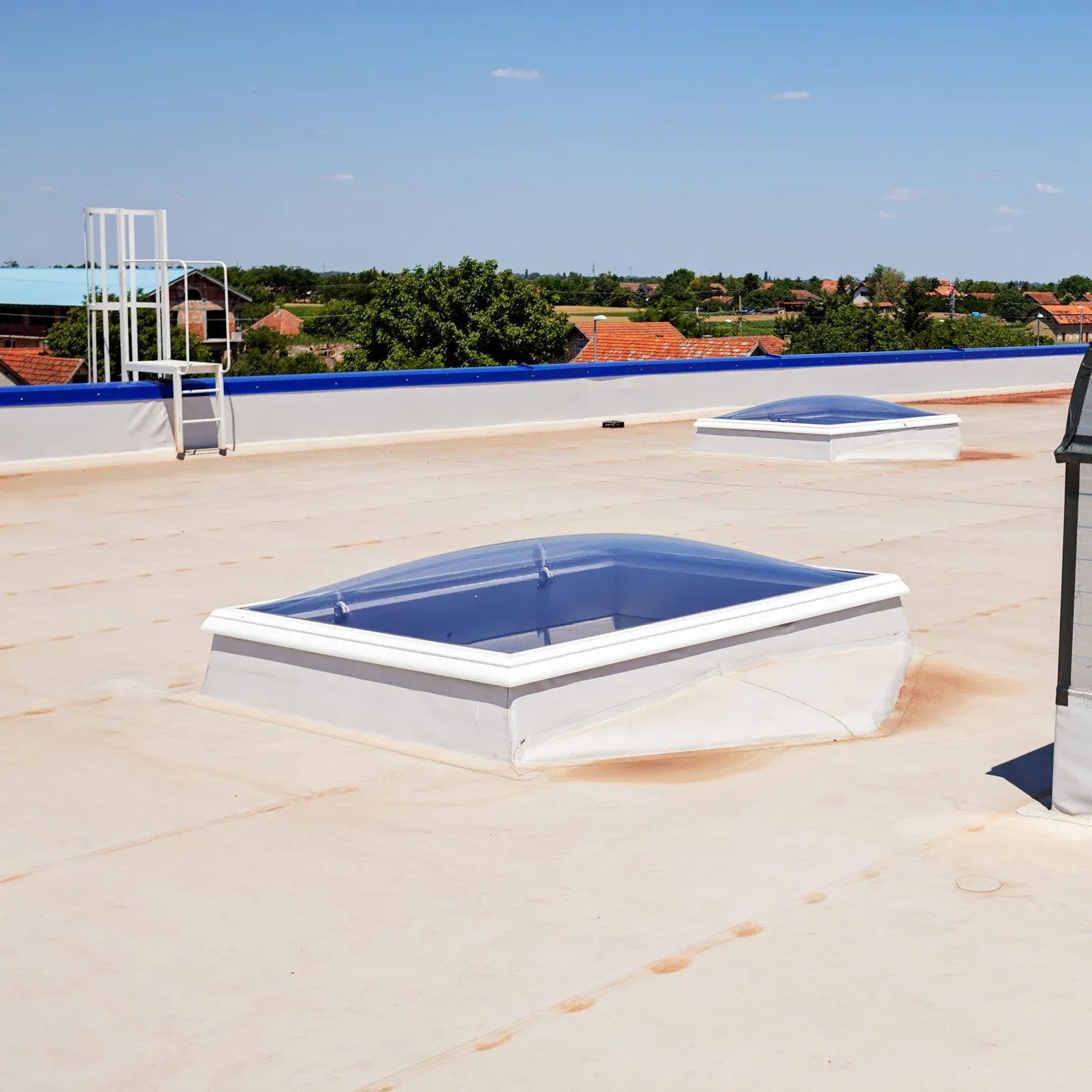
Silicone Roof Coatings for Commercial Buildings in San Mateo, CA
CATEGORY
Roof Systems
LOCATION
San Mateo, CA
A silicone coating can protect a compatible roof surface, but it does not replace a weak substrate or correct a failed drain path. We inspect the existing membrane, previous coatings, open seams, ponding areas, and transitions before deciding whether restoration belongs in the bid. San Mateo identifies technology, finance, restaurants, and retailers among its business sectors. Their operating needs can affect roof access and overspray protection, but a sector label does not describe one building's schedule or membrane. The city's rail-corridor plan covers the Hillsdale Station and Hayward Park Station areas, where roof access should be coordinated with the property and construction schedule. A Downtown Hillsdale corridor building needs a roof-specific evaluation. We define what can stay, what needs repair, and where preparation or removal changes the scope before a coating quantity is priced.
Substrate: confirm the coating can bond to the roof
Silicone, acrylic, urethane, and prior coating layers do not share one preparation method. We identify the existing membrane or surfacing from records and accessible details, then check for loose material, contamination, trapped moisture, and weak adhesion. A test patch can help confirm preparation and bond under the selected product instructions. It should be placed in a representative area and documented with the surface condition and method used. One successful patch does not certify every roof zone.
Where the membrane has open laps, damaged flashings, or wet insulation, repair or selective removal may need to precede a coating. An assessment of the existing surface should state the areas included, test locations, and conditions that would stop application. A moisture survey can identify zones for follow-up but does not replace test openings when the assembly question requires them.
Repairs and preparation: repair details before applying a field coat
Clean and dry substrate, compatible repair materials, and reinforced transitions control the quality of a restoration. The scope should identify how loose coating is removed, how seams are prepared, what material bridges a crack or change in plane, and whether damaged membrane is replaced. Details at curbs, pipe supports, skylights, parapets, and metal edges need a specified method. Coating across an unstable flashing can leave the original movement unresolved beneath a fresh surface.
We map the repairs by roof zone and separate measured work from allowances for concealed damage. A drain review can identify low points and outlet conditions before the field coat is applied. A perimeter detail scope can keep metal replacement distinct from coating. The GC can price each step without treating all square footage as the same preparation condition.
Application and verification: set thickness and test locations in the specification
The selected system's technical data and project documents establish preparation, application rate, target dry-film thickness, reinforcement, and inspection method. We record the product and batch details required by the scope, the work area, and representative checks. Coating spread rate or wet-film readings should be tied to the specified acceptance method. A field record should state where measurements were made and what areas were inaccessible rather than turn a sample into a roof-wide performance statement.
Application passes should be planned to reach the specified cured thickness without leaving pinholes, thin edges, or unreinforced changes in plane. Record each work zone, weather and surface conditions, test location, and any area deferred for later preparation. If a check falls short, correct that area under the product instructions and document the recheck. The project record should make clear whether measurements represent a sample or a defined percentage of the treated roof.
Overspray controls, drain protection, and cleanup belong in the sequence. Confirm air intakes, adjacent surfaces, pedestrian routes, equipment, and the building's operating windows before spraying. The daily plan should say who releases each zone and how the crew protects open edges or stops if surface moisture or weather falls outside the product instructions. That avoids leaving a partially treated roof without a clear handoff.
Drainage in San Mateo: check low areas before coating changes the surface
A coating must leave drains, scuppers, strainers, and overflow points open and serviceable. We inspect their surrounding flashings and follow the path toward the outlet, then compare that observation with roof plans. If ponding remains after rainfall, record its location and duration before assigning a cause to the coating, slope, or deck. If ponding remains after rainfall, note where and when it was observed before assigning the cause to the coating or deck.
San Mateo planning also identifies low-lying areas near San Francisco Bay as exposed to sea-level rise and flooding concerns. That community-level information is not a measurement of a particular roof. It reinforces why drain routes and roof-to-wall transitions belong in the field record. A drain and scupper scope keeps outlet work visible, while a foam-roof assessment can address a different coating base when SPF is present.
Alternative comparison: compare coating with repair and replacement
A restoration proposal should be compared with targeted repairs and replacement using the same roof area and the same assumptions about substrate condition. Include preparation, repair depth, reinforcement, application thickness, testing, protection, access, and disposal. If a test opening finds wet insulation or a failed deck, state how scope changes. The owner should see whether the price covers only the coating surface or also the transitions, curbs, drains, and metal details that can control water entry. Identify who approves a change when a test opening reveals a different substrate than the bid assumed.
Before coating is released, confirm the specification, permit conditions, and designated acceptance method with the project team. The application record should identify test zones and deviations, while the GC keeps any revised detail or approval with the project documents. Where the existing base does not suit restoration, compare a different coating system only on approved substrate, or review a new membrane assembly as its own design and removal scope.
Maintenance and closeout: keep the coating record useful after application
Closeout should identify the product, treated zones, preparation and repair work, reinforcement, measurement locations, drainage adjustments, and exclusions. Photograph representative field conditions, curbs, drains, terminations, and patches with a roof-zone key. Keep product instructions and maintenance requirements with the building record. If a later trade cuts or penetrates the surface, note who restores the coating and which compatible materials are specified. Keep those instructions with the roof plan and contact record.
Routine roof walks can track open seams, punctures, traffic paths, drains, standing debris, and coating wear. A new leak report should trigger a water-path review, not a presumption that the field coating has failed. Share the existing assembly, prior restoration history, tenant constraints, and access rules with us. We can document the visible condition and give the GC a repair or coating scope that identifies both the work and the boundary left behind.
Commercial Roofing Questions
Can silicone go over an existing roof coating?
Only after the existing layer and surface preparation are confirmed compatible with the selected system. A representative test patch can help, but it does not establish every roof zone.
Will a silicone coating fix ponding water?
It can protect a compatible surface, but it does not correct a low slope, blocked drain, or depressed deck. Record the water path and outlet condition before selecting the repair.
How is coating thickness checked?
Use the measurement method and sampling frequency in the approved specification. Record the roof zone and result; a small sample should not be described as a full-roof test.
When does coating become a poor alternative?
Wet insulation, weak adhesion, unstable membrane, extensive failed flashing, or an unsuitable substrate may call for removal or a different assembly.
What should the GC include in a coating bid?
List test patches, preparation, repairs, reinforcement, product system, target thickness, measurements, drains and edges, access, overspray protection, and exclusions.
Test the base before setting the coating quantity
Share roof plans, prior coatings, repair records, access restrictions, and leak locations. We can document substrate conditions and define the preparation and repair limits.