
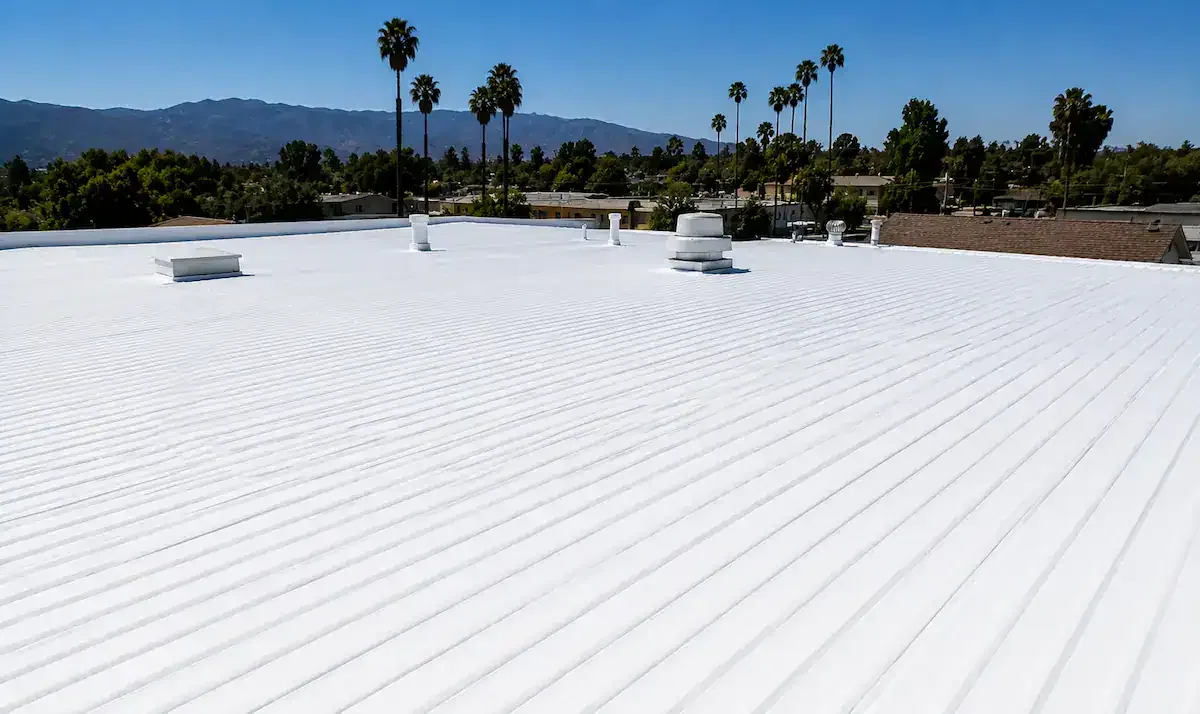
Acrylic Roof Coatings for Commercial Buildings in San Mateo, CA
CATEGORY
Roof Systems
LOCATION
San Mateo, CA
An acrylic roof coating is a fluid-applied restoration layer. Its value depends on the roof beneath it: a sound, compatible surface may accept a renewal coat, while wet insulation, loose surfacing, failed laps, or unstable flashing calls for repair or removal first. We inspect the existing membrane and prior coating layers, map drains and transitions, and define the preparation boundary before estimating gallons or labor. San Mateo's rail-corridor plan covers the Hillsdale Station Area and Hayward Park Station Area. In those districts, coordinate pedestrian routes and roof access with the property contact; the plan does not establish an individual roof type. That helps place a service discussion in the local urban fabric; it says nothing about one property's roof assembly. A Hillsdale station-area building still needs a roof-level review. We document what can remain, what requires repair, and what must be verified with a test patch.
Substrate compatibility: confirm what the coating will bond to
A coating schedule should name the existing membrane or surface, not just the finish color. We identify the roof type from records and accessible edges, then inspect for chalking, contamination, loose granules, open seams, previous coatings, blisters, and trapped moisture indicators. Acrylic formulations do not bond equally to every aged membrane or coating. A representative adhesion test using the proposed primer and product is a practical check before large-area application; record the location, surface preparation, cure conditions, and observed result. A pass at one test patch does not establish bond at every roof zone. Separate areas by substrate or prior repair history when the evidence differs. Photograph the test location before preparation, note the cleaning method and primer, and record the interval before coating and inspection. If adhesion fails, identify whether contamination, surface chalk, moisture, or an incompatible layer caused the result. Retest only after corrective preparation is specified. This creates a decision record the GC can price and repeat on comparable roof zones without treating one sample as universal approval. If the existing surface is unknown, include a small investigation allowance rather than assuming uniform compatibility. A roof-coating restoration scope should state the test procedure and the condition that would stop application.
Moisture and repairs: resolve failures before coating the field
A field coat cannot make wet insulation dry or fasten a loose termination. We trace reported leaks, inspect the membrane at laps and penetrations, check drain bowls and low points, and compare interior observations with conditions above. Infrared or capacitance mapping may identify areas for follow-up, but test openings can be needed to confirm moisture within the assembly. Mark the limits of any wet or weak zone, then assign who removes, replaces, and closes it before the coating crew arrives. Repairs should use materials compatible with both the existing roof and the coating system. At curbs, parapets, and skylights, describe the reinforcement and tie-in instead of relying on a generic bead of sealant. The moisture survey and a commercial roof inspection can document different parts of that investigation; neither alone certifies concealed layers.
Preparation and application: specify preparation, film build, and cure checks
Surface cleaning, removal of loose material, primer, patching, reinforcement, and application rate belong in the written scope. State the manufacturer's required dry-film thickness and how wet-film readings will be taken during installation. Coating over dirt, dew, or an incompatible residue can undermine adhesion even when the pail and color are correct. The installer should follow product instructions for substrate temperature, ambient conditions, recoat time, and cure. A project plan needs a stop point when conditions fall outside those limits. Record batch information, measured quantities, wet-film readings, and completed areas by roof zone so a later inspection can compare the installed work with the specification. Include a sample area when appearance or texture matters. At penetrations and edge metal, define reinforced transitions and termination points. A silicone coating uses a different surface and water-management approach, so compare systems only after compatibility and ponding conditions are known.
Water path and drainage: keep drainage and low areas in the scope
Before coating, clear and inspect drains, scuppers, strainers, sumps, crickets, and the route water follows from each roof zone. A coating can restore a surface without changing the slope that sends water toward an outlet. Photograph ponding with its extent and timing after rainfall, and note whether the condition existed before the proposed work. Do not present a product warranty as a drainage correction. San Mateo's economic development work plan includes support for businesses and stronger commercial districts. For an occupied property, access planning should identify who can authorize a roof closure, route people around lift operations, and receive notice before each application shift. Detail the protection plan for an unexpected shower, including exposed work limits and who can authorize a pause. For metal transitions, coordinate the coating termination with the edge-metal and coping scope; for outlet repairs, define the drain and scupper work separately.
Cost and schedule: compare the full restoration scope
Two coating bids are comparable only when they use the same measured roof area, substrate assumptions, preparation, primer, repair allowance, reinforcement, dry-film thickness, and number of coats. Also align access, staging, rooftop-equipment protection, disposal, test patches, drain cleaning, and the treatment of wet areas. A lower price may exclude repairs or count only the open field while leaving curbs and perimeters outside the work. San Mateo's local weather normal from the nearby airport station is useful background, but it does not promise a number of dry days for an individual job. Build the sequence around forecast checks, cure windows, tenant access, and a defined daily stop point. Ask the estimator to separate measured quantities from allowances and list conditions that change the price. If the existing assembly cannot accept a coating, compare replacement systems such as TPO roofing or EPDM roofing on a common removal and flashing basis.
Closeout and maintenance: leave a record that supports the next roof walk
At closeout, provide a roof-zone plan, product and batch records, test-patch results, preparation notes, wet-film readings, repair locations, and photographs of drains, penetrations, and reinforced details. Identify areas not coated and any substrate condition left for a later decision. The building contact should know which maintenance actions protect the finish and which alterations require an approved tie-in. Schedule periodic checks for splits, abrasion, punctures, open transitions, and blocked outlets, with closer review after rooftop trade work. Avoid calling the coating maintenance-free: its service depends on adhesion, film integrity, compatible repairs, and drainage. A simple log with date, zone, observation, and corrective action makes future condition comparisons more useful than a warranty document alone. The rail-corridor plan covers both Hillsdale and Hayward Park station areas, but a district-level plan does not describe a roof; closeout evidence must remain tied to the inspected property and installed scope.
Commercial Roofing Questions
Can acrylic coating be applied over an existing coating?
Only after the old layer is identified, soundness and adhesion are checked, and the proposed primer or direct-bond method passes a representative test. Unknown or loose layers need investigation first.
Will an acrylic coating stop ponding water?
A coating can renew a compatible surface, but it does not create slope or correct a blocked outlet. Map low areas and decide whether drainage changes belong in a separate design scope.
What should a coating bid include?
Compare roof area, substrate, preparation, primer, repairs, reinforcement, target dry-film thickness, number of coats, drain and edge details, access, testing, and allowances for concealed conditions.
How do you verify coating thickness?
The specification should name the required dry-film thickness and the accepted wet-film measurement method. Keep readings by roof zone with product and batch records.
Can a coated roof remain in service during the work?
It may be phased when access, odor or overspray controls, daily work limits, cure time, and protection below are coordinated. Approve the sequence and reopening criteria before application.
Test the substrate before committing to a coating quantity
Share roof plans, prior coating records, leak locations, and access limits. We can document representative surface conditions and define preparation, repair, and test-patch boundaries.