
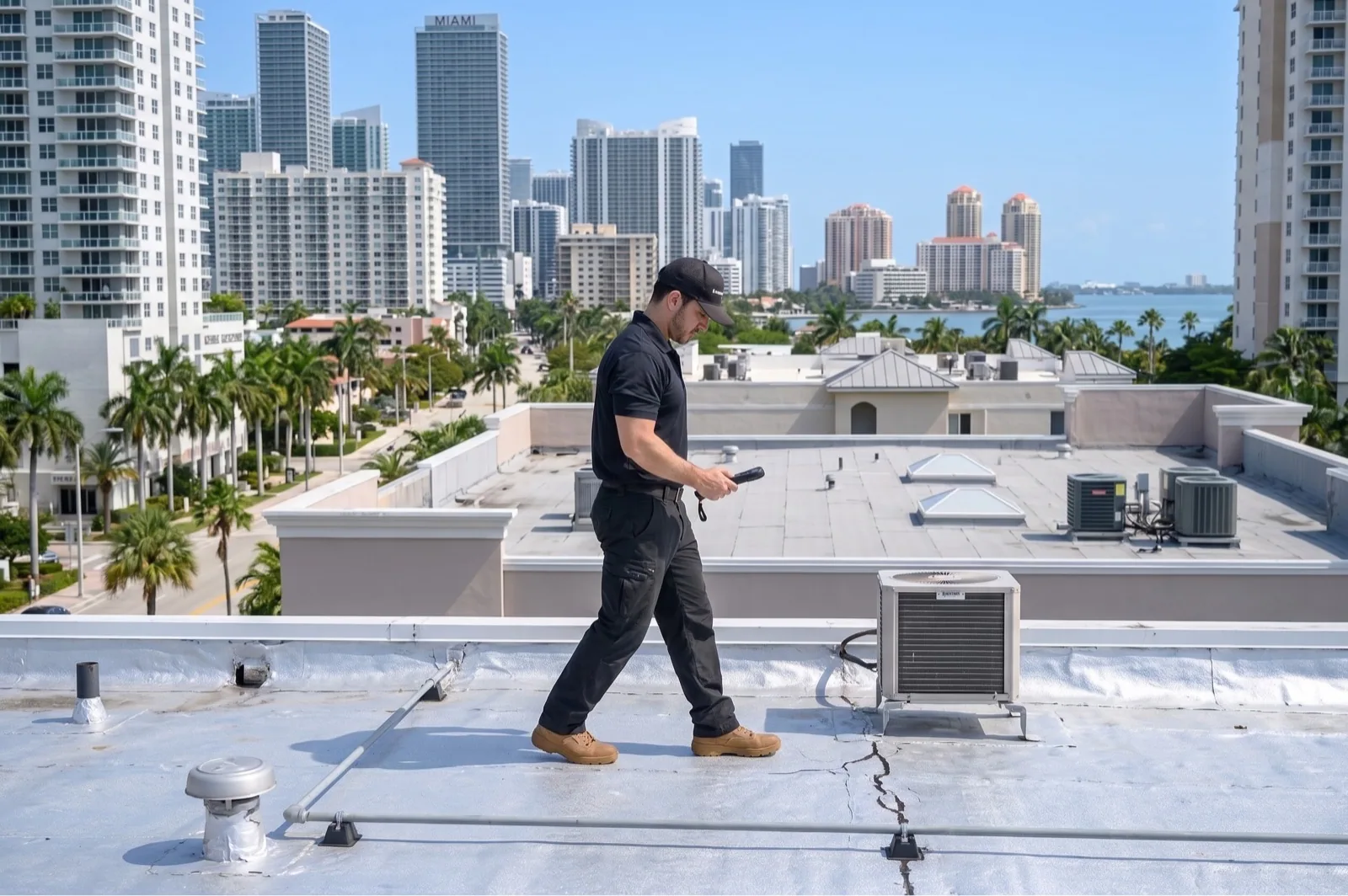
Commercial Roof Condition Reports in San Mateo, CA
CATEGORY
Roofing Capabilities
LOCATION
San Mateo, CA
A report is useful when the next person can find the drain, seam, curb, and work limit without calling the inspector back to translate a photograph. Downtown's retail core and the Mariner's Island plan area illustrate different commercial contexts within San Mateo. Neither tells us which assembly is on the building in front of us, so the report begins with the roof we actually walked. We map the areas inspected, note the visible assembly, and mark what could not be confirmed from the surface. A Mariner's Island property and a Downtown San Mateo building each need a field-based record, not a borrowed condition label.
Field condition: show what the crew actually observed
Start the report with the access date, roof areas reached, weather at the visit, system identification where visible, and the limits of the inspection. Then locate each concern on a plan or roof sketch: open lap, failed termination, damaged flashing, blocked drain, surface split, or patch that needs monitoring. Photographs should show a wide context and a close view, with a note that explains why the detail matters. We distinguish an active leak reported by the owner from a condition we observed, and we do not turn a ceiling stain into a proven entry point. If a roof section is unsafe or inaccessible, the report states the next step. A hands-on inspection can pair the written record with a drone view when the site permits it.
System detail: follow the water path and edge
San Mateo's design table pairs an 85 mph three-second gust with climate zone 3, useful context when recording a visible perimeter detail. A condition report does not infer attachment capacity from that number; it records visible edge metal, perimeter terminations, exposed fasteners, seams, and any detail that deserves engineering or opening. At a roof edge, loose metal can allow wind-driven water beneath a membrane, while a failed curb flashing can send water along the deck before it appears inside. We sketch the likely path only where the observed conditions support it, then mark uncertain transitions for a closer check. The record should separate urgent water control from a permanent repair. For an active issue, a flashing review or edge-metal inspection can define the next field scope.
Scope boundary: make recommendations traceable
Every recommendation should tie to an observation and a decision. We label the work as monitor, repair, investigate, or price a larger renewal, and note the reason. A recommendation to open a wet area needs a location, a safe access plan, and an owner decision about the allowance. On the roof sketch, we mark the proposed test area and the direction water could follow toward a drain or wall. The note records whether the opening will be patched the same day, what protection is needed below, and which trade returns if the deck requires work. These details let a general contractor reserve access and sequence without treating a diagnostic opening as a permanent repair. A note that merely says “repair as needed” does not tell a contractor where to begin or a manager what to approve. The city's shoreline planning examines how land and infrastructure face rising seas and coastal flooding. That municipal planning context may matter to a property owner's broader risk review; the roof report itself stays grounded in the water path, drain condition, and assembly we inspected. A capital planning review can carry the report findings into an annual budget.
Cost driver: keep allowances tied to the detail
Cost ranges move when access, tear-off depth, wet insulation, deck repairs, edge height, staging, and work around occupied space change. A report should identify which of those items were visible and which remain unknown. We can price a small repair separately from a larger roof repair or an eventual replacement, but the assumption behind each amount belongs in the same record. For drain design, San Mateo uses a rainfall input of two inches in one hour; when an assembly changes, we record bowls, overflow routes, and low points that need coordination. That criterion is not a claim that a particular drain is undersized. The site measurements and proposed assembly determine whether work is needed, and the report should make that distinction plain. For each repair, we label whether a crew can finish in one mobilization or must return after testing, material delivery, or a trade release. The report puts that timing beside the affected roof area so ownership can compare schedule as well as price.
Handoff: leave a record the next trade can use
Before the crew leaves, we organize images by roof area, attach sketches, identify materials where confirmed, and list open decisions in order of consequence. The report should give a general contractor enough detail to coordinate temporary protection, rooftop equipment service, and the next dry-in boundary. If the property is in Bay Meadows, where planning allows office and residential uses, the schedule may need separate notice and staging for different occupied areas. That is an operations question for the actual building, not a condition that can be inferred from district zoning. A drain and scupper scope can close a defined item; a warranty file review can preserve the correct product and repair records after work is complete. We include who owns each follow-up so the report does not become a file with no next date.
Commercial Roofing Questions
What should a roof condition report show?
It should identify roof areas reached, visible system details, access limits, photographs, mapped observations, active owner-reported leaks, and recommendations tied to the condition found. We separate a confirmed open seam from a suspected wet area and identify which observations require testing or an opening. The report should also state the next action and who must approve it, so the repair scope is usable after the inspection rather than just descriptive.
Can a roof report locate the entry point for an interior leak?
Sometimes, when the water path and the roof detail line up clearly. Water can travel along a deck, insulation joint, or structural member before appearing inside. We compare the interior report with seams, penetrations, drains, and transitions above, then identify where an opening or moisture survey would narrow the search. The report should distinguish a likely entry point from one that has been confirmed during repair.
How should a report handle roof areas the inspector could not reach?
Mark the area as not inspected, state why access was limited, and recommend the specific access or safety step required for a return visit. We do not label an unseen section as sound because adjacent areas look acceptable. If the area includes equipment, a steep transition, or a restricted hatch, the owner can coordinate the right trade and let the report retain that open condition until it is checked.
Does the report set a replacement date?
A condition report can identify whether repair, monitoring, testing, or replacement pricing deserves attention, but an exact date needs more than a visual grade. Moisture, attachment, deck condition, repair history, drainage, edge height, and owner operations all affect the choice. We state the findings available and the assumptions still open, then give ownership a practical next step for its budget or maintenance meeting.
What makes a report useful to the general contractor?
The general contractor needs a clear work boundary, access notes, staging constraints, materials where confirmed, photographs, and the trade handoff that follows roof work. We identify what must stay watertight, when rooftop equipment needs coordination, and what approval is needed if the deck or insulation changes. A concise scope note can then be priced and scheduled without forcing the general contractor to guess which detail the report meant.
Put the roof condition in writing
Share the reported leak locations, access rules, and the roof areas that need a decision. We can inspect the field, photograph the details, and return a record with the scope and follow-up clearly marked.
Related Pages
- Commercial Roofing in Mariner’s Island, San Mateo, CA
- Commercial Roofing in Downtown San Mateo, CA
- Commercial Roof Inspection
- Flashing Failure Roof Repair
- Commercial Roof Capital Planning
- Commercial Roof Repair
- Commercial Roof Replacement
- Commercial Roof Drain and Scupper Service
- Commercial Roof Warranty Management