
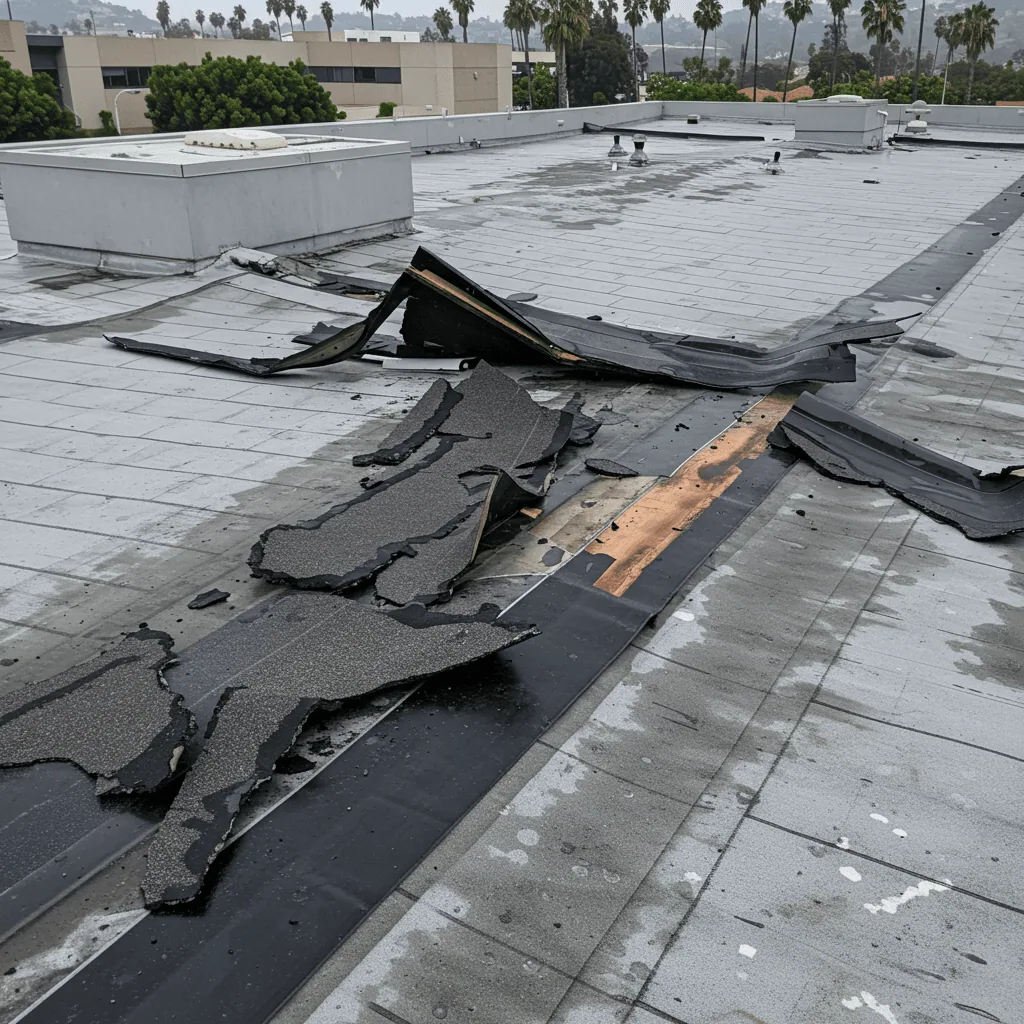
Commercial Roof Seam Repair in San Mateo, CA
CATEGORY
Roof Damage Repair
LOCATION
San Mateo, CA
A split lap needs a clean, compatible tie-in, not another bead over loose material. In San Mateo, CA, we mark the seam, check how far the separation runs, and confirm the membrane before preparing the repair. Downtown offices, Bay Meadows mixed-use areas, and Mariner's Island properties have different access windows, but the repair boundary should be clear at each one. We distinguish a local opening from a longer seam failure, then price the material, access, and dry-in sequence needed to close it.
Seam inspection: measure where the lap has released
Start at the open edge and follow the seam in both directions. Look for dirt, moisture, wrinkles, fishmouths, prior patches, or a weld that has separated from the sheet. Mark the length and note any curb, drain, edge, or change in roof plane. A roof inspection can map several openings when the same assembly continues across multiple sections.
Planning documents put Downtown and Hillsdale among San Mateo's employment areas; Bay Meadows and Mariner's Island also have area plans tied to commercial growth. That context can shape access and tenant phasing, but it does not identify the membrane at a particular property. We confirm the sheet and reinforcement from roof records, exposed edges, or an approved test area before choosing a repair. Surface color alone is not enough to identify a system.
If the seam opens near a curb, check whether movement in the flashing is pulling the lap apart. If it lies beside a drain, look for standing water or a shifted clamping assembly. A ponding-water repair review may be necessary when the low point crosses the failed lap. We record connected conditions separately so a seam repair does not leave another cause unpriced.
Material fit: prepare a weld or adhesive tie-in
TPO and PVC seams are heat welded after the surface is clean and the existing sheet accepts a consistent weld. EPDM repairs require compatible primer, tape, or cover strip. Modified bitumen and built-up roofs have their own lap and surfacing details. Coated assemblies need compatible coating and reinforcement at the transition. We remove material only within the approved boundary and prepare a test area when condition is uncertain.
Title 24's 2025 California standards became effective in San Mateo at the start of 2026. A repair that changes attachment or assembly may need project review. We state whether the scope is an in-kind seam correction or a broader replacement, and identify any deck, insulation, or substrate work that needs separate approval. That detail helps the GC avoid covering a questionable seam before the underlying condition has been checked.
A TPO roof system and an EPDM assembly do not share the same preparation steps. At the lap, remove contamination, check sheet condition, and use the correct tools or adhesive for the actual membrane. A new cover strip can be useful only when it bonds to sound material and reaches beyond the failed edge. The repair sketch should show the overlap and nearby detail so another trade does not cut through it.
Scope control: separate the seam from adjacent roof work
A seam can fail because of poor preparation, movement, trapped moisture, incompatible patching, or a related detail that remains active. We write down the observed condition and the repair area without assigning a cause that the field evidence does not establish. If a test opening reveals wet insulation or a soft deck, stop at the agreed boundary, protect the area, and document the change before expanding the work.
When water is entering occupied space, a rapid roof response can establish temporary protection while the permanent seam scope is prepared. A wind-related roof repair may be added if edge movement or lifted material connects to the seam. Those scopes should remain separate in the work order so the owner can see which condition each line resolves.
City plans place Bay Meadows in mixed-use development, while Mariner's Island occupies the area between Marina Lagoon and Foster City with retail, office, and housing. On roofs over active properties, we confirm notices, access, noise limits, and material routes before opening the lap. A Mariner's Island roof area or Bay Meadows project still needs its own walk and work window.
Field test: check the completed lap before closeout
After the repair, inspect the full prepared edge, not only the point where the seam first opened. Check for skips, fishmouths, contamination, incomplete weld, or a loose termination at the end of the patch. Where an appropriate test is available for the assembly, record the method and result. We photograph the repair with a roof-plan reference and note weather, access, or surface conditions that limited the check.
If the interior symptom was active, arrange a follow-up observation after suitable conditions. A dry ceiling immediately after repair does not prove the membrane is sound beyond the marked seam. Keep the repair record beside earlier roof plans so a later crew can see what was opened and what stayed in place. A roof condition report can carry an unresolved end condition into the next scheduled inspection.
Handoff: give the next trade a clear roof boundary
Closeout should identify the roof zone, measured lap, membrane, preparation, patch material, and adjacent condition left outside the scope. Mark the repair on a plan with a reference such as north roof, grid line, or equipment curb. If a mechanical or solar contractor needs access, show where foot traffic is allowed and which fasteners or penetrations must stay clear. A maintenance inspection can revisit the repaired seam and compare the condition with its closeout photographs.
For a GC, that record is a practical handoff: the seam is repaired, the repair limits are known, and any test or follow-up is assigned. We can provide photographs and a concise field description for the property file. The proposal should also name any roof area that was not inspected, especially when records or safe access were unavailable. This keeps a localized correction from being mistaken for a roof-wide assessment.
Send the roof plan, known membrane type, photographs, and access constraints. We will measure the failed lap, define a compatible tie-in, and coordinate the repair around building operations. If hidden moisture or substrate damage changes the scope, we will mark it for approval before proceeding. That gives the property manager a workable sequence and a record the next trade can use.
Commercial Roofing Questions
Can a split seam be patched without replacing the roof?
A localized repair may be appropriate when the surrounding sheet, substrate, and attachment are sound. We test the material and mark how far the lap has released. If failures repeat across several zones or insulation is wet, the owner can compare repair with broader replacement using a measured condition report rather than assuming one opening represents the whole roof.
Why does seam material need to be identified first?
Each membrane uses different preparation and tie-in materials. TPO and PVC may be welded, EPDM typically uses compatible primer and tape, and bituminous systems require their own lap treatment. We confirm the installed sheet from records or an approved test area before ordering material, which reduces the risk of a patch that will not bond to the roof.
What if the lap is wet when the crew arrives?
A wet or contaminated surface cannot be prepared as a reliable permanent tie-in. We protect the opening if needed, record the condition, and return when the surface can be prepared correctly. If moisture is within the assembly, a test opening may be needed before the owner approves a larger repair. The estimate states how drying or access affects the schedule.
How do you keep seam work from disrupting tenants?
We confirm access, noise limits, interior protection, material movement, and any equipment shutdown before opening the roof. The work can be split by roof zone with a defined dry-in stop. For offices or residences around Bay Meadows and Mariner's Island, the site contact sets notices and work windows for the actual property.
What should be in the seam repair closeout?
Keep the marked roof plan, before-and-after photographs, membrane identification, repair dimensions, preparation notes, test result when applicable, and any excluded adjacent condition. We also record where access limited inspection. That gives maintenance staff a useful baseline and makes it easier to compare the same lap during a later roof walk.
Measure the lap and set a clean tie-in
Share the roof plan, seam photographs, membrane records, and access window. We will inspect the opening, define the repair boundary, and coordinate a San Mateo work sequence with the GC.