
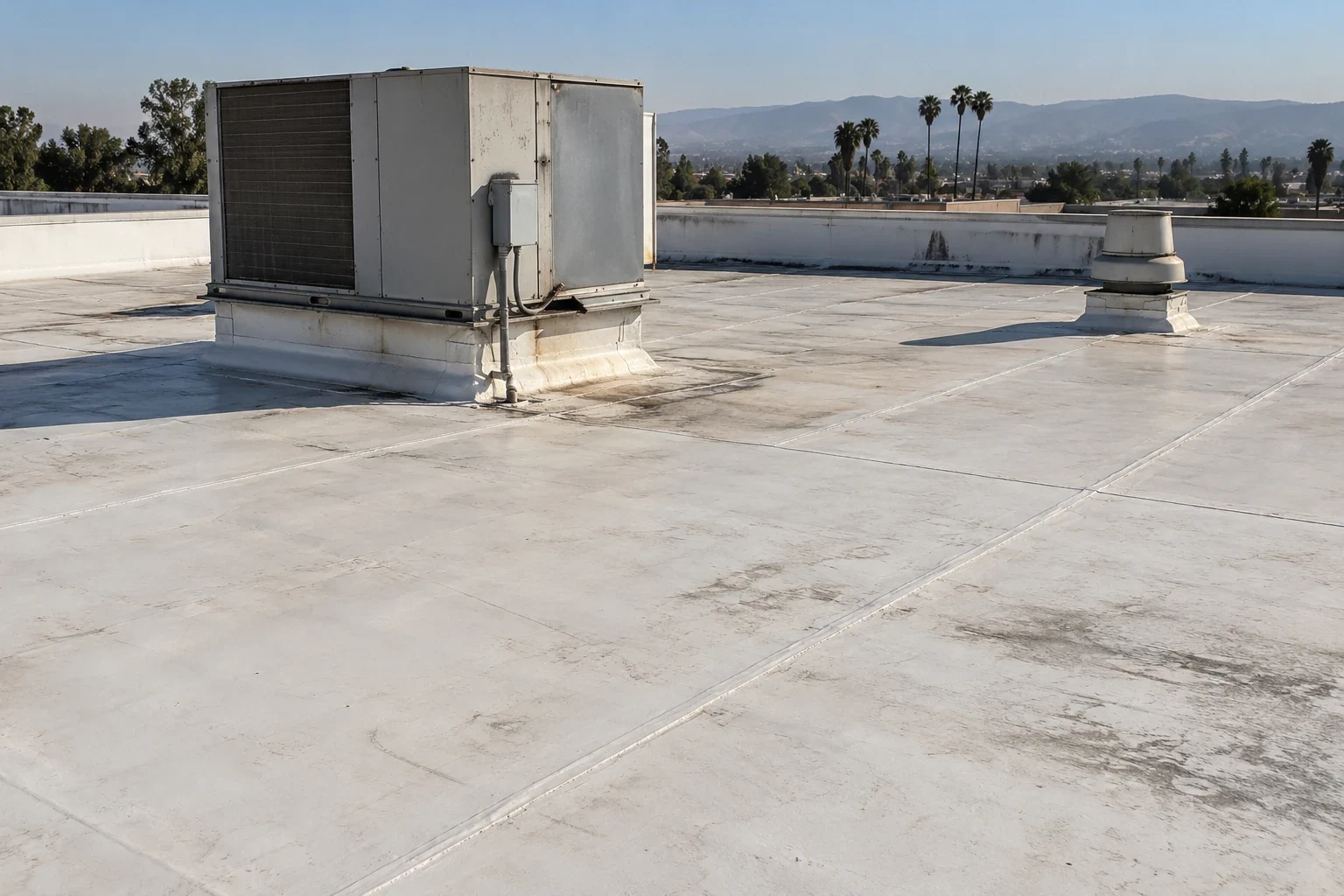
Holcim Elevate Roofing in San Mateo, CA
CATEGORY
Roofing Manufacturers
LOCATION
San Mateo, CA
A factory-applied adhesive changes how a TPO sheet meets the roof, but it does not remove the need to verify the surface beneath it. Holcim Elevate lists UltraPly TPO SA with Secure Bond Technology as a reinforced, heat-weldable membrane with pressure-sensitive adhesive applied at the factory. For a San Mateo, CA project, we first check substrate compatibility, existing layers, and the perimeter where the assembly turns up a wall or curb. That review tells the GC whether the specified system can move forward as drawn or needs a field adjustment. The seam remains heat welded, while the field sheet's bond depends on an approved substrate and clean preparation. We record those conditions before procurement so the material selection, attachment detail, and installation sequence describe the same roof. We can compare this GAF TPO membrane option with Sika Sarnafil systems when the specification permits alternatives.
System detail: separate field bond from seam weld
UltraPly TPO SA uses factory-applied adhesive on the sheet field; adjoining membrane edges still require heat-welded seams. Those are two different interfaces to inspect. We verify that the substrate is acceptable, dry, clean, and prepared for the adhesive, then lay out the sheet without trapped wrinkles or debris. At the lap, the welding tool must fuse both membrane edges continuously. At a drain or penetration, the installer needs a compatible flashing detail rather than an improvised cut. If the existing roof has coatings or residual adhesive, we test a representative area and confirm compatibility before opening the whole field. A membrane that bonds well across the field can still leak at a poorly finished curb or termination. The manufacturer's Versico membrane details provide a separate comparison for a project team reviewing single-ply options. The scope should show both attachment and flashing details.
Substrate: confirm what the adhesive will meet
Adhered work starts with the surface, not the roll. We look for loose granules, residual asphalt, dust, moisture, uneven board joints, and damaged insulation that could prevent a uniform bond. Any suspect area is marked for cleaning, replacement, or a different assembly detail before sheets are unrolled. A recover may be possible where the current roof is stable and compatible, but trapped moisture needs a defined repair boundary. Full removal gives access to concealed layers and deck condition, with more debris and dry-in work to schedule. San Mateo's rail-corridor plan includes the Hillsdale and Hayward Park station areas, while city planning identifies El Camino Real as a major north-south route. For a GC there, access and the work window can matter; the existing substrate still sets the adhesive decision. We do not infer a roof assembly from the district.
Sequencing: protect adhesive surfaces and daily closeout
Roll handling and staging deserve attention because dust or moisture at the bond surface can affect field work. We keep materials protected, sequence lifts with the GC, and release only the roof section the crew can prepare and close that shift. Once the release liner is removed, sheet placement needs to be deliberate. The crew aligns the membrane, works it into position, and follows the specified rolling procedure so the bond is consistent. Seams and flashing are completed before a section is treated as dry-in. HVAC, electrical, and plumbing work around curbs must be coordinated so the roof is not cut after the membrane is closed. A daily plan should show where the crew stops, how a temporary termination is secured, and who can access the finished area. Those details keep schedule pressure from turning into an unrecorded tie-in.
Cost driver: compare full attachment requirements
The self-adhered sheet is one part of an assembly. The bid also needs to identify insulation, cover board, vapor-control layers, edge metal, flashing, drains, and removal assumptions. Substrate repairs, access, sheet layout, and the number of penetrations affect labor. If a project changes from mechanically attached to adhered after a submittal review, attachment and substrate work may change as well. The recover decision needs that same substrate check before labor is set. We reconcile the drawing set, product data, and field conditions before the crew starts. For an existing roof, the GC should know whether the scope assumes a recover, tear-off, or a separate allowance for wet material. A line item for temporary protection and dry-in limits helps compare bids fairly. Include edge metal and coping when the perimeter needs replacement. The owner's decision is clearer when each proposal says what the membrane attaches to and how the perimeter will be finished.
Handoff: record seams, edges, and open conditions
At turnover, the useful record identifies the membrane assembly, the completed roof sections, and the details that were rebuilt. We photograph terminations, drains, curbs, and tie-ins, then mark any area that remains under a separate trade scope. If the crew repaired the deck or replaced insulation, the record should locate that work. For future service, the facility manager needs to know where equipment traffic crosses the membrane and which paths should remain protected. Routine observation can catch a lifted edge, blocked drain, or damage before water travels into the assembly. A maintenance visit is not a substitute for correct installation, but it gives the owner a way to track new field conditions. We can leave the GC with a marked roof plan and closeout notes that support the next budget and trade handoff.
Before turnover, we also note the condition of drains and the locations where future work may meet the new field sheet. A roof plan can show equipment and walls, yet the installed height and metal profile may differ from the drawing after other trades finish their work. We record those measured conditions and identify which trade owns each remaining attachment or seal. If a later phase is planned, the tie-in location and temporary stop need to be protected and photographed. This keeps a small unfinished edge from becoming an unclear responsibility. The owner receives a practical record of what was closed, what is still open, and which routes remain safe for service personnel. That information helps with future maintenance without suggesting that the membrane removes the need for inspection.
Commercial Roofing Questions
What does UltraPly TPO SA change during installation?
The membrane has a factory-applied pressure-sensitive adhesive for the field bond, while laps are still heat welded. We verify the approved substrate and preparation requirements first. The work plan must account for sheet alignment, bond procedure, seam welding, and flashing at curbs and drains.
Can this membrane be installed over an existing roof?
A recover is considered only after we check the existing layers, moisture, and substrate compatibility. Coatings, old adhesives, or loose material may require removal or a separate preparation detail. If a test area is needed, we document the result before the GC prices the larger field.
How do you check field adhesion and heat-welded seams?
We inspect surface preparation and sheet placement as the field is installed, then probe cooled seams for an open edge. Test welds help verify tool settings under current conditions. We also inspect drains and wall terminations because field adhesion cannot correct a weak flashing detail.
What details should the UltraPly submittal settle?
The package should identify membrane, approved substrate, insulation and cover board, seam method, edge condition, and flashing details. We compare those items to the roof plan and deck. A missing termination or curb dimension should be resolved before material is ordered.
What can delay a self-adhered roof project?
Moisture in the existing assembly, substrate repair, access limits, weather, and trade work around rooftop equipment can change the sequence. We mark daily dry-in boundaries and agree on staging with the GC. The schedule also needs time for deck review before the field membrane covers it.
Confirm the UltraPly substrate and sequence
Send the roof plan, specified assembly, and site access constraints. We can check the existing surface, define transitions, and coordinate a San Mateo dry-in plan with your GC.