
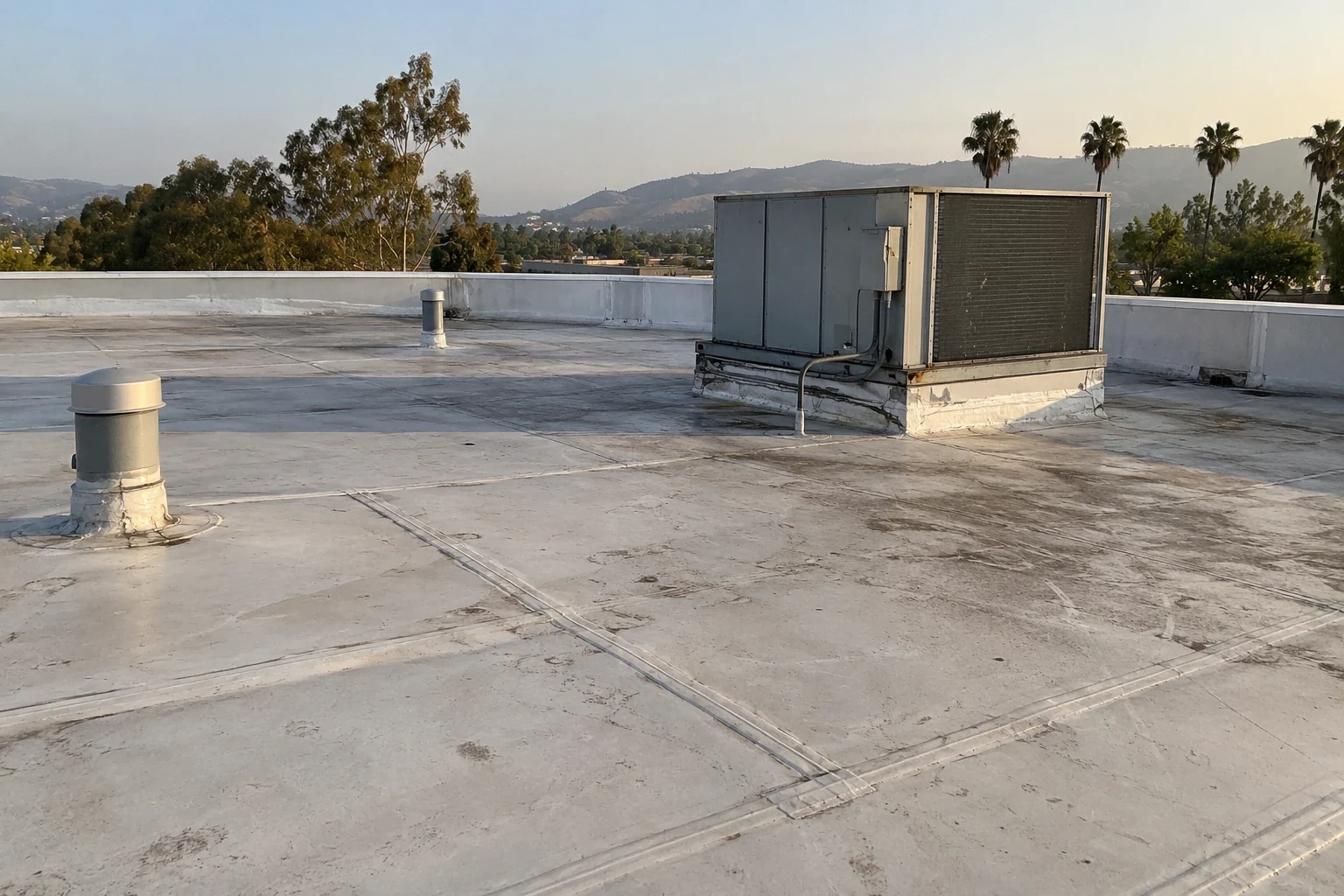
GAF Commercial Roofing in San Mateo, CA
CATEGORY
Roofing Manufacturers
LOCATION
San Mateo, CA
A GAF membrane is only one line in the roof assembly. On a San Mateo, CA project, the deck, insulation, attachment, perimeter, and transitions have to agree before the crew sets a field sequence. GAF lists EverGuard TPO among its commercial systems, with heat-sealable seams and options for different attachment methods. That gives a general contractor a defined product family to review, not a reason to skip the existing-roof check. We start at the substrate and the roof edges, then decide whether the work is a repair, recover, or replacement. The distinction matters when a tie-in reaches an occupied office or retail space and the next trade is waiting below. A clear scope records what stays, what comes off, and where the new membrane ends. For a broader assembly comparison, we can also review Carlisle membrane details and Johns Manville system components against the same deck and perimeter conditions.
Field condition: inspect before selecting the sheet
At a seam, the visible top surface can look sound while the bond has opened at a lap, a patch edge, or a curb corner. We probe representative seams, check weld continuity, and follow water marks back toward drains and penetrations. A small split in a sound assembly may call for a localized repair; widespread adhesion loss or wet insulation changes the scope. The roof cut, where appropriate, gives the GC a view of the layers that drawings alone cannot confirm. We note the deck type, insulation condition, attachment, and any existing moisture before naming a replacement build-up. In Bay Meadows, where the city describes office and residential components in Phase II, occupied-area protection may shape access and staging. The place fact informs coordination, not an assumption about any individual roof.
System detail: keep the weld and transition compatible
EverGuard TPO is a thermoplastic membrane, so its field seams are heat welded. The weld is only as dependable as the surfaces entering the lap. Dirt, moisture, wrinkles, poor alignment, or a temperature and speed mismatch can interrupt fusion. We lay out the sheets, check the overlap, and test welds as work advances rather than leaving every seam for the final walk. Corners, pipe penetrations, drains, and equipment curbs need their own detail. A prefabricated accessory can reduce field cuts, while some irregular conditions still require careful hand work. At a wall termination, the membrane, bar, sealant, and counterflashing must work as one water-shedding detail. The specified assembly also has to match the deck and insulation attachment, not merely the product label. Our review of a TPO roof assembly includes the membrane, insulation, cover board, and fastening pattern as one connected build-up.
Scope boundary: define repair, recover, or replacement
A recover can keep a serviceable assembly in place, but it cannot correct trapped moisture or an unstable surface. We document the existing layers, drains, edge conditions, and roof penetrations before drawing that boundary. If the substrate is dry and compatible, a recover may avoid tear-off and reduce debris handling. If wet insulation, deteriorated deck, or failed transitions are present, the proposed work needs to address them rather than conceal them. A replacement provides access to the full assembly, though removal and dry-in must be sequenced around weather and building operations. The contractor's estimate should identify assumptions about tear-off, disposal, cover board, attachment, and temporary protection. The written scope should distinguish inspection and mapping from a replacement bid, with the inspection work defined before the replacement sequence is priced. On a Mariner's Island property, city planning describes retail, office, and residential uses in the district. That mix can make delivery routes and occupied-space phasing part of the scope review.
Sequencing: protect the building while the field opens
Once membrane removal starts, each open area needs a planned dry-in point. We divide the roof into manageable sections, confirm where materials can be staged, and coordinate hoisting with the GC. A full tear-off exposes more of the assembly and creates a larger daily weather boundary; a recover can reduce disruption but depends on verified conditions below. Mechanical attachment, adhered work, and induction-welded assemblies have different material handling and substrate requirements. We keep the selected installation detail consistent with the project documents and manufacturer guidance, then coordinate roof access with HVAC, electrical, and other trades. If equipment must remain online, work limits and protection need to be settled before a curb or line set is disturbed. The schedule should include inspection points for deck repairs, insulation placement, membrane seams, and final terminations. Where the insulation transition needs a closer look, the cover-board scope should state board type, attachment, and treatment at edges before the membrane crew starts.
Cost driver: compare the complete assembly
Membrane price alone does not compare two roofing proposals. Thickness, reinforcement, insulation, cover board, fasteners, adhesive, edge metal, flashing accessories, and tear-off all affect the installed assembly. Roof geometry matters too: narrow perimeters, multiple elevations, rooftop units, drains, and skylights add detail work and staging time. Before award, we reconcile the GAF product and attachment method shown in the submittal with the deck, wind design, and project specification. A change in membrane color or sheet width can affect availability and layout, so the GC should review those choices before procurement. The scope should also say how existing wet insulation or damaged deck will be handled if discovered. We can walk the roof with plans and access constraints, mark exclusions, and give the team a sequence tied to the actual field condition rather than a broad allowance.
A transition drawing also needs a field check. Parapet height, coping width, drain bowl condition, and the available termination surface can change after demolition exposes the assembly. We compare those dimensions with the detail before ordering metal or cutting membrane. If a curb is being raised or replaced, the sequence must leave a secure temporary closure at the end of each shift. If it remains, the flashing height and equipment service clearance need to be coordinated together. Those decisions affect labor, dry-in, and the point where another trade can return. Writing them into the scope helps the GC compare bids on the same work instead of treating each contractor's assumptions as equivalent.
Commercial Roofing Questions
Can EverGuard TPO go over the existing San Mateo roof?
First we check the existing membrane, insulation, and deck. A recover is considered only when the assembly is stable, dry enough for the specified work, and compatible with the proposed attachment. If moisture or weak material appears, we map the affected area and price the correction instead of covering it.
What should the submittal show about the GAF assembly?
The package should identify the exact membrane, insulation and cover-board layers, attachment method, edge details, and flashing components. We compare those items with the drawings and deck conditions, then flag any mismatch before material is released. That keeps the field crew from improvising at a termination or curb.
How do you check a TPO seam during installation?
A probe checks the edge of the cooled weld for a gap or skipped area. We also make test welds as needed when conditions or equipment settings change. The inspection record notes the section and correction, so the GC can see which seam was reworked before the next layer or trade proceeds.
Does a white membrane solve roof heat by itself?
A reflective surface can affect solar absorption, but it does not replace insulation design, drainage, or equipment planning. We review the complete assembly and the project criteria. Roof drains, curbs, and exposed edges still need sound details, and existing moisture must be addressed before a new membrane hides it.
What changes the schedule most on a GAF reroof?
Deck repairs, wet insulation, edge-metal replacement, equipment coordination, and weather exposure often control the sequence. We set daily dry-in limits and material staging before removal begins. A current roof walk with the plans lets us separate confirmed work from conditions that need an allowance or written change.
Put the GAF scope on the roof
Share the drawings, access limits, and known roof conditions. We can inspect the assembly, mark repair and replacement boundaries, and coordinate a workable San Mateo sequence with the GC.