
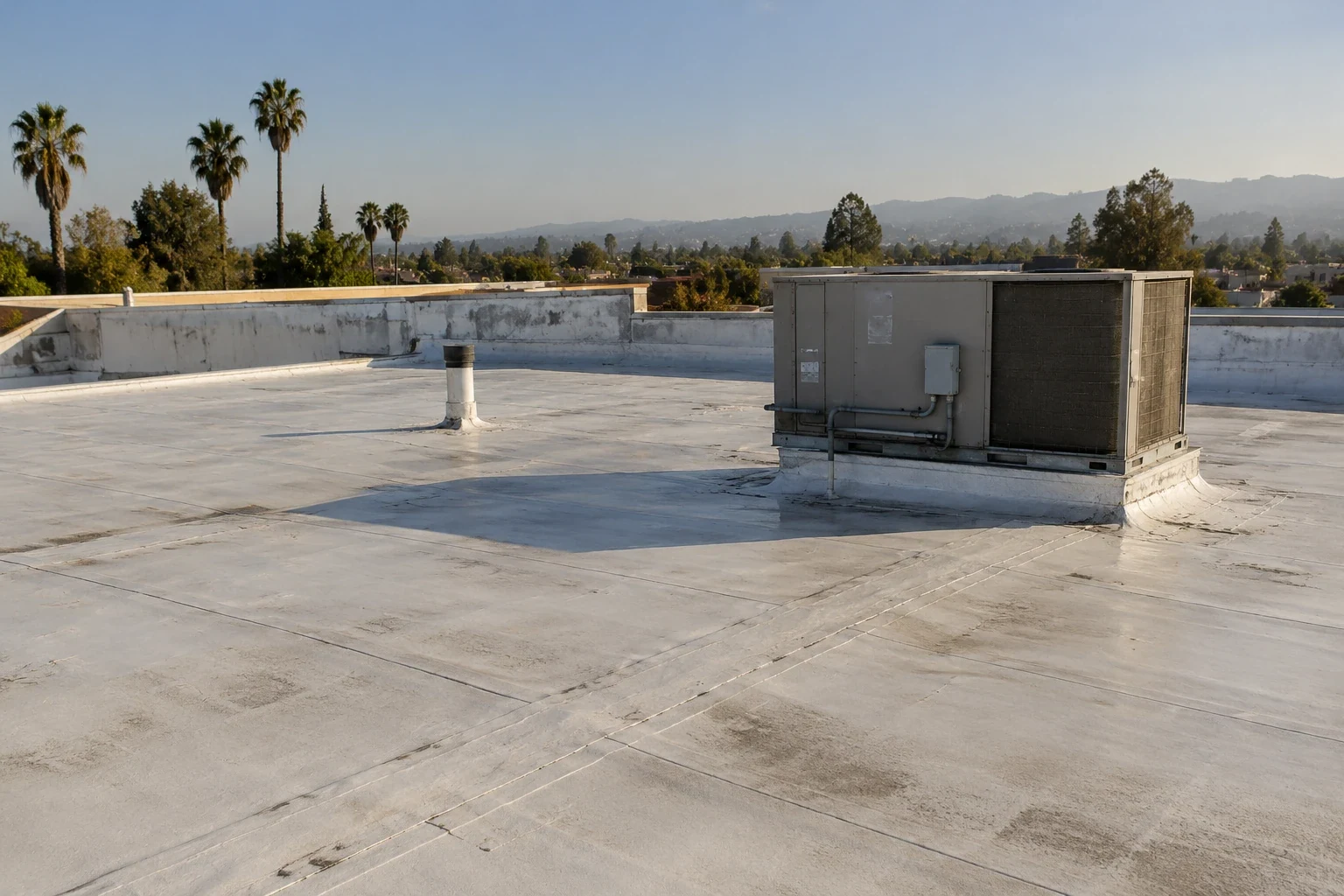
Sika Sarnafil Roofing in San Mateo, CA
CATEGORY
Roofing Manufacturers
LOCATION
San Mateo, CA
Attachment is not a finish choice. It determines how a roof transfers load into the deck and how the crew lays out the membrane. Sika Sarnafil lists G-series PVC membranes for adhered assemblies and S-series membranes with polyester reinforcement for mechanically attached systems. On a San Mateo, CA project, we verify the deck, insulation, perimeter, and tie-in before recommending either path. A system selection that fits one roof section may not suit a different substrate or edge condition. We compare the Holcim Elevate membrane options and GAF assemblies when the specification permits a product review. We mark what the drawings call for, inspect what the roof has, and reconcile the two before ordering membrane. Bay Meadows and the State Route 92 corridor are commercial and employment areas in the city's planning materials, but neither designation identifies the roof system on any specific property. The field review supplies that answer.
Membrane choice: match reinforcement to attachment
Sarnafil G and S products use different reinforcement and installation roles. Sika describes the G range as fiberglass reinforced and designed for adhered systems, while the S range is polyester reinforced for mechanically attached applications. Those labels matter when the GC reviews the deck, fastener layout, and insulation package. An adhered assembly requires a compatible, prepared substrate and the specified bonding materials. A mechanically attached system transfers force through fasteners and plates into the deck, so spacing and edge zones need to match the approved assembly. Both paths still depend on carefully welded seams, secure perimeters, and sound flashing. We review the complete detail set, not only the membrane name, and confirm that roof geometry and structural conditions support the proposed attachment before work begins.
Field condition: test the transition before selecting a repair
On an aging PVC roof, an opening at a seam may come from surface contamination, poor weld fusion, movement, or a patch that no longer bonds to the field. We inspect beyond the visible split and check the substrate and insulation below when the conditions warrant it. A heat-welded repair needs a clean, compatible surface; where the membrane is brittle, coated, or contaminated, a different detail may be needed. We also look at drains, pitch pockets, rooftop equipment, and parapet terminations because water can enter away from the interior stain. If a small repair is justified, the work record shows the cut line and repaired boundary. Repeated seam separation or widespread moisture may move the recommendation toward a replacement scope, but that choice follows what the roof reveals. The PVC system detail should match the field membrane and the specified flashing, while an inspection record locates the condition.
Scope boundary: distinguish membrane work from deck work
A membrane specification does not repair a corroded deck, restore wet insulation, or correct a drain that sits above the finished plane. Before pricing, we document existing layers, moisture findings, cover board, deck type, curbs, and edge metal. A recover can be considered where the roof remains stable and compatible. Tear-off is more disruptive, yet it can expose conditions that a recover would conceal. The estimate should itemize removal, deck repair, insulation replacement, membrane, and flashing. In Bay Meadows, the city's plan includes office and residential components, which may make loading windows and occupied-area controls important. At a project along the SR 92 corridor, staging and delivery may present different constraints. Those are coordination questions, not evidence about the roof itself; we make the scope from the field survey. A recover proposal should state the accepted existing layers and the repair boundary, while a replacement scope should include removal, dry-in, and new tie-ins.
Sequence: close the daily work boundary
Once demolition exposes the assembly, the crew needs a defined section size and a secure stopping detail. We coordinate staging and hoisting with the GC, then align the roof areas with the forecast and trade schedule. Adhered sheets need surface preparation and time for the specified bonding procedure. Mechanically attached sheets require the designed fastener pattern and secure perimeter work. In either case, seams, drains, penetrations, and wall flashings must be completed before the area is counted as dry-in. We schedule HVAC and electrical work so equipment is not moved across newly finished membrane without a protected route. Temporary protection is documented at each daily stop. A written sequence with inspection points for deck, insulation, welds, and terminations lets the GC see when the next trade can safely resume.
Cost driver: compare the complete Sarnafil assembly
Material thickness is one line in a roof price. Attachment method, deck, insulation, cover board, fastening, adhesive, perimeter metal, flashing accessories, and demolition also affect the installed cost. Roof geometry changes the labor: a field with frequent penetrations and parapet turns needs more detail work than an open field. If the project specifies an adhered G membrane, the substrate preparation and adhesive application need to be included. If it calls for an S membrane, the fastener pattern and deck attachment need review. The owner should compare bids with matching attachment, edge details, and removal assumptions. We identify conditions that may require an allowance and separate them from known scope. That gives the GC a more useful cost discussion before award and reduces late changes caused by a mismatch between the specification and roof conditions.
Submittal timing can also affect the work window. The GC should confirm that the selected membrane, insulation, cover board, fasteners, and flashing accessories are available as a compatible package before the roof is opened. We check the approved detail against the delivered material, then keep a sample and product labels with the project record. If a field mockup is required, the team can review seam appearance, transition finish, and the proposed installation sequence before full production. That review is particularly useful where the roof meets an existing wall or another membrane. A written response to a product substitution should identify which detail changes and who approves it. The goal is a clear assembly and cost boundary, not a last-minute choice made at the edge of an open roof.
Commercial Roofing Questions
When would a G-series Sarnafil assembly be considered?
Sika describes the G membrane range as fiberglass reinforced and designed for adhered systems. We still verify the approved substrate, bonding materials, and project detail. If the existing surface or insulation is unsuitable, the assembly or preparation scope must change before installation.
What changes with an S-series mechanically attached membrane?
The fastener and plate layout becomes a core part of the assembly. We confirm deck type, perimeter conditions, and the approved fastening pattern before laying out sheets. A mechanically attached field still needs welded laps, properly finished penetrations, and a secure edge transition.
Can a Sarnafil PVC repair be welded to an older roof?
We inspect the existing membrane and test compatibility at a representative location. Age, surface contamination, prior coatings, and patch material can affect the weld. If the surface does not accept a sound seam, we define a different repair detail instead of relying on a cosmetic patch.
Does membrane selection decide whether a recover works?
It is one requirement among several. Existing layers, moisture, deck condition, assembly height, fire requirements, and attachment compatibility also matter. We document those items so the GC can compare a recover with tear-off on the same scope boundary.
What belongs in the Sarnafil closeout?
Keep the final assembly, membrane and attachment records, marked roof plan, seam and termination photographs, and any deck or insulation repairs together. The facility team also needs protected service routes and locations where later trades should avoid cutting the membrane.
Match Sarnafil details to field conditions
Send the roof plan, specified system, and access limits. We can inspect attachment conditions, mark transition work, and coordinate a practical San Mateo sequence with the GC.