
Versico Commercial Roofing in San Mateo, CA
CATEGORY
Roofing Manufacturers
LOCATION
San Mateo, CA
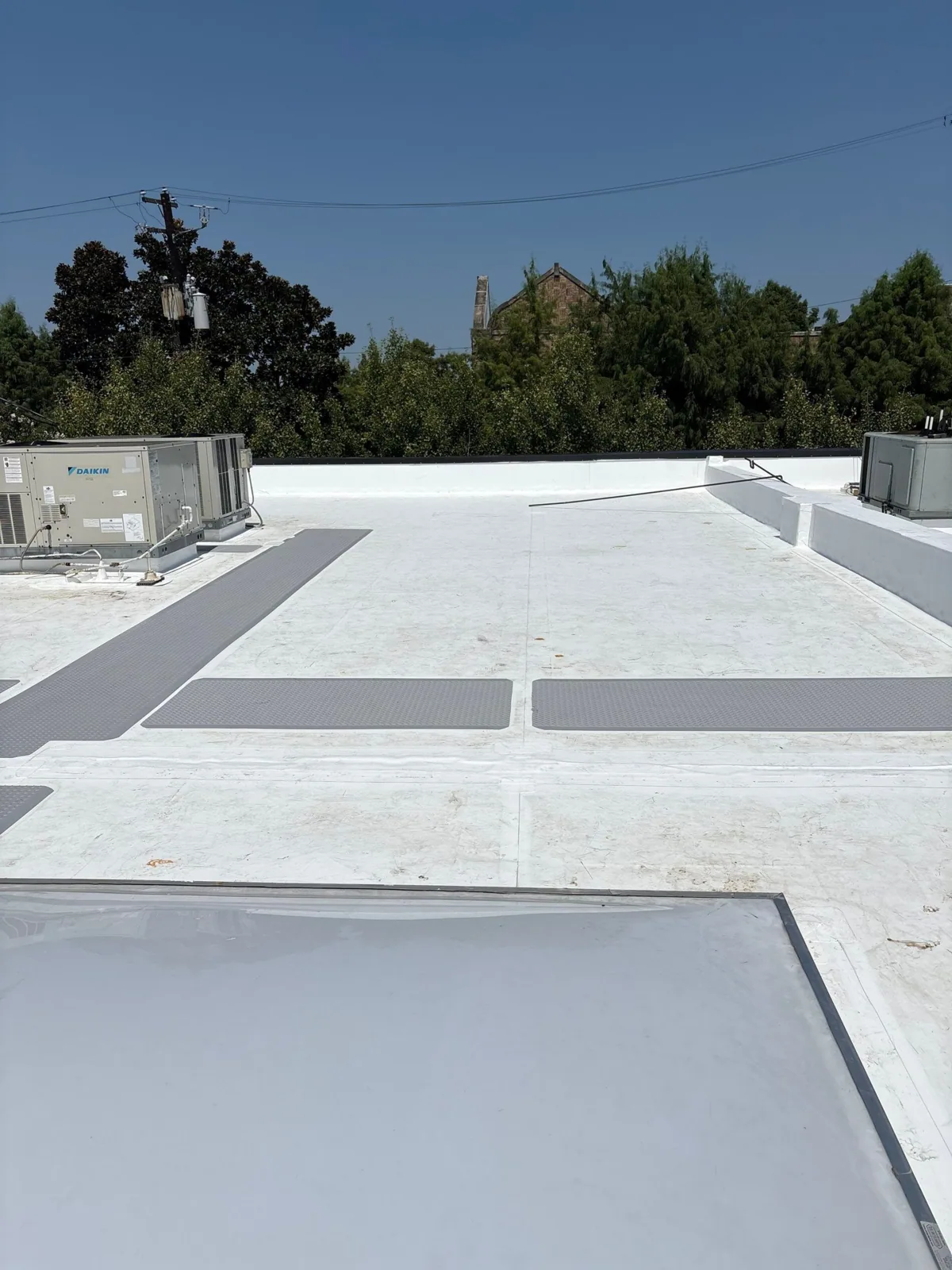
A TPO seam is a field connection, not a line item to leave for the end of the job. Versico's VersiWeld reinforced TPO uses the OctaGuard XT weathering package. We can compare it with GAF EverGuard and Carlisle SynTec if the specification allows alternate TPO products. The actual roof still determines how sheets attach, where laps land, and how the perimeter closes. In San Mateo, CA, we inspect deck type, insulation, existing layers, drains, and curbs before writing a repair or reroof scope. That helps the GC keep the selected membrane aligned with the specified assembly. We check weld access and detail transitions before material is staged, because a narrow parapet or crowded roof area can change the sheet layout. The owner gets a defined work boundary and a sequence the field crew can follow.
Field condition: find the path beyond the seam
A roof leak can travel below a membrane before showing inside. We inspect the visible opening, trace the water path, and check nearby seams, drains, curbs, and wall transitions. A commercial roof repair should identify whether the opening is isolated or tied to a broader seam or substrate problem. A surface patch may be enough where the surrounding sheet remains sound and the substrate is dry. If the membrane is pulling back at several laps or the cover board moves underfoot, the work boundary needs to widen. We document the condition by roof area and identify what must be opened for confirmation. San Mateo planning includes the Hillsdale Station Area and Hayward Park Caltrain station areas in its rail-corridor plan. A project near either area may need access and staging coordinated around occupied uses, but that plan does not establish the roof assembly. We rely on inspection findings for that decision.
System detail: preserve the weld line
VersiWeld is a reinforced TPO membrane, and its seams are heat welded. Before the crew makes a production lap, we check sheet alignment, overlap, equipment settings, and the condition of the surfaces being joined. Test welds help set the hot-air tool for the day's material and conditions. A probe on a cooled seam can locate an open edge while the crew is still nearby. At inside corners, outside corners, pipes, and drains, the field sheet turns into a flashing detail that must remain continuous. A prefabricated accessory can simplify some transitions, while irregular geometry may call for measured field work. We keep fasteners, plates, and edge-metal attachment consistent with the approved assembly. The Johns Manville TPO membrane offers another system comparison. The TPO roof-system detail still needs to show how field membrane, flashing, and metal meet, not just the membrane color and thickness.
Scope boundary: retain only compatible layers
Before a recover is priced, we document existing roof layers, moisture, surface condition, and fastening. A recover may reduce demolition, but only if the old assembly is stable and compatible with the proposed attachment. Wet insulation, loose membrane, or a damaged deck needs removal or repair rather than concealment. Full replacement has more tear-off and dry-in work, while opening the roof can reveal deck conditions that affect the bid. The estimate should state how much removal is included, what is assumed about cover board, and how concealed damage is handled. Downtown San Mateo's planning framework distinguishes retail-core and historic-district design guidance. That context can help coordinate work boundaries and access with the GC; it does not say whether a specific commercial roof can accept a recover. We set the scope from field evidence and assembly requirements, then compare it with a recover proposal where the old layers may remain.
Cost driver: price the edge and fastening
Fastener density, deck type, perimeter zones, and edge metal can change the installed cost of a VersiWeld project. The scope also needs membrane thickness, insulation and cover board, walkway protection, flashing, drains, and any tear-off. Roof geometry adds labor at curbs, parapets, expansion joints, and locations where a new sheet ties into an existing system. We compare the specified detail with actual dimensions before ordering metal or accessories. If the proposed fastener pattern differs from the bid documents, the GC needs a written clarification before work starts. Bid comparisons are more useful when they carry the same attachment, wind-design assumptions, and removal scope. We can mark areas that need a test cut or deck review, then separate that allowance from the confirmed work. This keeps a unit-price adjustment from being hidden inside a broad membrane number.
Material logistics should be settled before the roofing crew reaches the field. We verify roll quantities, insulation thickness, fastening hardware, edge metal, and flashing accessories against the approved package. Staging space can limit how much material arrives at once, while a phased roof may need separate lifts to keep paths open for occupants or equipment service. The GC should identify who can approve a substitution if the specified component is unavailable and how that decision affects the edge detail or attachment pattern. We keep the release point in writing. If the deck condition changes after tear-off, we stop at a protected boundary, record the exposed area, and obtain direction before covering it. That keeps the installed VersiWeld assembly consistent with the reviewed scope and avoids concealing an unpriced field change.
Sequencing: close each roof zone before release
We plan daily work so removal, insulation, membrane, and flashing reach a secure stopping point before the crew leaves. The GC coordinates hoisting, staging, and access, while roofing operations set which area is open and where temporary protection begins. HVAC or electrical contractors should finish work around curbs before the membrane is installed, or return under a defined protection plan. A phased roof needs an intentional tie-in, with a temporary end detail that can be reopened without damaging completed work. We inspect deck repairs and insulation before they are covered, then check field seams, penetrations, and terminations before releasing the area. A marked plan shows which zones are dry-in, which await another trade, and where material can be staged. That sequence gives building staff a clear route and lets the next subcontractor work without crossing an unprotected membrane.
Commercial Roofing Questions
What does OctaGuard XT mean for VersiWeld?
Versico describes OctaGuard XT as the weathering package used with VersiWeld membranes. The roof's performance still depends on the full assembly, correct attachment, sound welds, and completed flashing. We review those items against the approved submittal and field condition.
Can a VersiWeld repair be made to an existing TPO roof?
We first check whether the existing membrane is compatible and clean enough for a welded patch. The surrounding sheet, seam, and substrate also need to be sound. If moisture or widespread separation is present, we map the larger scope instead of treating each visible opening as isolated.
How do you verify a welded lap?
The installer makes a test weld when settings or conditions change, then checks the completed seam after it cools. A probe can locate an unbonded edge. We track corrections by roof zone and include the penetrations and terminations that tie into the field sheet.
What does a GC need before selecting a mechanically attached layout?
Confirm deck type, insulation attachment, perimeter details, and the approved fastening pattern. The fastener must secure the designed assembly, not simply catch the deck where convenient. We review those conditions and note any damaged substrate before the membrane layout is released.
Which items should be included in a Versico bid?
Compare membrane and thickness, attachment, insulation, cover board, perimeter metal, flashing, drains, tear-off, and temporary dry-in. We also identify whether deck repairs are included or carried as a separate allowance. That gives the owner a scope that can be compared line by line.
Review VersiWeld against the roof plan
Send the assembly details, deck information, and access limits. We can inspect the existing conditions, mark the edge and seam work, and coordinate a San Mateo sequence with the GC.