
Local weather advisory
Coastal Flood Advisory: Commercial Roof Help in San Mateo
The National Weather Service has issued a coastal flood advisory covering San Mateo. Heavy rain and drainage loading can expose roof leaks, blocked drains, and ponding water. This is a weather exposure advisory; it does not establish damage to a specific roof.
Do not access a roof during hazardous weather. Protect people first, avoid water near electrical equipment, and request roofing help when conditions permit.
National Weather Service · Updated Oct 28, 2026, 7:20 AM UTC
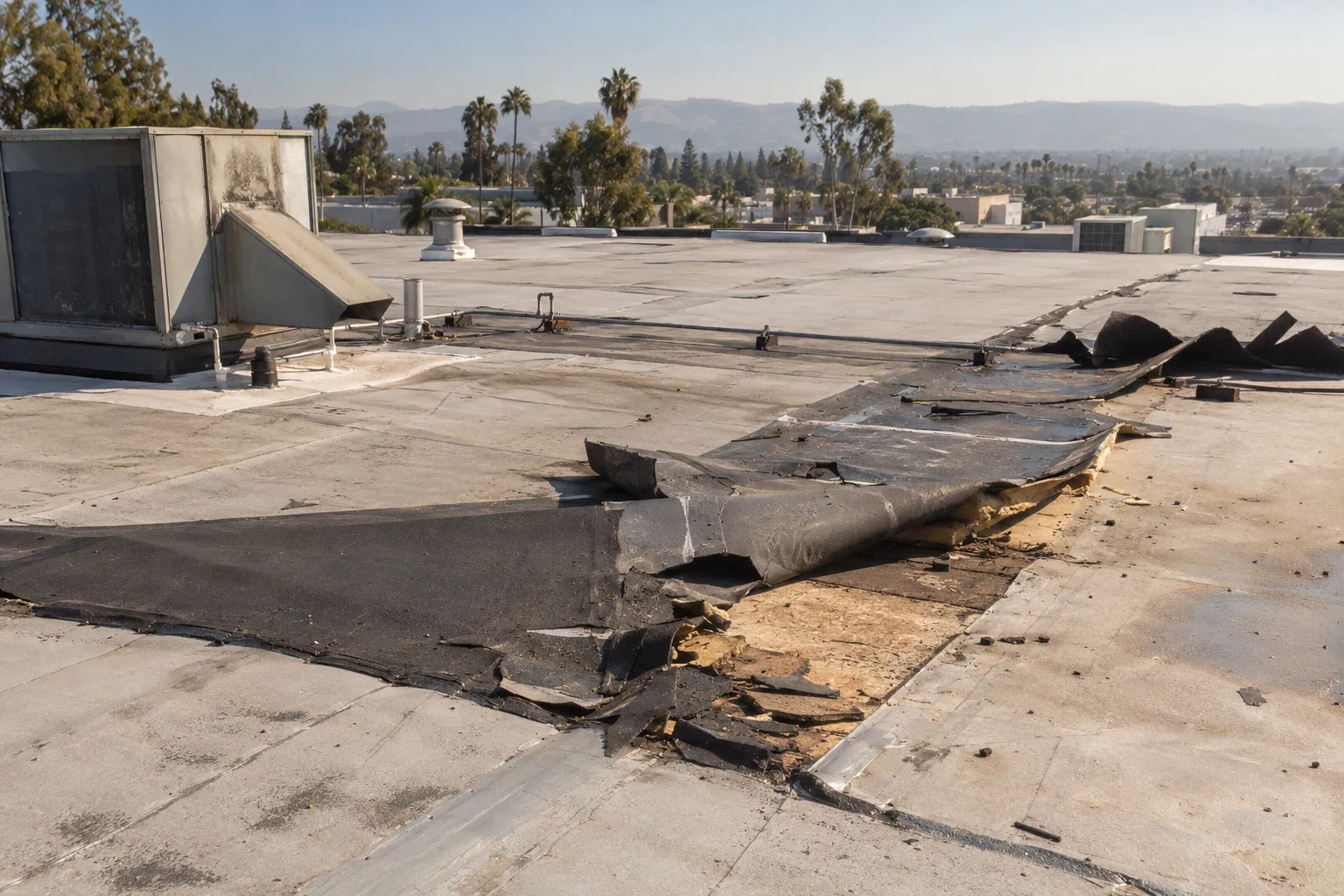
Wind Damage Roof Repair in San Mateo, CA
CATEGORY
Roof Damage Repair
LOCATION
San Mateo, CA
A lifted edge or loose termination changes the repair boundary before a crew removes material. For a commercial roof in San Mateo, CA, we first separate visible movement from the assembly that remains secure. Downtown offices, Bay Meadows mixed-use blocks, and Mariner's Island properties can have different access and tenant schedules, yet the roof decision is the same: identify the affected area, protect the interior, and define a tie-in that does not conceal loose material. A time-sensitive roof response can start with safe dry-in while the permanent scope is measured.
Field condition: map movement before the first cut
Wind can flex a perimeter, disturb coping, lift a sheet at a termination, or open a seam where the membrane changes direction. A loose surface does not prove that every sheet in the field has failed. We photograph the roof plane, edge, corners, curbs, and nearby patches, then mark each condition on a plan or roof sketch. The city lists a basic wind speed of 85 mph as a three-second gust reference, with wind exposure addressed in the building code. Those criteria inform design; they do not tell us what moved on a particular roof.
At the field edge, look for wrinkles that stop at a fastener line, a pulled plate, a separated weld, or a termination bar that has shifted. Each observation points to a different repair. A split seam correction may need a clean weldable lap; an edge repair may involve metal, cleat, fasteners, and substrate. We record which items are connected and which remain separate so the GC can price a defined area rather than a vague instruction to secure the roof.
Scope boundary: set the repair limit at sound material
Before cutting, confirm the membrane type, attachment, cover board, and condition beneath the loose portion. If the sheet is dry and attachment remains sound beyond the damaged zone, a controlled patch or new termination may work. If insulation has taken on water, fasteners have pulled through the deck, or movement extends along a longer perimeter, the scope changes. We mark the limit on the roof plan and identify material for a compatible tie-in.
For this repair, the relevant local code cycle is California's 2025 building standard, effective at the start of 2026. Project review still matters when a detail changes attachment or affects a larger assembly. We distinguish an in-kind correction from work that needs design input, then list the field condition that could add work. The owner has a decision point before concealed deck repairs, new blocking, or broader replacement alter price and schedule.
For active water entry, the first work order can cover temporary protection and inspection. A separate storm-related roof assessment can establish the permanent boundary after the sheet is dry enough to prepare. Our commercial roof inspection records the assembly and adjacent conditions when several roof areas are affected.
Sequencing: keep access and occupied work in the sequence
At an office or retail property, roof access shares time with deliveries, tenants, and mechanical service. We confirm the loading route, hatch access, fall protection, and equipment shutdowns before material arrives. Mariner's Island planning covers a zone bounded by Foster City and Marina Lagoon, where shops, workplaces, and homes share the district. That context makes coordination worth settling early, but a walk-through must establish access rules and occupied spaces.
Temporary dry-in should protect the interior without burying a loose edge or trapping moisture. We mark the covered zone, record the temporary material, and set a return condition for permanent work. If rain threatens the work window, the plan needs a stop point and a way to close the opening before departure. A Bay Meadows project area may include several roof levels; one roof map helps keep trades from crossing a finished tie-in.
For rooftop units or nearby electrical work, identify the responsible trade and required clearance. We do not move equipment or disconnect services without agreement. The foreman can complete one roof zone, inspect its tie-in, and release it before another trade resumes. That keeps later work off new membrane and ties the closeout record to the repair boundary.
System detail: match the membrane and perimeter detail
A heat-welded TPO or PVC repair needs clean, compatible sheet and a weldable overlap. EPDM usually calls for a different primer and seam tape approach. Modified bitumen and built-up roofing require their own preparation, lap, and fire-control decisions. Metal roofs have panel seams, clips, closures, and penetrations that can move independently of the deck. We identify the installed assembly before choosing a repair material, and label any uncertainty when records or exposed edges do not settle the question.
At a parapet, a new sheet must terminate without leaving an open path behind the flashing. At a curb, the counterflashing and membrane turn-up need room for a continuous seal. A flashing repair is separate when the metal or substrate is damaged, and TPO system work follows different preparation from an EPDM assembly. We record the overlap, weld or adhesive, fastener pattern, and finish before closing the edge from view.
Handoff: close the work with a useful record
A repair closeout should show the movement, marked work area, exposed condition, materials, and completed tie-in. Photographs need context, a close view of the seam or edge, and a roof-plan reference. If weather or access stopped testing, note what was completed and what remains. The record should distinguish temporary protection from permanent work and name adjacent items outside the authorized scope.
For an insurer or another GC, we can provide dated photographs and a plain description of the observed condition and repair. Name each inspected zone so the record does not imply that unrelated roof areas were reviewed. For several affected details, a roof condition report can keep marked locations, repair notes, and the next action together. We also note where a later trade must preserve clearance or avoid fastening through the patch.
After permanent work, inspect the repaired seam or termination and nearby drain path. If water reached the interior, arrange a follow-up observation in suitable conditions rather than treating a dry ceiling as proof. Add the repaired area to the next roof walk and compare photographs with the closeout. That gives the property contact a way to monitor the detail without expanding the original repair into an unpriced replacement.
Commercial Roofing Questions
Does a lifted edge mean the whole roof needs replacement?
A confined loose edge may be a detail repair when the membrane, attachment, deck support, and neighboring terminations remain sound. We mark where that condition ends. Widespread movement or wet insulation can justify a larger scope. The proposal separates measured work from concealed conditions that need approval after opening.
Can you cover an opening before the permanent repair is ready?
Yes, when safe access and weather allow, we can plan a temporary dry-in as its own step. The work record identifies the covered zone, material, and return condition, so the owner can distinguish protection from permanent restoration. We coordinate interior protection and avoid closing over a condition that must first be dried or inspected.
What changes the price of a wind-related repair?
Material compatibility, perimeter length, access, attachment, substrate condition, and whether insulation or deck needs replacement are the main drivers. Equipment shutdowns and occupied-area protection can change sequencing as well. We measure the visible repair, list exclusions, and set an approval point for concealed damage instead of treating an unknown area as included.
What should the closeout show for a commercial property?
Use a roof plan or marked sketch, before-and-after photographs, repair materials, tie-in details, and the exact areas left outside the work order. Add any access limitation or untested condition. A facilities contact can then compare the record with later inspections, including work near Downtown San Mateo or the State Route 92 corridor, without assuming every property uses the same assembly.
Can the repair happen while tenants and other trades are on site?
The sequence depends on roof access, drop zones, noise, equipment clearances, and the affected interior. We confirm those constraints with the GC, mark the work zone, and agree on a dry-in stop point before opening the roof. When another trade must cross the area, the handoff identifies when the membrane is ready and what must remain protected.
Define the wind repair before the next trade
Send the roof plan, access rules, photographs, and known membrane details. We will mark the observed area, separate temporary dry-in from permanent work, and coordinate a practical sequence for the San Mateo property.