
Local weather advisory
Coastal Flood Advisory: Commercial Roof Help in San Mateo
The National Weather Service has issued a coastal flood advisory covering San Mateo. Heavy rain and drainage loading can expose roof leaks, blocked drains, and ponding water. This is a weather exposure advisory; it does not establish damage to a specific roof.
Do not access a roof during hazardous weather. Protect people first, avoid water near electrical equipment, and request roofing help when conditions permit.
National Weather Service · Updated Oct 28, 2026, 7:20 AM UTC
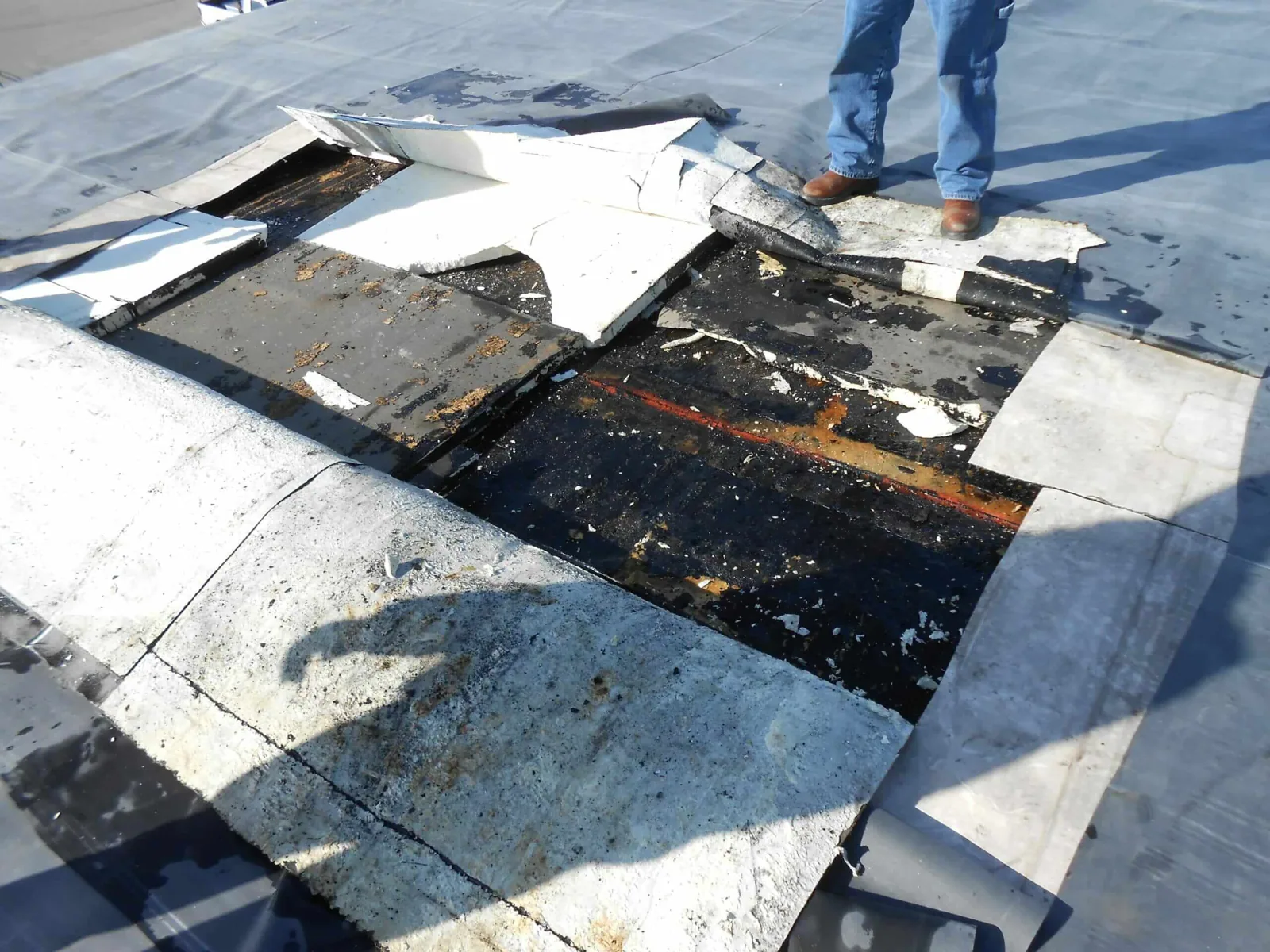
Storm Damage Roof Repair in San Mateo, CA
CATEGORY
Commercial Roofing Services
LOCATION
San Mateo, CA
After a wind or rain event, a stained ceiling does not identify the roof opening. In San Mateo, we trace the reported water path, inspect seams and perimeter details, and record the affected zone before pricing a repair. Loose edge metal, a displaced flashing, a puncture, or a blocked outlet each calls for a different response. The city lists an 85-mile-per-hour basic wind speed; that design value is not a storm report or site damage evidence. We document what can be reached safely, separate temporary protection from permanent work, and identify testing or trade coordination that may be needed. A commercial property along San Mateo’s State Route 92 corridor still needs an address-specific field inspection before the scope is set.
Initial response: make the first report actionable
When water is active inside, protect people, equipment, and inventory first. The facility contact should identify the room, roof area if known, time observed, and any electrical or ceiling hazards. Keep occupants clear of a wet or sagging ceiling, and do not send staff onto a roof during unsafe weather. We confirm current access and response availability before arranging a visit. If temporary cover is appropriate, the crew records what it protects, where it is secured, and what conditions require return inspection. Temporary stabilization is not a permanent repair or a warranty determination.
Photographs from the interior and exterior can help locate the affected area, but they do not replace close inspection. We ask for roof plans, prior repair tickets, equipment layout, gate instructions, and a site contact who can approve access. An active leak repair starts with tracing the water path, not sealing the visible stain. Where safe access is limited, we document the constraint and schedule the next appropriate evaluation rather than guessing about concealed conditions.
Inspection: inspect the roof zone and adjacent details
We inspect the reported area and nearby transitions that could carry water toward it. The review includes field seams, wall flashings, curb corners, pipe boots, skylight perimeters, edge metal, fasteners, drains, and scuppers. A wind-lifted edge can create an opening beyond the visible interior stain. A drain obstruction may cause water to remain without a membrane breach. We photograph each observation and mark its roof section.
Local growth references include the SR 92 employment corridor, Bay Meadows, Mariner's Island, Downtown, and Hillsdale. These areas help sort work orders, but a district label cannot establish what happened on a particular roof. At a property near Bay Meadows, we verify the actual entrance, access rules, and roof assembly with the site contact. If a detail is hidden by equipment or a prior repair, the report identifies the view limitation and says what opening or test would resolve it.
Damage review: separate event damage from prior conditions
A post-event report should distinguish fresh movement from older wear. We compare current photographs with earlier inspection images when they exist, then note displaced material, open laps, cracked sealant, loose terminations, and prior patches. Not every defect began during the latest storm, and a visual inspection may not establish when concealed moisture entered the assembly. The owner can use dates, maintenance logs, weather records, and the inspection photos to build a reliable file without turning an observed condition into a causation claim.
Nearby SFO climate normals are station records, not San Mateo measurements or event totals. We write down the owner’s reported event details and the roof evidence separately. If an insurance adjuster or consultant needs documentation, the claim support scope can organize photos, repair history, and observed conditions while leaving coverage decisions to the carrier.
Temporary protection: set a safe temporary protection boundary
Temporary protection needs a defined area, attachment method, access condition, and removal or reinspection point. The crew considers wind exposure, roof height, wet surfaces, electrical equipment, and the material’s ability to remain secure. If those conditions do not support safe stabilization, we explain the limitation and discuss interior protection or another route with the owner. The daily note records the installed measure, area covered, time, weather conditions, and what remains exposed. Avoid describing a temporary cover as a repair that closes every leak.
Operations may need a temporary room closure, equipment shutdown, or inventory move while the roof is assessed. We coordinate with the facility contact and identify who can approve changes. For an occupied building, an occupied-site sequence can separate roof access from business or tenant circulation. If water is near electrical systems, the owner’s qualified electrical contractor handles the related safety decision. Roofing scope stays within the roof and approved protection boundary.
Repair scope: write a permanent repair scope
Once the assembly and entry point are understood, the proposal names the roof zone, materials, preparation, detail repair, and verification. A localized puncture may need a different patch than a loose seam, failed curb, or damaged edge. The scope lists adjacent details to inspect, included and excluded areas, and the approval point if tear-back reveals wet insulation or deck damage. For metal roofs, panel laps and fastener patterns are reviewed separately from membrane seams. Photos before and after work tie the closeout to the same roof locations.
San Mateo’s 2025 California Building Standards Code took effect January 1, 2026. Check permit requirements against project scope and current authority rules. A repair proposal can compare localized work with broader replacement when the inspection finds repeated openings or widespread deterioration. Concealed deck or insulation conditions remain subject to owner approval before added work proceeds.
Coordination: coordinate access, trades, and records
Repair timing depends on safe weather, roof access, material availability, building use, and any necessary trade handoff. We confirm loading access, lift placement, roof hatch or ladder rules, interior notifications, and work hours before mobilization. Rooftop HVAC or solar contractors may need to isolate equipment or protect their own components. If a repair sits near a drain or scupper, the drainage review can identify a separate obstruction or detail problem. The project manager should know who can pause the area if conditions change.
Closeout records the completed repair, material, photos, date, field limits, and any item held for follow-up. A report should say whether the leak test was visual, water-based, or another approved method. If the work did not include a test, state that clearly. Keep temporary protection, permanent repair, and monitoring recommendations in separate lines so the next contractor does not mistake one for another. For repeated incidents across sites, a roof condition report can standardize photo and location references while preserving each building’s history.
Next step: choose the next roof decision
Share the reported room, roof plan, event date, prior work, and access contact. We will confirm whether the affected area can be inspected safely, document what is visible, and identify the next test or repair step. If the cause remains uncertain, the scope will say what evidence is missing. If temporary protection is used, the follow-up point will be stated separately from permanent repair.
Owners comparing several buildings should keep address, roof system, and repair history distinct. Citywide storm context cannot substitute for a property inspection, and one site’s damage does not establish another’s condition. We can prepare a repair scope, condition report, or replacement comparison from the field record. Contact the service team to confirm current availability and arrange access with the person responsible for the roof and building operations.
Commercial Roofing Questions
Does a roof leak prove storm damage?
No. A leak is an interior symptom. We inspect the roof path, nearby details, prior repairs, and current conditions, then distinguish observations from what remains uncertain.
Can temporary protection stop all water entry?
That depends on safe access, the opening, and weather exposure. The Diligence Notes states the area covered, method, limits, and need for follow-up.
What should be documented for an insurance file?
Keep event details, roof plans, dated photos, maintenance history, inspection findings, repair scope, and closeout together. Coverage and causation decisions belong to the insurer and its qualified reviewers.
Will the code wind speed show what damaged my roof?
No. The city’s 85-mile-per-hour basic wind speed is a design reference, not an event record or proof of property damage.
When is a repair no longer enough?
Repeated openings, broad wet insulation, failed attachment, or deck concerns may justify testing or a replacement comparison. The report explains which findings support that change.
Document the roof before setting the scope
Provide the affected area, roof plan, prior repair records, and safe access contact. We will record field conditions and separate temporary protection from permanent work.
Related Pages
- Commercial Roofing Along San Mateo’s State Route 92 Corridor
- Commercial Roof Leak Repair
- Commercial Roofing in Bay Meadows, San Mateo, CA
- Commercial Roof Insurance Claim Assistance
- Occupied Building Reroofing
- Commercial Roof Repair
- Commercial Roof Drain and Scupper Service
- Commercial Roof Condition Reports