
Commercial Roof Asset Management in San Mateo, CA
CATEGORY
Roofing Capabilities
LOCATION
San Mateo, CA
A roof record earns its keep when a facilities manager can act on it before the next leak competes with a tenant move, equipment change, or capital meeting. In San Mateo, commercial and office uses span Downtown, Bay Meadows, and the Mariner's Island planning area, so one portfolio can contain different access rules and roof details. We start with the actual assembly, the areas that need attention, and the records already in hand. A Bay Meadows property and a Downtown San Mateo building should not be forced into one generic condition score. The first useful step is to make each roof's present state legible, then connect that field condition to a repair, monitoring, or renewal decision. Separating an observation, an owner decision, and completed work gives the next budget review a usable starting point.
Field condition: start with an assembly record
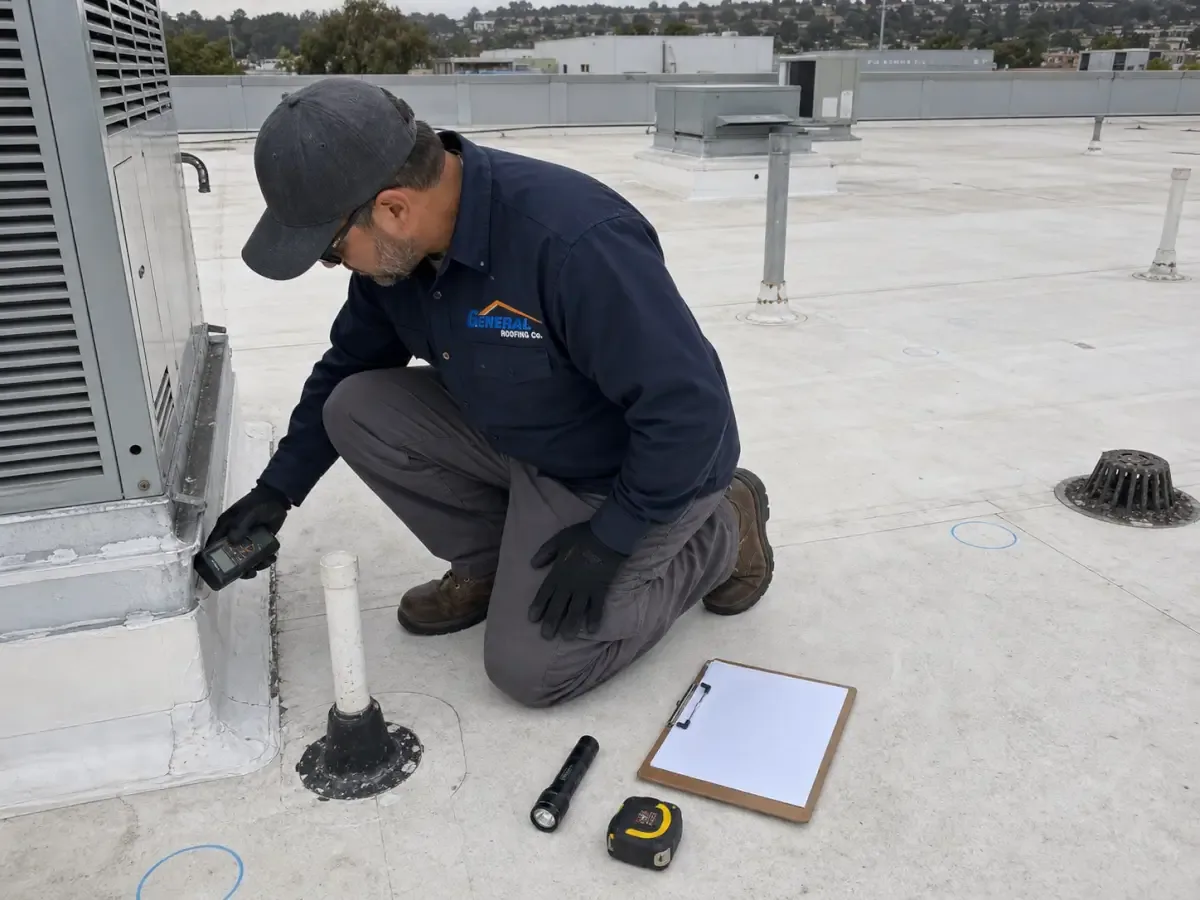
A useful asset file names the roof areas, visible system, transitions, drains, curbs, penetrations, edge conditions, and access limits that were actually observed. We do not fill a blank with an assumed membrane type. We photograph representative details, map active concerns, and note where a surface inspection cannot confirm concealed attachment or insulation. That distinction matters when a facilities team is comparing several roofs: a confirmed open seam is different from a suspected wet area, and a blocked drain is not the same scope as a failed drain bowl. Each observation should point to a next action, owner, and timing window. If the records are thin, an on-roof commercial inspection or moisture survey can establish a more reliable starting point before the portfolio schedule is changed.
Scope boundary: separate urgent work from planned renewal
Asset management is not a color-coded promise that every roof will last a fixed number of years. It is a way to keep active water entry, exposed terminations, damaged flashings, and recurring drain issues from disappearing inside a broad condition label. We sort findings by consequence and by what the field can support: make the area watertight, complete a defined repair, investigate concealed moisture, or price a larger assembly. A written condition report gives ownership a basis for those choices, while a ponding-water review can distinguish standing water from a drainage or deflection problem that needs broader coordination. The scope should say what is included, what remains unknown, and what field observation would change the recommendation. That keeps the maintenance list useful without treating a visual observation as a warranty of future performance.
Cost driver: build the capital view from field facts
A roof budget becomes more useful when it ties dollars to a scope boundary instead of a vague condition grade. Cost changes with removal depth, wet insulation, deck repair, edge height, access, crane or lift needs, protection for occupied space, and the number of details that must be rebuilt. For San Mateo drain design, the minimum rainfall input is two inches in an hour. That requirement makes drain bowls, overflow paths, and low points worth documenting before a replacement allowance is compared with a repair-only figure. We can price a defined replacement scope beside a documented recover option when the existing assembly and code constraints allow that comparison. No portfolio spreadsheet replaces field verification; it helps the owner see which assumptions still move the number.
Sequencing: keep access and trade handoffs visible
A roof plan that ignores operations will fail at the loading gate, not on the spreadsheet. Record hatch and ladder access, tenant notification needs, rooftop equipment routes, staging limits, and the trade that must release each work zone. Downtown office and retail sites may have active public entrances below; Bay Meadows planning allows a mixed-use district with office and residential components, so a single property can require careful separation between the roof crew and people using the site. We set a dry-in boundary, identify when equipment must be moved, and agree on how the next trade takes the area back. For a building with several roofs, a multi-property work schedule can align access windows while keeping each roof's scope separate. The crew should know what can proceed, what needs owner approval, and where a changed field condition pauses the sequence.
Maintenance: turn observations into a maintenance cadence
After repair or renewal, the record needs a practical return date and a short list of details to revisit. We note the drain path, termination points, sealant transitions, rooftop equipment supports, and any area where debris or foot traffic can alter the observed condition. That list is not a substitute for a hands-on check after a significant leak or trade visit. It tells the facilities manager what should be checked first and what changed since the last visit. A maintenance entry should distinguish completed work from a recommendation still awaiting approval; otherwise, the next manager may think a proposed curb repair was already performed. If an owner is coordinating repairs with other capital work, a scheduled maintenance visit and a building-use plan help keep roof access, occupant notice, and scope ownership in the same conversation.
Commercial Roofing Questions
What belongs in a commercial roof asset file?
Begin with the roof areas, observed system, access points, drains, edges, curbs, penetrations, leak locations, repair history, photographs, and current open items. We separate what was seen from what remains concealed, then attach a next step and responsible party to each item. That lets a property manager compare condition without treating an unverified membrane or wet area as established fact. Include drawings and warranty documents when available, but verify that they match the roof in place before relying on them.
Can a condition grade tell ownership when replacement is due?
A grade can help sort attention, but it cannot set a reliable replacement date by itself. The decision also depends on moisture, attachment, deck condition, repair history, edge details, drainage, access, and what the owner needs from the building. We use the inspection record to show which parts are confirmed and which need testing or opening. Then ownership can compare a defined repair, recover, or replacement scope against the risk of postponing work.
How should several roofs be ranked for capital work?
Put active water entry and safety concerns in front, then compare documented failure points, occupied areas below, moisture findings, and the time needed to coordinate access. A roof with a small but consequential leak may outrank a larger area with an aging surface and no active failure. We state the condition, the next action, and the assumptions behind each allowance so a capital meeting can compare scopes without flattening distinct buildings into one score.
What changes an annual roof budget after a survey?
The largest changes usually follow the field condition: wet insulation, soft or deteriorated deck, widespread attachment issues, repeated edge failure, difficult staging, or work around rooftop equipment. Drain capacity and overflow details also matter when the scope changes the assembly. We flag these items before pricing when possible, and we identify any concealed condition that can only be resolved once material is opened. The budget should show those allowances rather than hide them in a single unexplained total.
How do records help after a property changes hands?
A dated record gives the next manager a map of what was inspected, repaired, deferred, or left for follow-up. It should include photographs, the limits of completed work, product information when confirmed, and the next maintenance action. We also mark where a finding was visual only or where access prevented a closer check. That makes it easier to request a comparable field review instead of treating an old estimate as proof that the work was completed.
Bring the roof record and access plan
Share the current drawings, repair history, tenant constraints, and the roof conditions that need attention. We can walk the field, mark scope boundaries, and put the next repair or capital decision in writing.