
Local weather advisory
Coastal Flood Advisory: Commercial Roof Help in San Mateo
The National Weather Service has issued a coastal flood advisory covering San Mateo. Heavy rain and drainage loading can expose roof leaks, blocked drains, and ponding water. This is a weather exposure advisory; it does not establish damage to a specific roof.
Do not access a roof during hazardous weather. Protect people first, avoid water near electrical equipment, and request roofing help when conditions permit.
National Weather Service · Updated Oct 28, 2026, 7:20 AM UTC
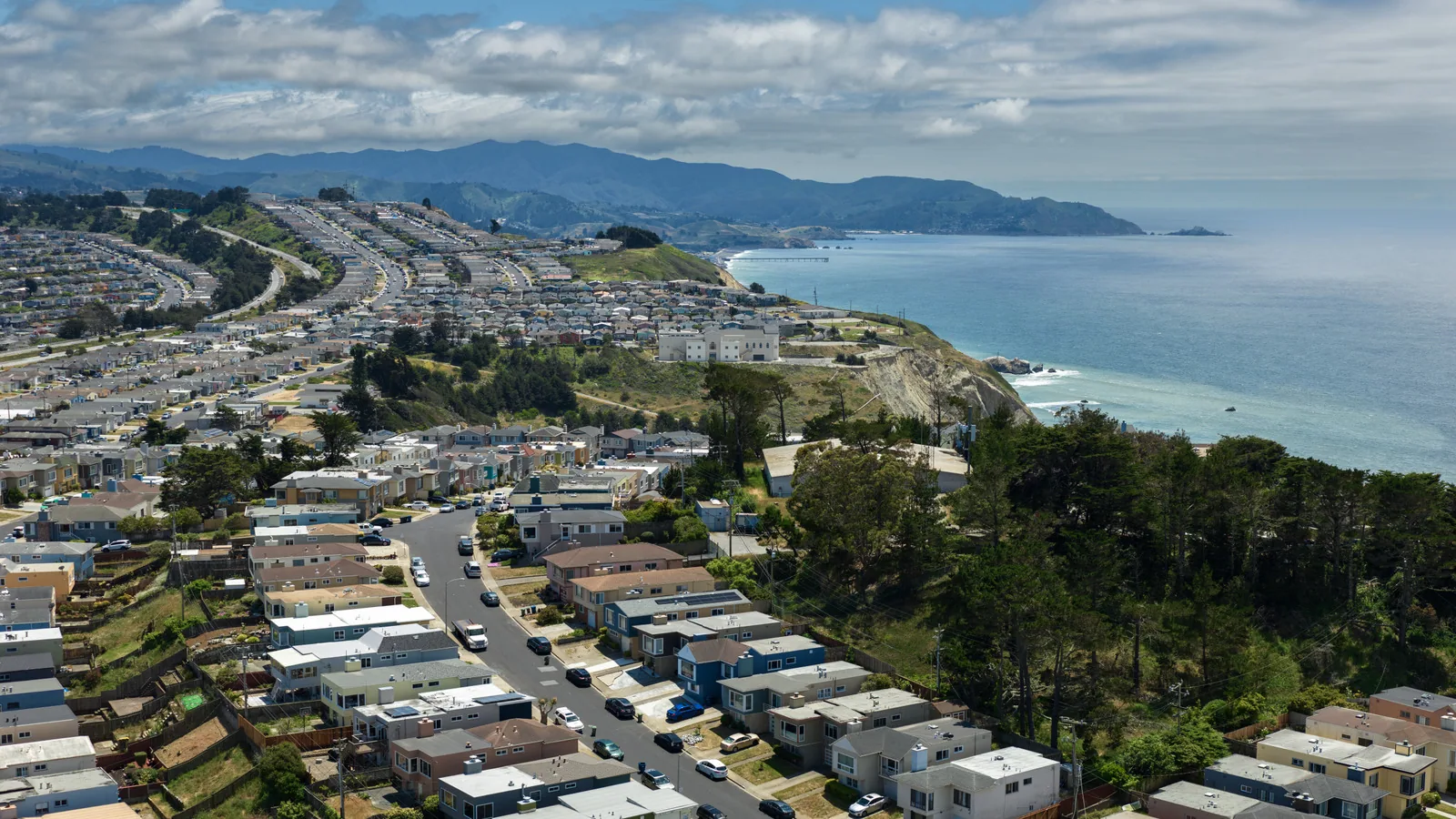
Commercial Roofing in Daly City, CA
CATEGORY
Service Areas
LOCATION
San Mateo, CA
A roof leak in Daly City calls for tracing the water path before opening the membrane. We compare the reported interior location with roof drains, seams, curbs, and wall transitions, then record what is visible and what remains unconfirmed. Building access and use shape the inspection window, so the owner identifies the approved route and contact before the crew arrives. The resulting scope ties each repair to a roof zone and sets a safe closeout boundary.
Field condition: start with the building, not a map label
Daly City's land-use framework applies across its incorporated area. That broad context does not tell us what a particular commercial roof contains, so the first visit documents the assembly and observed condition. We locate the reported leak, check the roof above and upslope, and inspect the nearest drains, seams, curbs, and perimeter details. If the owner has prior repair records, we mark those locations and compare them with current photographs before proposing another patch. Before the crew leaves the roof, we also check whether temporary protection changed drainage or covered a maintenance route. If a patch must remain until a permanent repair is approved, mark its edge and note the next inspection trigger. That is especially useful when a building contact changes between shifts or tenants, because the next person can see which condition is stable and which remains open. We avoid calling a repair complete until the roof detail and the water path have both been checked.
Access determines how much of the roof can be inspected at one time. We confirm the ladder or hatch, key control, required escort, and where equipment can be set without blocking a tenant route. Daly City's development context is citywide; a roof scope is narrower and has to identify the actual membrane, drains, edges, and penetrations at the property. A documented roof inspection can establish that distinction and a focused repair scope can address a verified defect.
Scope boundary: read the water path and edge details
Water at an interior ceiling can come from a seam, a curb, a drain, or a penetration some distance away. We follow roof slope and trace the path instead of cutting out the visible stain without diagnosis. Around an HVAC curb, we inspect flashing height, attachment, sealant, and the transition back to the field membrane. At the perimeter, we check whether edge metal is secure and whether water can move toward the intended outlet rather than behind a termination. At each outlet, note the bowl, strainer, leader connection, overflow route, and any debris that could slow discharge. A clear opening does not prove that a downstream line is connected or that water leaves the building as intended. We photograph those details and, when the owner approves a flow check, record what the test actually reaches. If an overflow is missing or blocked, the report shows where that condition sits in the repair priority rather than hiding it beneath a membrane patch.
Daly City's physical-development framework covers its incorporated area. A roof replacement or structural change still needs a property-specific scope and review. In nearby San Bruno, downtown and commercial-industrial areas are part of the city's revitalization focus; a manager coordinating both places should keep roof access and permit details tied to each building. The San Bruno city service area is a separate municipality.
Sequencing: choose a repair boundary that lasts
A roof patch should reach sound material and tie into the existing system without leaving a second weak point. We remove or prepare the affected area as the material requires, install the compatible repair, and restore the flashing or edge detail involved. The estimate states whether the work is a small repair, a larger membrane section, or a drain and transition correction. If access, wet insulation, or an unknown assembly changes the repair boundary, we say so before permanent work proceeds.
Replacement becomes relevant when failures repeat across sections, attachment is poor, or moisture extends beyond a limited opening. A recover may be possible only if the existing layers, structural capacity, drainage, and edge height allow it. The owner needs a cost comparison that includes tear-off, disposal, insulation, penetration work, and protection of occupied space. A roof replacement scope lays out the limits, while a membrane-system review can compare a suitable assembly with the roof conditions we actually find.
System detail: set up the work without losing access
On an active property, the work plan identifies roof zones, material staging, lift locations, a dry-in boundary, and routes that must remain open. We confirm which doors, loading bays, and service corridors cannot be blocked. If a crew must open a roof section, the day's plan says what will be removed, how the area will be protected if conditions change, and who signs off before a temporary boundary moves.
A manager with sites in San Bruno and Daly City should use a separate access sheet for each building; regional district names do not replace property approval. Separate work zones for different addresses and keep a property contact with each daily log. A phased reroof plan can protect occupied space, and a drain and scupper service can be scheduled as its own task if outlet condition is part of the diagnosis.
Cost driver: keep closeout tied to the roof
The final record should show where the crew worked and what remains unresolved. We attach dated photographs to a roof map, identify the material used where confirmed, and list any follow-up inspection or maintenance item. If the work stopped at a defined boundary because an adjacent system was outside the approved scope, mark that line clearly. It is easier to make a later decision when the owner can see what was repaired and what still needs evaluation.
A shared portfolio can use one reporting format for Daly City and San Bruno while retaining separate site contacts, access notes, and repair histories. Roof condition and repair history stay with the building record. If your team is seeing an active leak, send the interior location, available roof access, and recent repair notes. We can inspect the reported area, document the likely water path, and provide a scope that distinguishes immediate stabilization from permanent correction. Owners coordinating a second city visit can use South San Francisco coverage as a separate stop with its own access instructions.
Commercial Roofing Questions
What should a Daly City property manager send before an inspection?
A roof plan, access instructions, the interior leak location, and any recent repair record help us prepare. We confirm the property contact and work limits before the crew uses a hatch, ladder, lift, or staging area.
Can a citywide planning map identify my roof condition?
No. City planning sets land-use context. The roof assembly, drainage, penetrations, and repair boundaries must be established at the building through inspection and, when needed, testing.
When does a recurring leak point toward replacement?
Repeated failures across several roof zones, widespread wet insulation, weak attachment, or deteriorated edges can indicate a broader problem. We inspect first and explain whether a repair or replacement addresses the observed conditions.
How do you protect tenants during a repair?
We agree on entry, material movement, interior protection, noise windows, and the daily work boundary with the property contact. The crew leaves a documented dry-in condition and notes any route that remains restricted.
Do you service properties outside Daly City?
The planned service area includes nearby municipalities such as San Bruno and South San Francisco. Each location gets its own access review and roof inspection rather than a shared assumption about building conditions.
Plan a San Mateo roof review
Share the property location, roof access requirements, reported condition, and any available plan or repair history. We will inspect the relevant areas and provide a field-based scope for the next decision.