
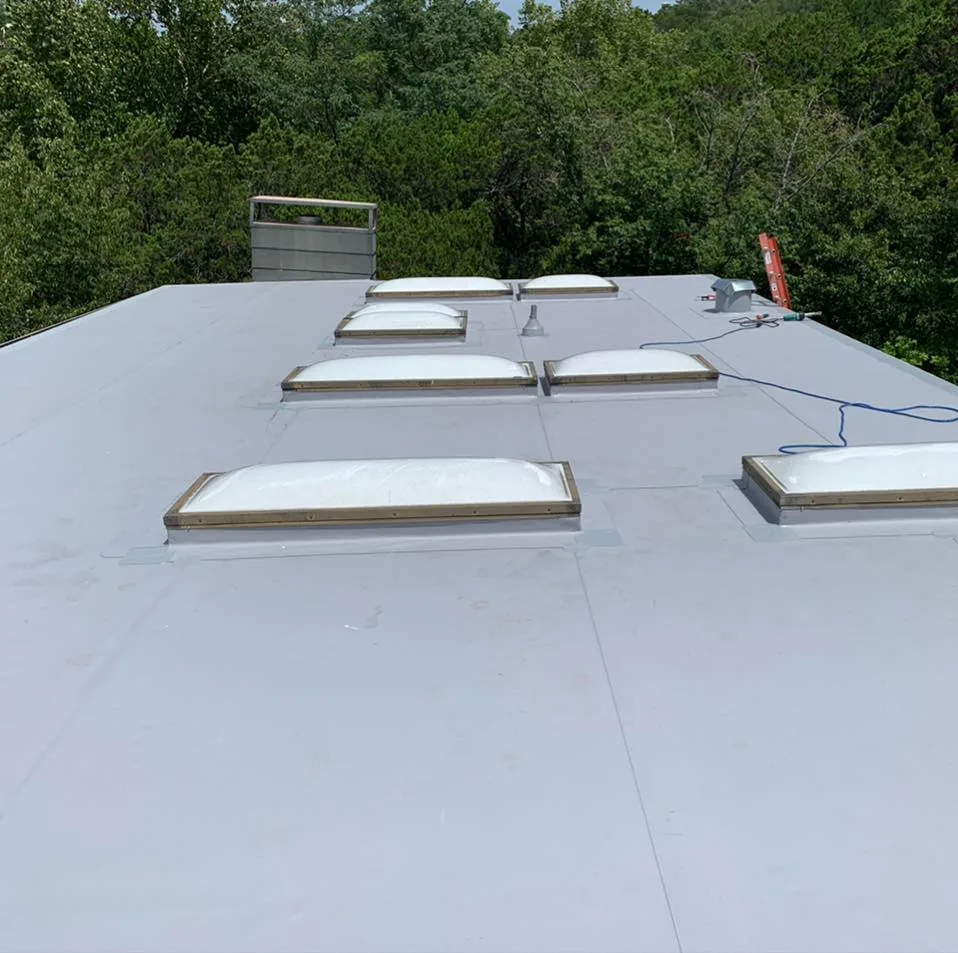
Johns Manville Commercial Roofing in San Mateo, CA
CATEGORY
Roofing Manufacturers
LOCATION
San Mateo, CA
A membrane can flex during installation and still need a disciplined detail at every lap. Johns Manville describes its TPO as polyester reinforced, with a formulation designed for ultraviolet resistance, flexibility, and weldability. For a San Mateo, CA project, the product description is a starting point for submittal review, alongside the GAF commercial membrane option and Carlisle SynTec TPO assembly when the project allows more than one product path. The roof deck, insulation attachment, drain plane, and perimeter decide which assembly can be installed and what must be corrected first. We inspect those conditions, mark the limits of removal, and test representative seams before calling a repair complete. A GC gets a scope tied to the field, with the product and installation details recorded together. That is useful when the roof work connects to a mechanical curb, an occupied floor, or another trade's release date.
Material choice: connect membrane to assembly
JM TPO is one option within the manufacturer's commercial roofing portfolio. Its reinforced sheet can be mechanically attached or adhered in approved systems, but the assembly selection still has to match the deck and project requirements. Insulation type, cover board, fastener pattern, vapor control, and perimeter details all affect the outcome. A sales sheet alone does not settle whether a recover is appropriate or whether wet material must be removed. We compare the specification with existing conditions and identify any mismatch before the GC issues a purchase order. We also compare the proposed TPO roof system with the actual substrate rather than treating a membrane selection as the entire assembly. Mariner's Island extends between Marina Lagoon and Foster City, with city planning identifying homes, offices, and retail in the district. Those neighboring uses can affect lift windows and debris routes, while membrane and attachment choices still come from the roof assembly.
Seam inspection: locate the failure before patching
At a seam, a dark line or lifted edge can signal an incomplete weld, contamination, movement, or an older patch that has lost bond. We check the lap with a probe, inspect nearby fasteners and flashing, and trace the water path rather than patching only the visible mark. On a TPO roof, heat-welded material must be clean and dry where the new patch meets the existing sheet. If the membrane has aged or changed surface texture, we test an inconspicuous area and choose a detail compatible with the field. A wet insulation layer below a seam can keep water moving after the surface repair, so we distinguish a membrane defect from a broader assembly issue. A targeted leak repair can be scoped separately from replacement when the field remains serviceable. The repair record notes location, cause indicators, work boundary, and any follow-up condition that remains open.
Scope: name what stays and what changes
When a JM membrane reaches its service limit, the GC needs a clear choice between repair, recover, and replacement. A localized repair may work where the surrounding sheet and substrate remain serviceable. A recover can limit tear-off, but it cannot correct concealed wet insulation or an unstable deck. Full replacement exposes the assembly and allows deck repairs, new insulation, and a new field membrane to be sequenced from the base upward. We document roof cuts, moisture findings, drains, terminations, and penetrations before writing that recommendation. A marked roof inspection should distinguish visible evidence from concealed conditions, while the replacement estimate lists the removal and new assembly work as separate steps. Downtown San Mateo includes retail and transit access under its commercial-center planning description. That context may matter to staging and occupant routes; it does not determine the condition of any individual roof. The scope records the roof evidence and states assumptions separately from the district context.
Sequence: set a workable dry-in limit
Daily progress depends on how much roof can be opened and closed before the crew leaves. We stage material, agree on hoisting, and mark the temporary dry-in boundary with the GC before removal. A mechanically attached layout may place fastener rows and sheet laps differently from an adhered assembly, so the approved detail must be on the roof before installation. Around rooftop equipment, HVAC service clearance and flashing height need coordination before curbs are altered. A crew should not leave a partially welded lap exposed as the day's stopping point. We plan work sections around weather, access, and occupied areas, then identify inspection points for deck, insulation, and seam work. The maintenance plan can then preserve clear drain paths and identify new openings before the next phase. The handoff should state which areas are ready for other trades and which remain protected by roofing operations. That keeps scheduling from relying on a broad percentage-complete estimate.
Handoff: preserve the assembly record
At closeout, the GC needs more than a membrane name. We provide marked roof areas, repair locations, photographs of completed terminations, and the status of any substrate condition that affected the scope. Product data and the final installation detail should match the material used in the field. If the work was phased, the record should show where a new sheet ties into existing membrane and what remains for a later phase. Maintenance staff can use that map to keep service routes clear, report a new opening, and avoid placing equipment on a vulnerable seam. A clean record also supports later roof planning without suggesting that a membrane eliminates maintenance. On a project using Johns Manville products, the GC can send the roof plan and access constraints so we can review the substrate, set repair boundaries, and coordinate the next trade release.
There is a second cost check after the product is chosen: confirm how the details will be built where roof areas meet. A sheet specification may not list the full effort at parapets, expansion joints, pipe groups, or equipment curbs. We measure those locations, compare the proposed flashing with the existing condition, and identify any metal work or removal that belongs in the bid. If another trade must disconnect or reset equipment, the schedule and responsibility should be clear before work begins. That coordination reduces the risk of a finished membrane being cut by a late curb change. It also gives the owner a better comparison between proposals because each estimate addresses the same transitions, protection, and closeout documentation.
Commercial Roofing Questions
How do JM TPO characteristics affect a San Mateo roof scope?
The manufacturer identifies polyester reinforcement and a formulation intended for ultraviolet resistance, flexibility, and weldability. We check whether those properties fit the specified assembly, then verify deck, insulation, and perimeter conditions. The roof's current layers determine whether the work is a repair, recover, or replacement.
Can a failed JM seam be repaired without replacing the field?
A localized repair can work when the surrounding sheet remains compatible and the substrate is sound. We probe beyond the visible split, check for moisture below, and prepare the membrane for a new heat-welded patch. If the failure repeats across laps or moisture is widespread, we map a larger scope.
What should a JM product submittal include?
It should identify the membrane, attachment, insulation and cover board, flashing details, and applicable components. We compare those items with the project documents and exposed deck. Any deviation needs a written review before delivery, especially where edge metal or a curb transition controls the water path.
When is a recover a poor fit for the existing roof?
Wet insulation, loose layers, deck damage, incompatible attachment, or excessive existing build-up can rule out a recover. We use inspection findings and test cuts where approved to define what remains. The GC can then compare tear-off, localized replacement, and a broader new assembly without hiding unknowns.
How do you coordinate roof work with an operating building?
We set work zones, hoisting, noise windows, and the daily dry-in point with the GC. HVAC access and tenant routes are considered before staging or flashing is removed. A section is released only after its seams and terminations are closed and the temporary protection plan is no longer needed.
Tie the JM specification to the roof
Share the plans, material schedule, and known field conditions. We can check the existing assembly, identify seam and perimeter work, and define a practical San Mateo sequence with your GC.