
Roofing for Retail and Restaurant Chains in San Mateo, CA
CATEGORY
Industries We Serve
LOCATION
San Mateo, CA
A roof leak above a dining room, stock area, or point of sale can create an immediate operating problem, but the roof scope still needs a measured diagnosis. We locate the reported area, inspect the assembly above it, and separate protection from permanent repair. San Mateo identifies restaurants and independent, regional, and national retailers among its business sectors. Downtown is a commercial center with retail and transit access, while Hillsdale, Bay Meadows, and Mariner’s Island include other commercial and office uses. Chain operators need a repeatable service record that remains specific to each store’s roof and access conditions.
Store-level intake: identify the affected operation
The service manager should report the room or sales area, time, weather, and whether water reached inventory, food preparation, electrical equipment, or customer space. We use that detail to prioritize access and interior protection, then inspect above the location. A stain alone does not tell us whether a seam, curb, drain, edge, or nearby penetration is the entry point. A defined leak-repair visit records the suspected path and the repair boundary. If the roof needs testing, we show what remains unknown before opening it. That lets a chain operations contact decide whether to isolate an area, move stock, or schedule after a service period.
Chain portfolio: keep the reporting comparable
A multi-location operator benefits from a consistent record format: property identifier, roof zone, system where confirmed, reported symptoms, inspection photos, work completed, and next action. That does not mean one store’s roof recommendation should be copied to another. Age, substrate, previous overlay, equipment, drainage, and maintenance history can differ even within the same brand. A property-level maintenance file can carry uniform fields while retaining individual store findings. Assign a stable label to each roof zone so a later manager can compare the current inspection with a prior repair ticket. The record should make open items visible, not bury them in a broad annual summary.
Kitchen and rooftop equipment: protect the interfaces
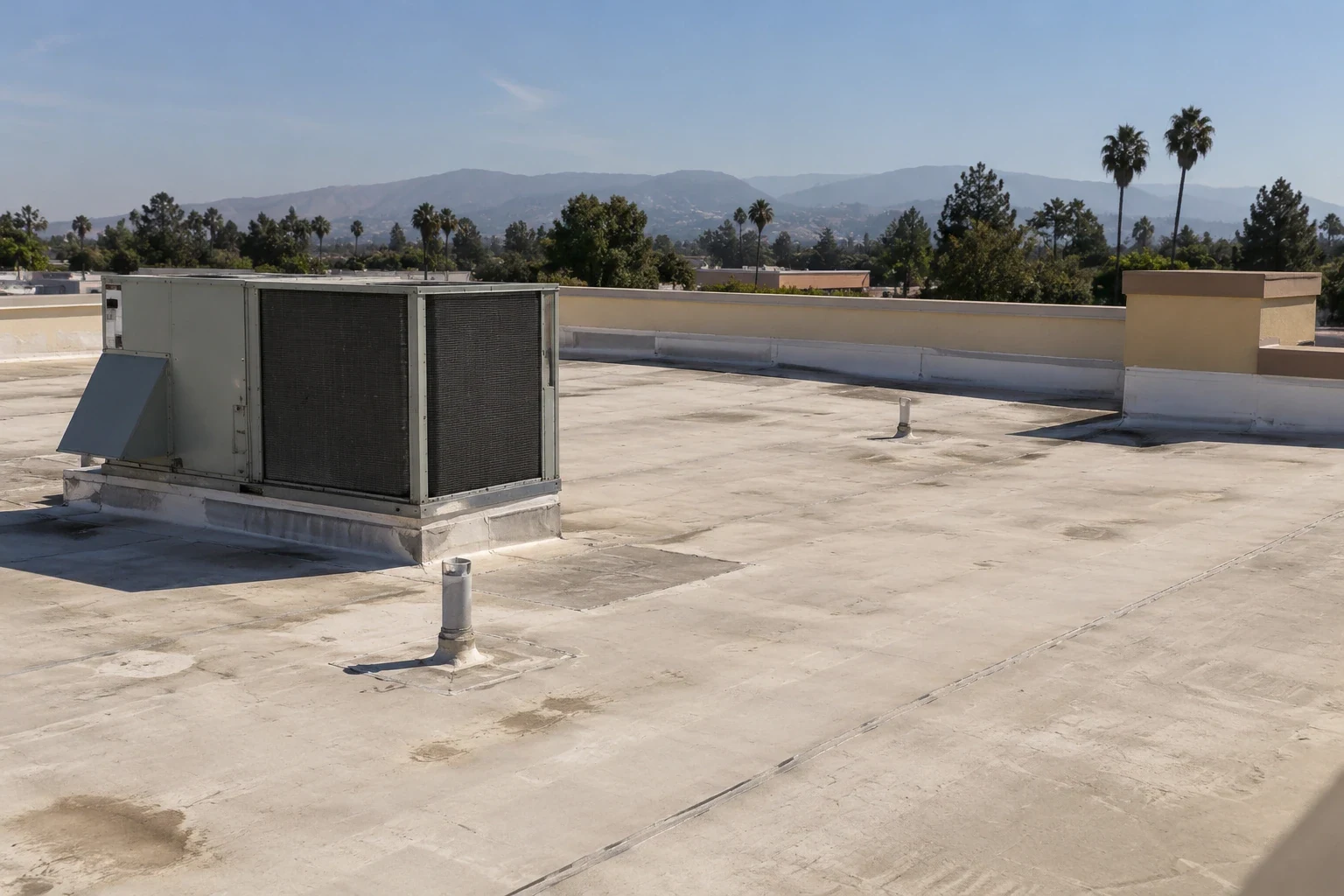
Restaurant exhaust, refrigeration, make-up air, and other rooftop equipment bring service needs to the roof membrane. We inspect curbs, fans, penetrations, pitch pockets, and the nearby drain path. Before replacing a unit, coordinate the roofing detail with the mechanical contractor so the curb is not left exposed or flashed around dimensions that later change. A curb and support review can set that coordination in scope. Keep technicians’ clearances open after the work. The manager should know which trade reconnects equipment and who checks the final flashing. That keeps food-service equipment access separate from roofing work without treating the two scopes as unrelated.
Work hours: set boundaries around service
A retail property may have deliveries before opening, customer traffic throughout the day, or a quiet period only after close. The property contact provides those constraints and confirms lift access, parking, loading, pedestrian routing, and notices. We establish a work zone that can be protected and closed before the next operating period. The occupied-building phasing plan can identify the room below each roof area and the release contact. Downtown San Mateo’s retail and transit activity makes curb planning relevant, but a district description does not set any store’s hours or access rules. The site manager approves the schedule for the actual property.
Repair or renewal: price the choice by condition
We compare an isolated flashing failure with repeated leaks, wet insulation, weak attachment, deck concerns, or drainage problems. A patch may be the right first move when the surrounding roof remains sound and the water path is clear. Recover or coating may fit only if the substrate, moisture, edges, and project requirements support it. Replacement may reduce repeated mobilizations where deterioration spans several areas. A replacement scope can show removal, insulation, equipment tie-ins, and edge metal separately. If a chain is planning multiple sites, price each roof from its own inspection and report unknowns before combining scopes into a regional budget.
Preventive service: reduce avoidable operating surprises
A maintenance visit should include drain bowls, scuppers, seams, exposed fasteners, edge metal, equipment curbs, and prior repair points. We record accessible conditions and identify debris, open seams, loose metal, or details that need a closer review. San Mateo’s roof-drain design input is two inches of rainfall per hour; that design criterion does not certify an individual outlet, so the crew checks its observed condition and flow path. A preventive maintenance visit can give a store operator a dated record before the next planned service window. For Downtown San Mateo properties, use the Downtown service area to coordinate a visit, then confirm property access directly with management. A hospitality property record can use the same zone discipline while retaining guest and service-hour restrictions.
A store operator can help prevent a small roof defect from becoming an inventory or service interruption by reporting conditions early and with a clear location. Note the room, ceiling grid or visible feature, date, weather, and any equipment affected. Do not send staff onto the roof; access and inspection belong to authorized personnel. We can then compare the report with roof details and decide whether temporary protection or a repair visit is appropriate. For a multi-site operator, keep the store number and street location in the internal work order, but use public-facing instructions that focus on service area and roof work rather than exposing tenant or property details. At completion, the manager should know whether the area is safe to use, what maintenance remains, and whom to contact if the same condition returns. When multiple locations need attention, rank them by active water entry, food or electrical exposure, and recurrence, then schedule the remaining maintenance by operational window. That approach makes the chain’s roof program easier to manage without pretending each site has the same assembly.
A regional maintenance manager can use a monthly or quarterly review to spot recurring trouble without making a condition claim from a spreadsheet. Compare leak reports by roof zone, repeated service calls, open maintenance items, and repairs that did not resolve the symptom. A cluster of reports may justify a new inspection, while a single report may need a localized check. We document the roof itself before recommending a wider program. If a location has remodeling work planned, include roof penetrations, curb relocation, and edge transitions in the construction coordination meeting. That keeps the exterior assembly from being treated as a last-minute closeout item. Chain operators can then align the roof schedule with store plans and avoid unnecessary repeat mobilization.
Commercial Roofing Questions
What should a store manager do when water reaches inventory?
Protect people and goods, report the exact area and time, and follow the property’s interior response procedure. We inspect the roof above the report and distinguish temporary protection from a permanent repair.
Can roof work happen outside customer hours?
The property approves the allowed window. We plan lifts, noise, staging, and daily dry-in against that schedule, then adjust only with the manager’s approval.
How can a chain compare multiple locations?
Use the same reporting fields but retain separate inspection findings, photos, and scopes for every address. A shared format improves budget review without assuming the roofs match.
When should equipment be moved for roofing?
Only after the owner and mechanical contractor agree on dimensions, disconnects, lift access, and reset responsibilities. We coordinate the curb and flashing detail before the unit is shifted.
What should routine maintenance cover?
Inspect drains, seams, penetrations, edges, and prior repair areas, then record what was observed and what needs a follow-up. The store receives a clear next action rather than a generic pass/fail note.
Review the roof scope with our crew
Share the property type, roof condition, access rules, and timing constraints. We can inspect the assembly, define a field scope, and coordinate a sequence around the operation.