
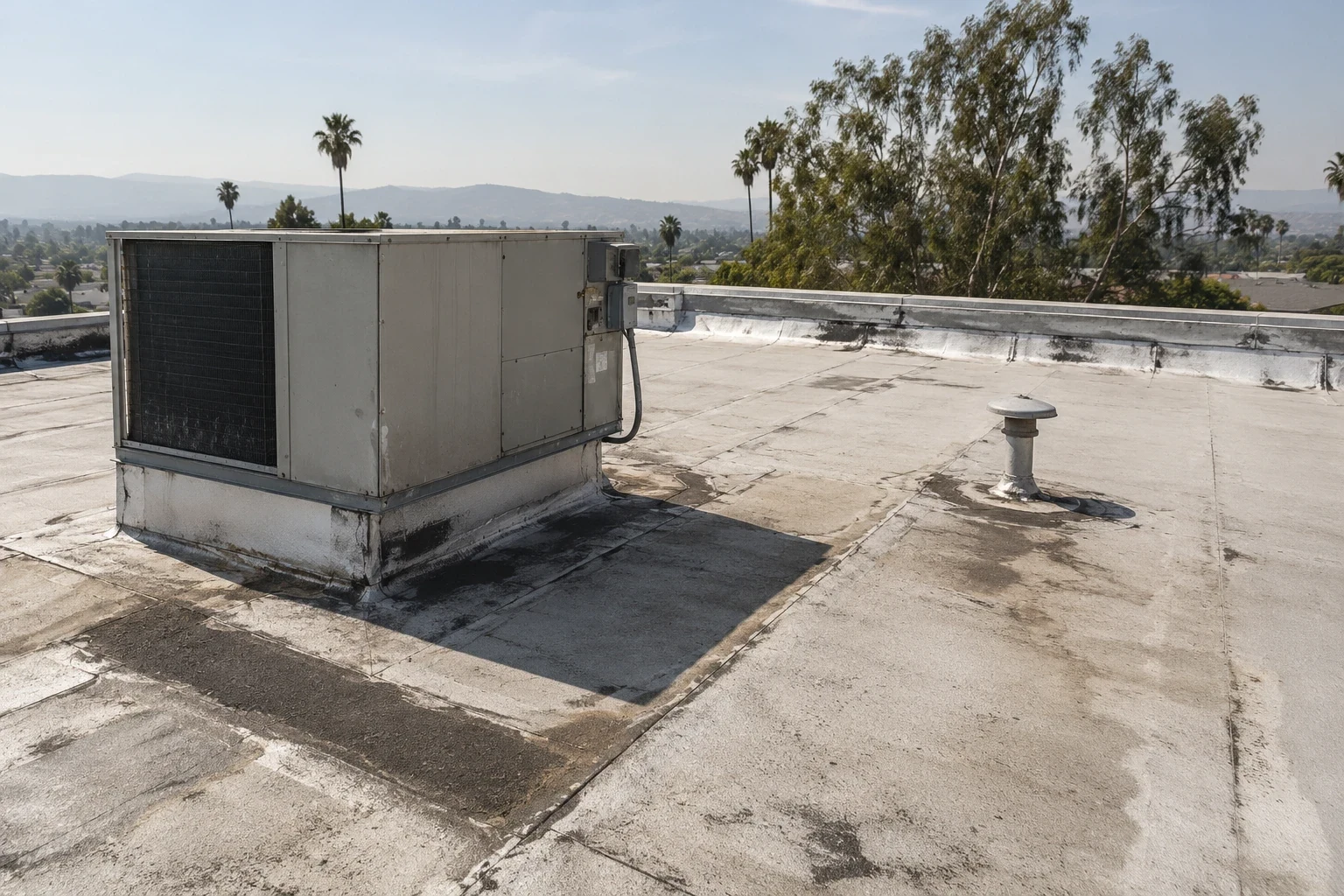
Roofing for Insurance Restoration in San Mateo, CA
CATEGORY
Industries We Serve
LOCATION
San Mateo, CA
A property owner dealing with roof damage needs a safe temporary condition and a record that separates observed damage from unrelated wear. We document the affected roof area, inspect the assembly, and prepare a repair scope that identifies what can be confirmed in the field. Low-lying parts of San Mateo near San Francisco Bay face sea-level-rise and flooding concerns. For a Bay Meadows claim, record the observed roof condition, interior reports, and event timeline as separate property-level facts. Downtown and Mariner’s Island are distinct San Mateo commercial settings; in either one, keep the claim record tied to a specific building and its documented water path. We inspect the actual building and its water path before describing the loss-related work.
Initial protection: address active water entry safely
If water is entering, protect people, equipment, and contents first and notify the responsible property contact. We inspect from a safe access point, identify the affected zone, and use temporary protection appropriate to the condition. Record date, weather, interior location, and visible roof opening before conditions change. A temporary stabilization visit should distinguish immediate protection from permanent restoration. We do not cover uncertain damage with a broad statement; we mark the area, photograph it, and state what can be inspected next. If electrical or structural hazards are present, the owner coordinates the appropriate trade before roofing work proceeds.
Inspection record: separate event damage from prior condition
A repair file should show roof condition, affected area, adjacent materials, and any visible pre-existing wear. We map seams, penetrations, curbs, drains, and edges around the reported location. If a storm-related impact or opening is visible, document its size and relationship to the assembly without extending that conclusion to the rest of the roof. A photo-labeled condition report can make the observed boundary clear. When testing is needed, list the test area and what result would change the scope. This gives the owner and adjuster a repair record that distinguishes direct observation from a question requiring further review.
Scope and documentation: describe the work in field terms
An estimate should identify removal, substrate repair, insulation, membrane, flashing, edge metal, and temporary weather protection separately. Use the roof-zone map to show what is included and what remains outside the documented damage area. If matching material or a tie-in is uncertain, state the issue and inspect the actual assembly before finalizing the repair detail. Claim documentation support can organize photographs and scope descriptions; coverage decisions belong to the policy and carrier. We keep the roofing record focused on observed conditions, work performed, and the materials needed to restore the assembly.
Local context: do not confuse regional exposure with a site loss
San Mateo is preparing shoreline adaptation work that considers land use, infrastructure, and coastal flooding vulnerability. Low-lying areas near San Francisco Bay are included in local exposure discussions. An owner reviewing drainage can compare roof slopes, outlets, and visible discharge conditions with the property’s history, then document what inspection actually confirms. We inspect the property’s grade, roof slopes, drains, terminations, and interior reports. If a repair requires material delivery near SR 92, confirm the actual vehicle approach and staging point with the property contact before including those logistics in the claim file. A Shoreline San Mateo area review still relies on building-level inspection and documented conditions.
Repair versus replacement: match the remedy to confirmed extent
A localized puncture or failed flashing can support a targeted repair if surrounding material is sound. Damage across multiple areas, wet insulation, failed attachment, or a compromised deck may require a larger scope. We identify test findings and estimate the work needed to restore continuity. A repair alternative and a replacement alternative should use the same area map so the owner can compare them. Do not count age or maintenance needs as event damage without documentation. We show where the estimate ends and what work remains a separate capital or maintenance decision.
Closeout: preserve the condition record
After repairs, provide before-and-after photographs, a roof-zone map, a description of materials installed, test results, and any remaining maintenance recommendation. Label observations by date and location. Keep temporary stabilization separate from completed permanent repair, and note whether another contractor completed equipment or interior work. The facility manager can use the file to track future leaks without attributing them to an earlier event automatically. A file for a Mariner’s Island property should distinguish observed roof conditions from neighborhood context and include the specific inspection date, photographs, and repair scope. A portfolio manager record may share a consistent format while retaining unique building evidence. For publicly owned properties, agency restoration records can keep procurement scope and field documentation aligned.
The repair file should be organized so a reviewer can follow the condition from report to completed work. Use a dated photo of the interior symptom, a location on the roof plan, images of the roof opening or damaged detail, and a final view of the restored assembly. Keep temporary cover, investigation, and permanent repair as separate entries. If concealed damage expands the scope, record the new area and obtain approval before proceeding beyond the original boundary. We can identify labor and material tasks needed to restore the roof, but the policy and carrier determine coverage. Do not combine unrelated maintenance into the event scope without labeling it separately. For a bay-adjacent asset, a resilience review may consider drainage and flood exposure; a roof claim still turns on the observed assembly, water-entry path, and documented event. A documented inspection should connect each recommendation to visible or tested conditions. The owner can then retain a clear record for future maintenance even after the claim review is complete.
The owner should retain records of conditions that were present before the event as well as the documented repair. Routine maintenance photographs, prior leak tickets, roof plans, and material information can help explain the building’s baseline. If those records are incomplete, say so and rely on current inspection rather than filling the gap with assumptions. The repair report should identify the extent actually observed, materials removed, condition beneath them, and final restoration. For future maintenance, note any unrelated defect separately and assign it to a later scope. This keeps the immediate restoration understandable and helps a property manager plan work that may not be part of the insurance review. If the roof requires broader renewal, provide that alternative apart from the event-specific repair.
Communication should separate three questions: what is safe right now, what damage was observed, and what permanent work is proposed. A property manager can share the first answer with occupants while the owner and carrier review the latter two. When a temporary cover is used, give it an inspection date and a named person responsible for checking it. That prevents interim protection from becoming an undocumented long-term condition.
Commercial Roofing Questions
What should I document before temporary protection?
Record the date, interior location, visible water path, weather, and roof area if it can be reached safely. Photograph conditions before covering them, then keep the temporary work separate from permanent repair.
Does shoreline flood planning prove my roof was damaged?
No. Regional vulnerability work describes planning conditions, not an individual roof loss. We inspect the building, document visible damage, and identify any test needed to establish the scope.
Can an estimate distinguish storm damage from maintenance?
We map observed conditions and describe the area included in each repair. The owner and carrier can then review the record against the policy; maintenance and unrelated wear remain clearly identified.
What if the roof damage is hidden below the membrane?
We identify a test location, explain what the opening can establish, and protect and restore the area. If the result changes insulation or deck scope, we document the added work before proceeding.
What should be in the final restoration file?
Keep dated photos, marked scope, material information, repair records, and open maintenance items. A clear location key helps the owner evaluate a later condition without confusing it with this repair.
Review the roof scope with our crew
Share the property type, roof condition, access rules, and timing constraints. We can inspect the assembly, define a field scope, and coordinate a sequence around the operation.