
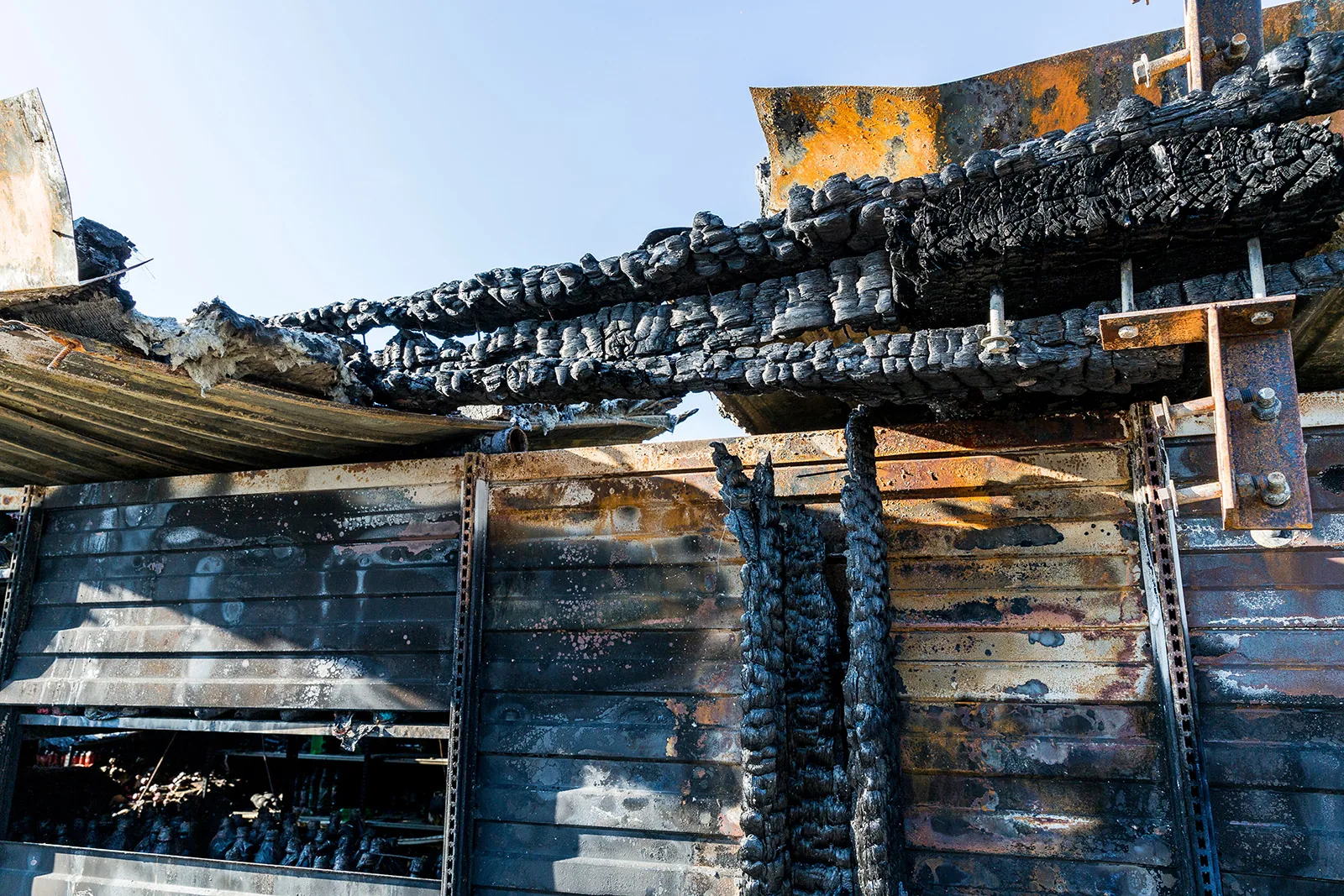
Commercial Fire Damage Roof Repair in San Mateo, CA
CATEGORY
Roof Damage Repair
LOCATION
San Mateo, CA
Heat can blister a membrane, soften an adhesive, or damage a penetration without opening a hole that is easy to see. After a roof fire or smoke event in San Mateo, CA, we coordinate safe access, document the affected roof area, and separate immediate dry-in from permanent repair. Downtown offices and Mariner's Island mixed-use properties may have different occupant and trade restrictions, but the first roof decision is specific: what material was exposed, what remains stable, and what must stay closed until the responsible safety professional releases the area.
Access release: confirm access before inspecting heat damage
Do not enter a roof area until the site contact and fire or safety officials allow it. We coordinate access, escort requirements, hot-work restrictions, equipment shutdowns, and any exclusion zone before carrying tools up. The inspection begins at the perimeter of the affected area and progresses only where the substrate and structure are safe to approach. If a roof opening remains, we agree on a temporary weather barrier that does not conceal unstable material.
San Mateo's land-use materials associate offices and commercial activity with Downtown and Hillsdale; Bay Meadows and Mariner's Island also appear in planning for growth areas. These districts may include different occupancy and access conditions, so notices need confirmation at the property. We do not assume an event affected neighboring roofs. The work plan records which roof section was released and which remains excluded.
Photographs should show context, distance, and detail without asking a crew to cross a restricted zone. Mark the roof plan with the boundary provided by the safety contact. If heat has affected a curb, vent, or rooftop unit, identify the trade responsible for making that equipment safe. A emergency roof response can protect an approved opening while the full scope is being prepared.
Heat assessment: separate visible burn from hidden assembly damage
A discolored sheet may have heat damage beyond its visible edge. Check for blistering, shrinkage, soft adhesive, cracked coating, exposed reinforcement, distorted metal, and loosened fasteners. Inspect seams and transitions around the affected area because heat can change a tie-in before the field membrane is visibly burned. We note what is observed and avoid treating soot or odor alone as proof that a roof layer needs removal.
At a membrane assembly, determine whether heat reached the insulation, cover board, or deck. A test opening may be appropriate after the area is safe and the owner approves the boundary. Wet suppression, water used during firefighting, or weather after the event can leave moisture separate from heat exposure. We map those conditions independently. If there is a soft deck, damaged framing, or a question of load capacity, the appropriate structural professional must review it before the roofing crew proceeds.
San Mateo's code summary lists a minimum rainfall basis used for roof-drain design. When response water or rain has entered, we inspect drains and the discharge path, but do not assume water around the incident came from a roof defect. A roof condition inspection can document the assembly and separate heat, water, and pre-existing conditions for the GC.
Scope separation: keep roofing work distinct from restoration
The roofing scope should state the damaged zones, material removal, temporary cover, replacement layers, tie-ins, and closeout steps. Structural repair, electrical work, HVAC service, interior drying, odor treatment, and contents may belong to other trades. We coordinate the roof sequence without implying that an unrelated system is cleared or restored.
San Mateo's current code reference is the 2025 California Building Standards set, effective since January 1, 2026. Review may be needed if heat damage leads to a changed assembly, attachment, penetration, or roof opening. We distinguish an in-kind patch from replacement needing design coordination. If removal reveals a different condition, photograph the layers and obtain approval before extending the scope. This gives the GC a cost checkpoint before broader restoration is added.
For an active interior leak, a leak repair assessment can trace the water path after safe access is restored. A membrane puncture repair may be separate if a fastener or cleanup activity cut the sheet. We list those details apart from heat replacement so the GC can match each line item to an observed condition and responsible trade.
Material selection: match replacement layers to the verified roof
Identify the installed membrane and attachment before choosing replacement material. TPO, PVC, EPDM, modified bitumen, built-up roofing, metal, and coating systems respond differently to heat and use different repair components. Existing invoices can help, but exposed edges or test openings may still be needed. We record the assembly and area removed so a patch does not reach a surface that has softened or lost adhesion.
At a metal curb or vent, inspect the panel, closure, flashing, and fastener line. At a membrane curb, rebuild the turn-up and counterflashing only after the substrate is sound. A flashing repair may be part of the scope, while a TPO system uses a different tie-in from an asphaltic roof assembly. State the transition and preparation rather than matching color alone.
When comparing local repair with a larger project, review the damaged zone, adjacent roof, drainage, and remaining service needs. A roof-recover review should follow an assembly and moisture check, not a visual assumption after a fire. If the existing layers cannot accept another system, list tear-off and disposal for approval before scheduling.
Closeout record: document the repair and release the next trade
Closeout includes a roof-plan mark, before-and-after photographs, verified layers, replacement details, and test results. Record access limits and uninspected areas. If temporary protection remains, label it and set the return condition. The site contact should know what work remains and which zones other trades must avoid.
For Downtown San Mateo roof repair or Mariner's Island, coordinate equipment service and occupancy with the GC before release. A condition report can keep repair limits, exclusions, and follow-up together. We document visible items outside the approved scope, such as an open seam or loose edge metal, so they are not mistaken for completed work.
Send the roof plan, access limits, event timeline, and assembly records. We will inspect the released area, mark visible damage, and identify decisions for concealed layers. The scope separates temporary protection, permanent roofing, structural review, and restoration so the GC can sequence trades and keep approvals clear.
Commercial Roofing Questions
Can you inspect the roof while fire officials are still on site?
Only within the access boundary and timing approved by the site contact and responsible safety officials. We coordinate any escort, hot-work restriction, shutdown, or exclusion zone before entering. If the roof is not released, we can plan the inspection sequence and temporary protection needed once safe access is granted.
Does discoloration mean the membrane must be replaced?
Not by itself. We check for blistering, shrinkage, soft adhesive, damaged reinforcement, and changes at seams and penetrations. A test opening may be needed to see whether insulation or deck was affected. The estimate separates visible roof damage from any concealed layer that cannot be confirmed until removal is authorized.
Who handles wet insulation after firefighting?
We document the roof layers and identify wet material within the approved roofing scope. Interior drying, electrical work, structural repairs, and contents restoration may require other trades. The GC coordinates those responsibilities, while our proposal states where removal stops and what must be ready before the roof is closed.
Can temporary protection stay in place until a full repair is approved?
When the area is safe and the weather plan supports it, we can install a defined temporary dry-in. The record labels the covered zone, material, and return condition. It does not replace permanent flashing or membrane work, and another inspection may be needed after the area is released for full access.
What records help coordinate a commercial fire-damage repair?
Share the roof plan, access release, event timeline, photographs, known membrane assembly, and any equipment or trade restrictions. We mark the roof area inspected, list materials removed and installed, and state which work remains open. That record helps the GC coordinate roofing, structural, mechanical, and interior restoration without mixing their scopes.
Set the roof boundary after safe access is released
Share the roof plan, access restrictions, event timeline, and known assembly details. We will document the released area, separate temporary protection from permanent roofing, and coordinate the San Mateo scope with the GC.