
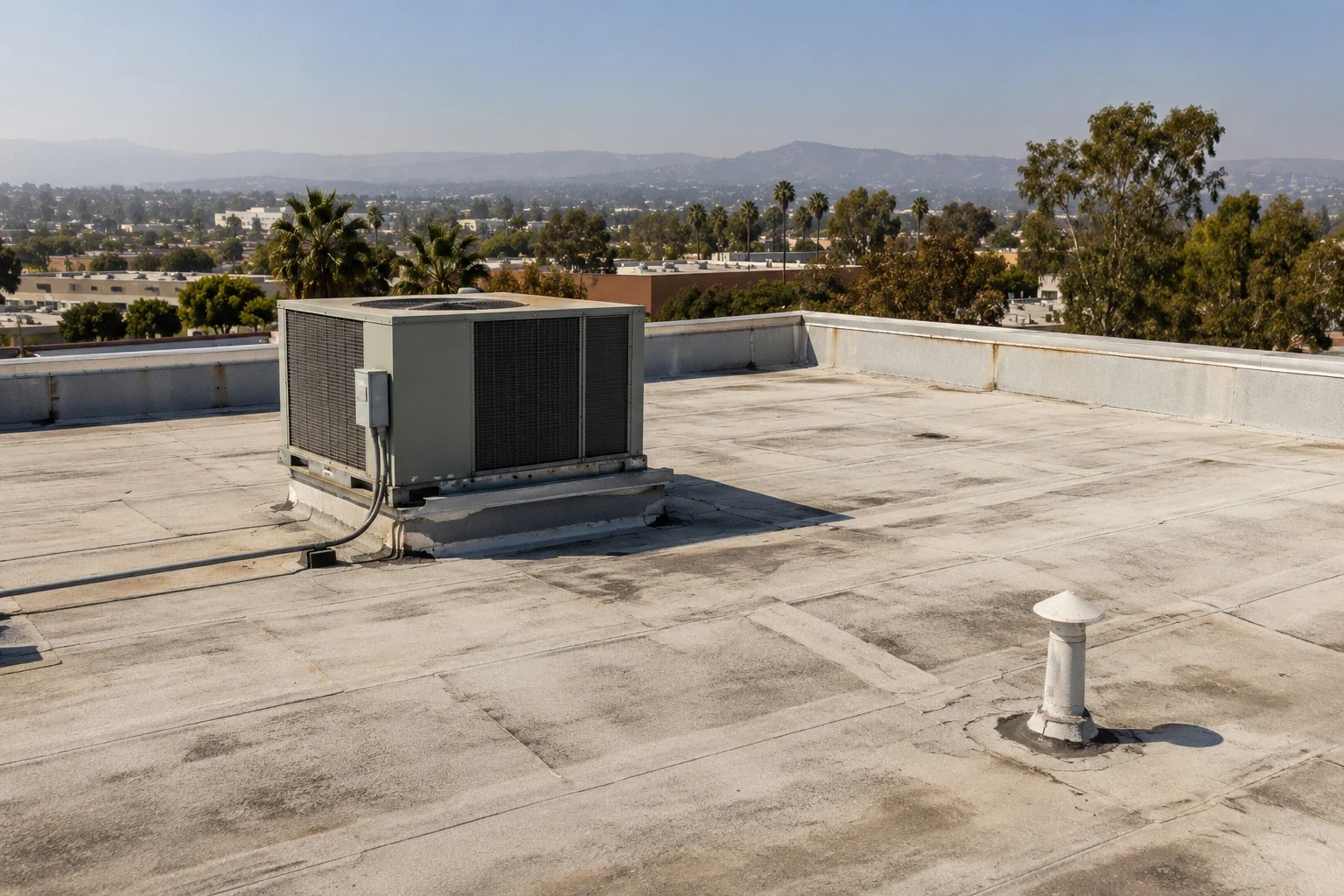
Multi-Site Commercial Roofing Programs in San Mateo, CA
CATEGORY
Roofing Capabilities
LOCATION
San Mateo, CA
One property manager can inherit several roofs, but a shared calendar does not make the assemblies or leak histories the same. San Mateo plans commercial and office uses in several distinct areas, including Downtown and the Mariner's Island district. A Downtown building and a Bay Meadows property may have different tenant hours, access limits, and roof details. We keep each field condition and work boundary separate, then coordinate mobilization, notice, and trade handoffs where they overlap. The owner gets a program that groups the work without flattening it into one portfolio score. That difference protects the schedule and makes each approval easier to trace back to the roof that needs it.
Sequencing: group visits without combining scopes
Start with a route plan that shows which buildings can be visited in the same mobilization and which need a separate access window. We confirm hatch locations, loading routes, tenant notices, rooftop equipment restrictions, and the person who can release each area. The city's rail-corridor plan covers the Hillsdale and Hayward Park Caltrain station areas, a useful reminder to confirm each property's real access route before setting crew order. That context can help a manager discuss travel and access between properties, but it does not tell us the best crew sequence until the actual site rules are known. We place the inspection visit next to the right access contact, then schedule repairs after the roof findings and approvals are clear. A multi-site calendar should show weather holds, material delivery, and the trade handoff for each roof rather than a single start date for every property.
Scope boundary: keep a separate work order for each roof
A portfolio may include a leak repair, an edge detail, a moisture investigation, and a roof ready for capital pricing. We give each item its own building identifier, roof area, finding, scope, price assumption, and approval record. That prevents an open repair at one address from being mistaken for completed work elsewhere. A roof asset record can hold current observations and prior work, while a capital comparison can rank the approved projects without changing the underlying Diligence Notes. If a property has multiple roof elevations, we map the tie-ins and shared drains before combining labor or material allowances. The owner can see which mobilization savings are real and which scopes remain distinct. Each work order should also state what stays outside the price, who clears equipment, and what finding would trigger a revised scope.
Field condition: establish a common inspection record
Consistency comes from recording the same useful fields, not from forcing the same rating onto every roof. We note visible system, approximate area when measured, drain and edge details, penetrations, access limits, active water entry, prior patches, and photographs. Where a roof cannot be fully reached, that gap remains visible in its report. San Mateo's local business sectors include technology, finance, restaurant, and retail uses; a site record should connect roof work to each property's operating need instead of assuming a standard tenant schedule. The office-building plan may need quiet-hours coordination, while a retail or restaurant property may need a different loading and customer route. We record those actual constraints with the roof condition so the next crew is not handed a spreadsheet that says only “repair.”
Cost driver: show the portfolio cost drivers
Multi-site pricing can account for shared mobilization, but the repair itself still changes with removal depth, wet insulation, deck repairs, edge height, access equipment, rooftop units, and occupied areas below. We show a common rate only when the roof details support it; unusual drains, parapets, or equipment curbs may need a separate allowance. San Mateo planning identifies Downtown, Bay Meadows, Mariner's Island, Hillsdale, and State Route 92 as employment or growth areas, but those labels do not establish a building's membrane or project cost. We compare actual work areas and price assumptions. A TPO assembly requires its own seam and edge review, while a drainage concern can add testing or correction. The portfolio summary should tell ownership which values are comparable and where the field condition makes a separate price necessary.
Maintenance: carry each roof through the next cycle
After work, we retain dated photographs, areas repaired, materials used when known, remaining recommendations, and the return visit due. The manager can then separate completed repairs from proposals still awaiting approval. San Mateo's economic development work focuses on supporting businesses, attracting investment, and strengthening commercial districts. Keeping roofing work coordinated with the property's actual operating calendar helps managers preserve access and make a roof decision before the next planning window closes. A maintenance visit can review drains, flashings, edges, and prior repairs on each property, but the observations still go into separate records. If water reappears, a leak assessment starts from that roof's own report rather than a portfolio average. The program should leave the next manager a usable list of what changed, what remains open, and who owns the follow-up.
Handoff: give the owner one clear decision view
The portfolio view can summarize condition, urgent action, approved scope, access contact, and next budget step without hiding the details behind a single red-yellow-green label. We keep the building-level report attached, set an owner for each open item, and show when a roof needs another survey before it can be priced. That makes it easier to take a focused question to finance, operations, and the general contractor. A good handoff describes what the crew saw and what the crew completed; it does not infer that a neighboring building shares the same roof system. When a repair affects an occupied area, the record includes notice and access notes for that site. The result is a common operating format with room for different assemblies, occupants, and construction sequences. The manager can approve one roof's work while keeping another property's evaluation open.
Commercial Roofing Questions
How do you schedule inspections across several San Mateo properties?
We group visits where access, travel, roof type, and owner availability make that practical, then confirm a separate contact and roof area for each stop. Downtown, Hillsdale, Bay Meadows, and Mariner's Island may have different building operations, so a calendar should include the actual hatch, loading route, tenant notice, and equipment constraints. The crew records each roof separately even when inspections share one mobilization.
Can a portfolio use one roof condition score?
A portfolio summary can group attention, but the underlying records need building-level observations. A low score may represent active water entry at one site and a broad replacement need at another. We show the specific roof area, confirmed defect, open question, and next action beside any summary so the owner can compare priority without losing the reason behind it.
What makes multi-site repair pricing comparable?
The scopes must share clear assumptions about access, removal depth, deck and insulation work, edge details, equipment protection, and work hours. We can identify shared mobilization where sites support it, then separate special conditions that change labor or material. The owner can review common pricing only for work that is truly alike and retain a separate allowance for each roof's field condition.
How should a manager handle a new leak between scheduled visits?
Record the affected building, interior location, time reported, and any safe access information, then contact the roofing office to confirm the next response. We inspect the roof area, trace likely water paths, and separate temporary protection from permanent repair. The existing asset record helps the crew find prior patches and open issues, but the new condition still needs its own field review.
What should the owner receive after a multi-property project?
Keep a building-level closeout with dates, work limits, photographs, materials when confirmed, remaining items, and the next maintenance action. The portfolio summary can identify which sites are complete and which need another decision, but it should link each status to its own scope. That helps finance and facilities review the program without treating a completed repair at one property as completion elsewhere.
Set the portfolio sequence
Share the property list, roof plans, access contacts, tenant windows, and current repair history. We can inspect each building, coordinate the visits, and return separate scopes with one clear schedule.