
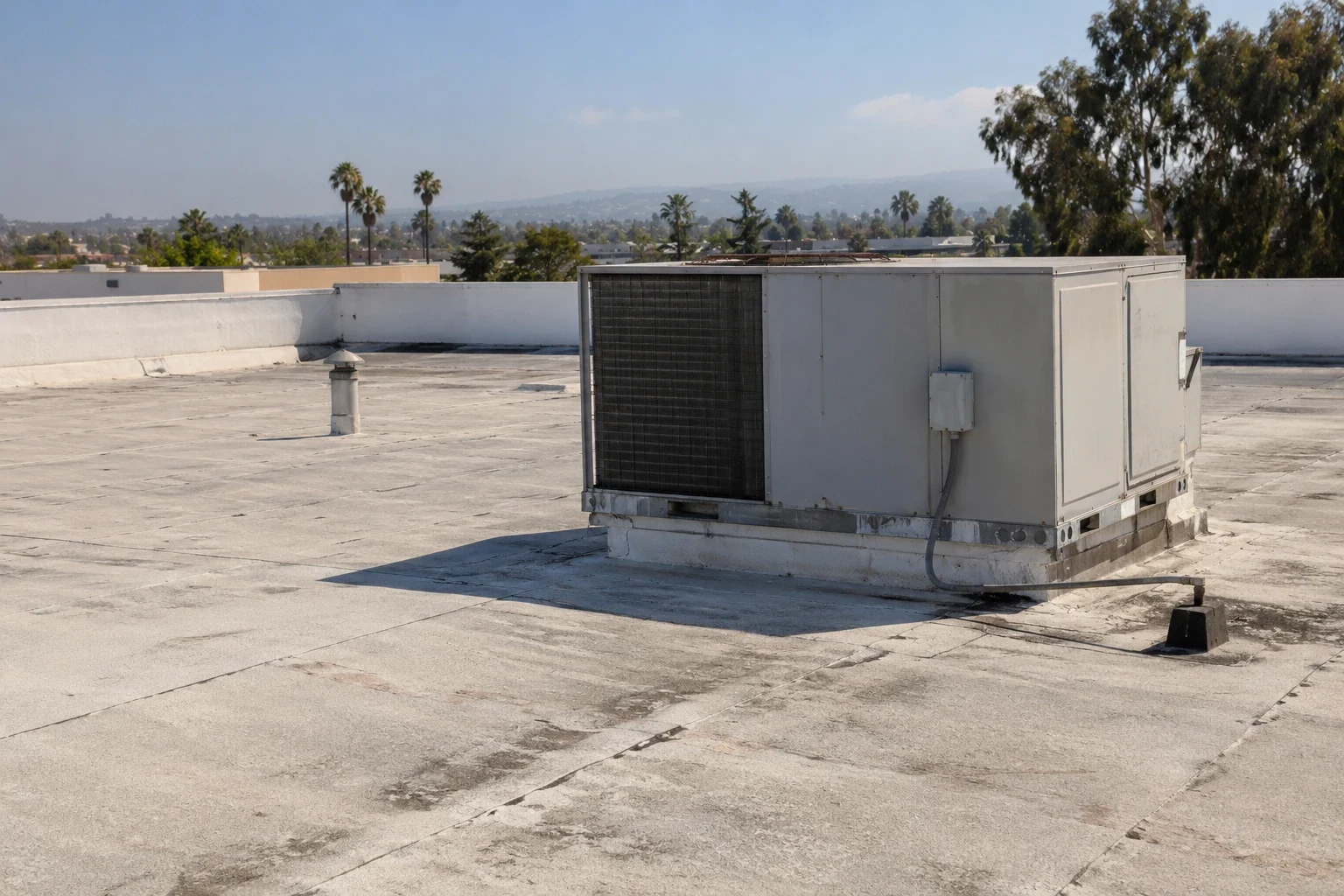
Commercial Roof Due Diligence Surveys in San Mateo, CA
CATEGORY
Roofing Capabilities
LOCATION
San Mateo, CA
A transaction can have a short inspection window and a long roof history. The survey has to show which areas were reached, what was observed, and what could not be confirmed before a buyer turns a summary into a capital assumption. Bay Meadows allows office and residential components, while the Bay Meadows property and a building along El Camino Real still require separate roof and access checks. Neither district label establishes a roof's age or system. We put the acquisition schedule next to the access plan, then note which findings can be priced from the visit and which need more investigation before a buyer sets a reserve. We inspect the roof that is actually present, then separate immediate repair, further testing, and longer-term renewal from the purchase discussion.
Scope boundary: set the survey limit before the visit
Before a due diligence walk, identify every roof area in the purchase scope, the access point, occupied space below, rooftop equipment, and any safety restriction. We compare the available roof plan with the areas that can be reached and note gaps rather than implying full coverage. A general contractor can help arrange hatches, escorts, equipment access, and interior observations while the property team shares leak history and prior work. We photograph transitions, drains, curbs, edges, and repairs, then map the findings to the building area. A commercial roof inspection can establish visible conditions, while a condition report organizes them into an actionable record. The survey scope should say whether testing or an opening is included; it should never let an inaccessible roof section disappear from the transaction file. When elevations differ, we label each area separately and note shared drains, parapets, or equipment that connect the work between them. The owner then sees the shared detail.
Field condition: separate observed condition from assumptions
A surface review can identify open seams, failed flashings, punctures, ponding, loose edge metal, damaged drains, and visible repairs. It cannot establish the condition of every concealed layer without testing or openings. We state whether a roof appears to be TPO, PVC, EPDM, built-up, or another assembly only when the visible detail supports that identification. We also distinguish an interior water stain reported by the seller from a leak path confirmed during inspection. Those distinctions matter to a buyer comparing one roof with another. A moisture survey may help locate areas for further evaluation, while an edge or flashing review can define a specific repair exposure. The report should leave a clear list of unanswered questions for the next diligence step.
Cost driver: translate findings into transaction exposure
Repair cost changes with the area affected, removal depth, wet insulation, deck condition, access, equipment protection, and the detail that failed. We separate a small repair from an allowance for concealed materials and show when a larger replacement comparison is warranted. The transaction record should account for San Mateo's adoption of the 2025 California Title 24 standards, effective January 1, 2026, when a proposed roof scope may require code coordination. For a potential replacement scope, we identify the assembly assumptions, drains, edge details, and insulation questions that affect pricing. If a repair is the immediate need, a defined repair estimate should list its work limit and exclusions. The buyer can then distinguish a known current condition from a future capital plan. Where a cost range is requested, we state whether it assumes a local repair, broader removal, insulation replacement, or deck work. We also identify the point at which a test opening would change that estimate, rather than burying the risk inside a single allowance.
Handoff: preserve the transaction record
A good survey file contains the date, weather, areas accessed, roof plan annotations, photographs, reported leak locations, visible system details, repair notes, and recommendations. It should also state who provided the drawings and history, because a seller's file and a field observation are different kinds of information. We make the report usable for the buyer's building team after closing by listing items for immediate attention, follow-up testing, and budget planning. Bay Meadows planning permits office and residential components, so a property team may need to coordinate roof access around more than one occupied use. That context affects staging, not the roof condition finding. A roof asset record can carry the survey into ongoing operations, and a property-use plan can help set notice and access before a later repair.
Sequencing: coordinate the next inspection or repair
Some findings can be priced from visible conditions; others need a test cut, electrical isolation, equipment move, or a follow-up visit with safer access. We label the decision point so the transaction team can decide whether it belongs before closing, in a repair escrow, or in a post-close capital schedule. The survey does not substitute for a specialist review when structural, mechanical, or environmental conditions are outside the roof scope. It gives the general contractor a roof-specific work boundary and enough detail to line up the next trade. When several buildings are part of one acquisition, a multi-property survey schedule keeps each roof's findings and access constraints distinct. The final handoff should identify what can be acted on now, what needs another inspection, and which assumption still controls the budget.
Commercial Roofing Questions
What should a buyer provide before a roof due diligence survey?
Provide the roof plan, prior proposals or repairs, known leak locations, warranty papers, access contacts, and any limits on walking the roof. We compare the documents with the areas that can be reached, then list missing records or inaccessible sections. If the seller has a maintenance log, it helps establish a timeline, but we still verify the current roof condition rather than assume a recorded repair resolved the issue.
Can a survey estimate the roof's remaining service life?
A field review can describe condition, active defects, repair history, and factors that affect a replacement decision. It cannot assign a dependable life number without reliable system information and broader testing. We state the observations and assumptions, then identify what would narrow the estimate, such as a test cut or attachment review. That gives the buyer a useful capital question without turning a visual walk into a promise about future performance.
How should a buyer handle an area that was not accessible?
Keep it listed as an open diligence item. We identify the section, why it could not be reached, and the access or safety coordination needed for a return visit. The buyer can then decide whether to arrange access before close or reserve a post-close inspection. An unvisited area should not inherit the condition rating of a nearby roof section just because both appear on the same drawing.
Can the roof survey set a repair budget?
It can define visible work and the assumptions behind an allowance. The number may change if testing finds wet insulation, deck deterioration, a larger failure area, or a difficult equipment move. We separate confirmed repairs from concealed-condition allowances and identify when replacement pricing should be requested. That lets the transaction team compare a known repair exposure with a broader capital possibility without mixing the two.
Will a survey confirm warranty coverage?
No. We can identify documents provided, note visible roof conditions, and record repairs that the seller reports. The agreement itself controls its terms, and the issuer applies coverage questions. A buyer should match any warranty to the building and roof area in the transaction file, then retain the survey and repair history for the post-close facilities team.
Schedule the roof review with access in hand
Share the property plans, transaction window, access contacts, and available repair records. We can inspect the roof areas, mark open questions, and prepare a scope the buyer and GC can use.
Related Pages
- Commercial Roofing in Bay Meadows, San Mateo, CA
- Commercial Roofing Along San Mateo’s El Camino Real Corridor
- Commercial Roof Inspection
- Commercial Roof Condition Reports
- Infrared Moisture Survey
- Flashing Failure Roof Repair
- Commercial Roof Replacement
- Commercial Roof Repair
- Multi-Site Commercial Roofing Programs